hing asafetida
Ferula narthex · Accepted scientific name
Scientific literature: Very Sparse (10 studies) · ★☆☆☆☆
Hing asafetida, scientifically known as Ferula narthex, is a perennial herb prized for its aromatic resin. Renowned in traditional medicine, it serves as a potent digestive aid and anti-inflammatory agent. This versatile plant provides unique olfactory qualities, making it essential in both culinary traditions and holistic therapeutic practices.
- Family
- Apiaceae
- Native range
- Asia-Temperate
- Parts used
- Not available
- Common names
- Hing Asafetida
- Scientific synonyms
- Peucedanum Narthex · Dorema Asafoetida · 3 more
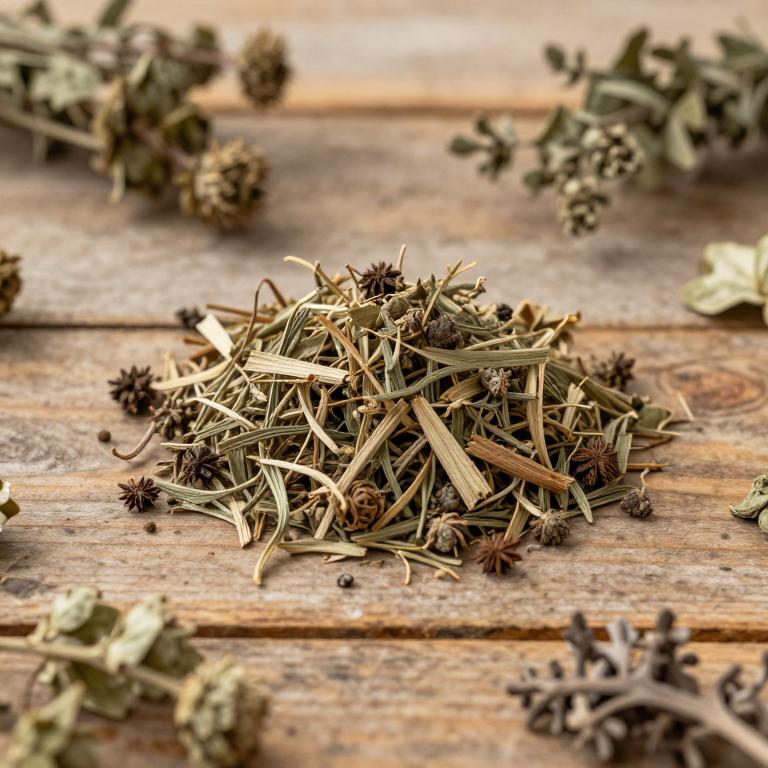
Names and Synonyms
Common Names
- hing asafetida
Scientific Names
Accepted name
Ferula narthexSynonyms
- Peucedanum narthex
- Dorema asafoetida
- Ferula koelzii
- Narthex asafoetida
- Ferula jaeschkeana subsp. taenioloba
Regional and Traditional Names
French:
- Ferula asafoetida
- Ferula jaeschkeana subsp. taenioloba
- Ferula koelzii
- Narthex asafoetida
- Peucedanum narthex
Sources: Wikidata, Catalogue of Life
Taxonomical Classification
This plant belongs to the kingdom Plantae and the phylum Streptophyta, placing it within the class Equisetopsida and subclass Magnoliidae. It is further classified under the order Apiales and the family Apiaceae. Within this family, it is identified by the genus Ferula, specifically as the species Ferula narthex.
| Rank | Classification |
|---|---|
| Kingdom | Plantae |
| Phylum | Streptophyta |
| Class | Equisetopsida |
| Subclass | Magnoliidae |
| Order | Apiales |
| Family | Apiaceae |
| Genus | Ferula |
Sources: The World Checklist of Vascular Plants (WCVP)
Distribution
This plant exhibits a wide geographical distribution across several key regions of Asia. In Central Asia, it can be found growing within the borders of Tajikistan. Its range extends into Western Asia, where it is specifically noted in Afghanistan. Moving into the Indian Subcontinent, the species is documented throughout Pakistan. Additionally, it is widely distributed across the West Himalaya region of the Indian Subcontinent.
| Region | Area |
|---|---|
| Central Asia | Tadzhikistan |
| Western Asia | Afghanistan |
| Indian Subcontinent | Pakistan |
| Indian Subcontinent | West Himalaya |
Sources: The World Checklist of Vascular Plants (WCVP)
Botanical Identification
Ecology
The ecology of Ferula narthex is characterized by its ability to thrive within a broad altitudinal gradient, spanning from lowlands to high-altitude mountainous regions. This species is typically found across an elevational range starting as low as 600 m AMSL and extending up to a maximum of 3400 m AMSL. This wide vertical distribution suggests an adaptability to diverse microclimates, ranging from warmer, arid lowland environments to the cooler, more temperate conditions found in higher elevations. Its presence across such a significant range of altitudes indicates a resilience to varying atmospheric pressures, temperature fluctuations, and moisture availability, allowing it to occupy various ecological niches within its native mountainous and semi-arid habitats.
- Elevational range max:
- 3400 m AMSL
- Elevational range min:
- 600 m AMSL
Sources: Global Inventory of Floras and Traits (GIFT)
Chemicals
Ferula narthex has 5 reported phytochemicals identified across 0 scientific publications and several other databases. The most consistently reported chemicals include CHLOROFORM, Flavonoids, PETROLEUM ETHER, kaempferol, p-coumaric acid.
| Chemical | Supporting sources | Consensus |
|---|---|---|
| CHLOROFORM | 1 supporting sources | ★☆☆☆☆ |
| Flavonoids | 1 supporting sources | ★☆☆☆☆ |
| PETROLEUM ETHER | 1 supporting sources | ★☆☆☆☆ |
| kaempferol | 1 supporting sources | ★☆☆☆☆ |
| p-coumaric acid | 1 supporting sources | ★☆☆☆☆ |
CHLOROFORM
- Indian journal of pharmaceutical sciences
Flavonoids
- Phytochemistry
PETROLEUM ETHER
- Indian journal of pharmaceutical sciences
kaempferol
- Phytochemistry
p-coumaric acid
- Phytochemistry
Activities
Ferula narthex has 2 reported activities identified across 0 scientific publications and several other databases. The most consistently reported activities include Anticarcinogenic, Antioxidant.
| Activity | Supporting sources | Consensus |
|---|---|---|
| Anticarcinogenic | 1 supporting sources | ★☆☆☆☆ |
| Antioxidant | 1 supporting sources | ★☆☆☆☆ |
Anticarcinogenic
- Life sciences
Antioxidant
- Life sciences
Conditions
Ferula narthex has 1 reported investigations on conditions identified across 0 scientific publications and several other databases. The most consistently reported conditions include carcinogenesis.
| Condition | Supporting sources | Consensus |
|---|---|---|
| Carcinogenesis | 1 supporting sources | ★☆☆☆☆ |
Carcinogenesis
- Life sciences
Preparations
Ferula narthex has 9 reported preparations identified across 0 scientific publications and several other databases. The most consistently reported preparations include F. asafoetida extract, Petroleum ether (60-80 degrees ), aqueous extracts, benzene, chloroform.
| Preparation | Supporting sources | Consensus |
|---|---|---|
| F. asafoetida extract | 1 supporting sources | ★☆☆☆☆ |
| Petroleum ether (60-80 degrees ) | 1 supporting sources | ★☆☆☆☆ |
| Aqueous extracts | 1 supporting sources | ★☆☆☆☆ |
| Benzene | 1 supporting sources | ★☆☆☆☆ |
| Chloroform | 1 supporting sources | ★☆☆☆☆ |
| Essential oils | 1 supporting sources | ★☆☆☆☆ |
| Ethanol | 1 supporting sources | ★☆☆☆☆ |
| Hydroalcoholic extract | 1 supporting sources | ★☆☆☆☆ |
| Resins | 1 supporting sources | ★☆☆☆☆ |
F. asafoetida extract
- Veterinary world
Petroleum ether (60-80 degrees )
- Indian journal of pharmaceutical sciences
Aqueous extracts
- Indian journal of pharmaceutical sciences
Benzene
- Indian journal of pharmaceutical sciences
Chloroform
- Indian journal of pharmaceutical sciences
Essential oils
- Cellular and molecular biology (Noisy-le-Grand, France)
Ethanol
- Indian journal of pharmaceutical sciences
Hydroalcoholic extract
- Veterinary world
Resins
- Journal of intercultural ethnopharmacology