Muskroot
Ferula moschata · Accepted scientific name
Scientific literature: Sparse (76 studies) · ★★☆☆☆
Muskroot, scientifically known as Ferula moschata, is a highly aromatic perennial plant belonging to the Apiaceae family. Renowned for its intense, musk-like fragrance, it yields a precious oleo-gum-resin. Historically prized in traditional medicine, it is utilized for its diverse therapeutic properties, including antimicrobial, anti-inflammatory, and sedative effects.
- Family
- Apiaceae
- Native range
- Asia-Temperate
- Parts used
- Root
- Common names
- Muskroot
- Scientific synonyms
- Peucedanum Sumbul · Sumbulus Moschatus · 3 more
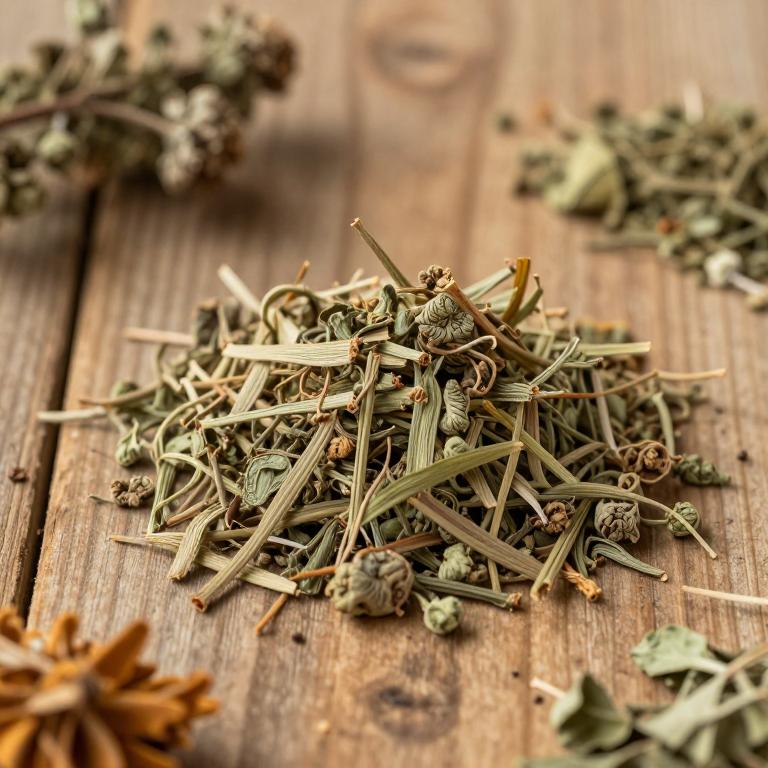
Names and Synonyms
Common Names
- Muskroot
Scientific Names
Accepted name
Ferula moschataSynonyms
- Peucedanum sumbul
- Sumbulus moschatus
- Euryangium sumbul
- Ferula sumbul
- Ferula urceolata
Sources: Wikidata, Catalogue of Life
Taxonomical Classification
This plant belongs to the kingdom Plantae within the phylum Streptophyta and the class Equisetopsida. It is further classified under the subclass Magnoliidae and the order Apiales, placing it in the family Apiaceae. Ultimately, it is identified by the genus Ferula and the specific species Ferula moschata.
| Rank | Classification |
|---|---|
| Kingdom | Plantae |
| Phylum | Streptophyta |
| Class | Equisetopsida |
| Subclass | Magnoliidae |
| Order | Apiales |
| Family | Apiaceae |
| Genus | Ferula |
Sources: The World Checklist of Vascular Plants (WCVP)
Distribution
This plant exhibits a specific geographical distribution centered primarily within the regions of Central Asia. It can be found growing naturally across the mountainous landscapes of Kyrgyzstan. Its habitat also extends into the territories of Tajikistan, where it is part of the local flora. Furthermore, the species is documented within the borders of Uzbekistan. Finally, its range stretches eastward into the Xinjiang region of China.
| Region | Area |
|---|---|
| Central Asia | Kirgizstan |
| Central Asia | Tadzhikistan |
| Central Asia | Uzbekistan |
| China | Xinjiang |
Sources: The World Checklist of Vascular Plants (WCVP)
Botanical Identification
Ecology
The ecology of Ferula moschata is characterized by its adaptation to rugged and exposed terrains, where it thrives primarily in mountainous regions. It is commonly found colonizing shrubberies and stony places, environments that typically offer well-drained soil and significant exposure to sunlight. These specific habitats, defined by rocky substrates and sparse vegetation, suggest that the species is well-equipped to endure the physiological stresses associated with high-altitude or semi-arid landscapes, including temperature fluctuations and limited organic matter in the soil.
- Habitat :
- mountains, shrubberies, stony places
Life history
The life history of Ferula moschata is characterized by its status as a perennial species, allowing the plant to persist in its environment over multiple growing seasons. As a perennial, it establishes a robust root system that serves as a nutrient reservoir, enabling it to survive periods of dormancy and emerge repeatedly to complete its reproductive cycles. This lifecycle supports a long-term presence in its native habitats, where it undergoes seasonal vegetative growth followed by the development of large, complex inflorescences. Through its perennial nature, the plant can accumulate sufficient biomass and energy reserves to support the production of seeds, ensuring its continued propagation and stability within its ecological niche over many years.
- Lifecycle :
- perennial
Morphology
The morphology of Ferula moschata is characterized by a non-woody, herbaceous growth form. The plant maintains a consistent stature, with a height that reaches a maximum of 0.5 m and a minimum of 0.5 m, indicating a compact developmental habit.
- Growth form :
- herb
- Plant height min:
- 0.5 m
- Woodiness :
- non-woody
Reproduction
The reproduction of Ferula moschata is governed by a seasonal flowering cycle that is highly dependent on environmental conditions. The flowering period is characterized by a specific window of activity, with the flowering start typically occurring in June. The duration of this reproductive phase is relatively concentrated, as the flowering end also aligns with the month of June, though the exact timing remains variable depending on the specific climatic factors of the habitat. This temporal pattern dictates the availability of pollen and the timing for potential pollination, marking a critical period in the plant's life cycle for ensuring the production of seeds.
- Flowering time :
- Jun
Sources: Global Inventory of Floras and Traits (GIFT)
Plant Parts
Ferula moschata has 1 reported plant parts identified across 1 scientific publications and several other databases that are studied for medicinal purposes. The most consistently reported plant part include root.
| Plant part | Supporting sources | Consensus |
|---|---|---|
| Root | 1 supporting sources | ★☆☆☆☆ |
Root
- Phytochemistry
Chemicals
Ferula moschata has 19 reported phytochemicals identified across 1 scientific publications and several other databases. The most consistently reported chemicals include Angelic acid, EO, Fesumtuorin A, Fesumtuorin B, Fesumtuorin C.
| Chemical | Supporting sources | Consensus |
|---|---|---|
| Angelic acid | 1 supporting sources | ★☆☆☆☆ |
| EO | 1 supporting sources | ★☆☆☆☆ |
| Fesumtuorin A | 1 supporting sources | ★☆☆☆☆ |
| Fesumtuorin B | 1 supporting sources | ★☆☆☆☆ |
| Fesumtuorin C | 1 supporting sources | ★☆☆☆☆ |
| Fesumtuorin D | 1 supporting sources | ★☆☆☆☆ |
| Fesumtuorin E | 1 supporting sources | ★☆☆☆☆ |
| Fesumtuorin F | 1 supporting sources | ★☆☆☆☆ |
| Fesumtuorin G | 1 supporting sources | ★☆☆☆☆ |
| Fesumtuorin H | 1 supporting sources | ★☆☆☆☆ |
Angelic acid
- Dr. Duke
EO
- Dr. Duke
Fesumtuorin A
- Phytochemistry
Fesumtuorin B
- Phytochemistry
Fesumtuorin C
- Phytochemistry
Fesumtuorin D
- Phytochemistry
Fesumtuorin E
- Phytochemistry
Fesumtuorin F
- Phytochemistry
Fesumtuorin G
- Phytochemistry
Fesumtuorin H
- Phytochemistry
Activities
Ferula moschata has 54 reported activities identified across 1 scientific publications and several other databases. The most consistently reported activities include Abortifacient, Aldose-Reductase-Inhibitor, Allelochemic, Allelopathic, Anthelmintic.
| Activity | Supporting sources | Consensus |
|---|---|---|
| Abortifacient | 1 supporting sources | ★☆☆☆☆ |
| Aldose-Reductase-Inhibitor | 1 supporting sources | ★☆☆☆☆ |
| Allelochemic | 1 supporting sources | ★☆☆☆☆ |
| Allelopathic | 1 supporting sources | ★☆☆☆☆ |
| Anthelmintic | 1 supporting sources | ★☆☆☆☆ |
| Antibacterial | 1 supporting sources | ★☆☆☆☆ |
| Anticancer | 1 supporting sources | ★☆☆☆☆ |
| Antiedemic | 1 supporting sources | ★☆☆☆☆ |
| Antifatigue | 1 supporting sources | ★☆☆☆☆ |
| Antigastritic | 1 supporting sources | ★☆☆☆☆ |
Abortifacient
- Dr. Duke
Aldose-Reductase-Inhibitor
- Dr. Duke
Allelochemic
- Dr. Duke
Allelopathic
- Dr. Duke
Anthelmintic
- Dr. Duke
Antibacterial
- Dr. Duke
Anticancer
- Dr. Duke
Antiedemic
- Dr. Duke
Antifatigue
- Dr. Duke
Antigastritic
- Dr. Duke
Preparations
Ferula moschata has 4 reported preparations identified across 1 scientific publications and several other databases. The most consistently reported preparations include ethanol extract, hexane extract, methanol extract, methanol extract of the dried roots.
| Preparation | Supporting sources | Consensus |
|---|---|---|
| Ethanol extract | 1 supporting sources | ★☆☆☆☆ |
| Hexane extract | 1 supporting sources | ★☆☆☆☆ |
| Methanol extract | 1 supporting sources | ★☆☆☆☆ |
| Methanol extract of the dried roots | 1 supporting sources | ★☆☆☆☆ |
Ethanol extract
- Iranian journal of pharmaceutical research : IJPR
Hexane extract
- Iranian journal of pharmaceutical research : IJPR
Methanol extract
- Iranian journal of pharmaceutical research : IJPR
Methanol extract of the dried roots
- Phytochemistry