Ferula jaeschkeana
Ferula jaeschkeana · Accepted scientific name
Scientific literature: Very Sparse (40 studies) · ★☆☆☆☆
, scientifically known as Ferula jaeschkeana, is a remarkable medicinal plant native to specific high-altitude regions. Renowned for its diverse pharmacological properties, this species is utilized in traditional medicine to treat various ailments. Its unique chemical constituents offer significant therapeutic potential, making it a subject of intense botanical interest.
- Family
- Apiaceae
- Native range
- Asia-Temperate
- Parts used
- Rhizome
- Common names
- Not available
- Scientific synonyms
- Peucedanum Jaeschkeanum · Ferula Wolffii · 2 more
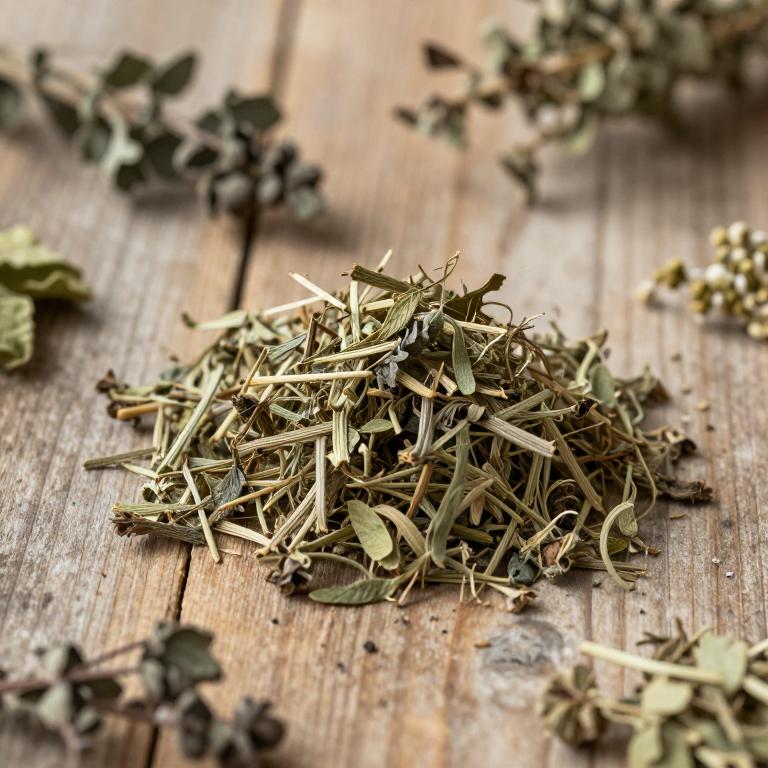
Names and Synonyms
Scientific Names
Accepted name
Ferula jaeschkeanaSynonyms
- Peucedanum jaeschkeanum
- Ferula wolffii
- Ferula jaeschkeana var. parkeriana
- Ferula gangensis
Regional and Traditional Names
French:
- Ferula gangensis
- Ferula jaeschkeana var. parkeriana
- Ferula parkeriana
- Ferula wolffii
- Peucedanum jaeschkeanum
Sources: Wikidata, Catalogue of Life
Taxonomical Classification
This plant belongs to the kingdom Plantae and the phylum Streptophyta, falling under the class Equisetopsida and subclass Magnoliidae. Within the order Apiales, it is classified under the family Apiaceae. Finally, its taxonomic identity is defined by the genus Ferula, specifically as the species Ferula jaeschkeana.
| Rank | Classification |
|---|---|
| Kingdom | Plantae |
| Phylum | Streptophyta |
| Class | Equisetopsida |
| Subclass | Magnoliidae |
| Order | Apiales |
| Family | Apiaceae |
| Genus | Ferula |
Sources: The World Checklist of Vascular Plants (WCVP)
Distribution
This plant exhibits a broad geographical distribution spanning several key regions across Asia. In Central Asia, it can be found growing within the territories of Turkmenistan and Uzbekistan. Its range extends into Western Asia, where it is documented in Afghanistan. Furthermore, the species is located in the high-altitude regions of Tibet in China. Finally, its distribution reaches the Indian Subcontinent, specifically within Pakistan.
| Region | Area |
|---|---|
| Central Asia | Turkmenistan |
| Central Asia | Uzbekistan |
| Western Asia | Afghanistan |
| China | Tibet |
| Indian Subcontinent | Pakistan |
| Indian Subcontinent | West Himalaya |
Sources: The World Checklist of Vascular Plants (WCVP)
Botanical Identification
Ecology
The ecology of Ferula jaeschkeana is defined by its specialized existence within high-altitude environments, specifically thriving in mountainous terrains and shrubberies. This species is strictly adapted to extreme elevations, maintaining a highly specific ecological niche with an elevational range that is consistently centered at 3600 m AMSL. Because its minimum, mean, and maximum elevation values are all recorded at 3600 m AMSL, the plant appears to occupy a very narrow altitudinal band, suggesting a high degree of specialization to the unique climatic and soil conditions found at this specific height in its mountain habitat.
- Elevational range max:
- 3600 m AMSL
- Habitat :
- mountains, shrubberies
Life history
The life history of Ferula jaeschkeana is characterized by its status as a perennial species, allowing it to persist in its environment over multiple growing seasons. As a perennial, the plant undergoes a cyclic development pattern where it establishes a robust root system that stores essential nutrients, enabling it to survive seasonal fluctuations and regrow during favorable periods. This long-term survival strategy enables the plant to undergo repeated reproductive cycles, transitioning through various stages of vegetative growth and flowering across several years rather than completing its life cycle within a single season.
- Lifecycle :
- perennial
Morphology
The morphology of Ferula jaeschkeana is characterized by its growth form as a non-woody herb. This plant is self-supporting and functions as an independent organism, showing no parasitic tendencies. In terms of stature, it reaches a mean plant height of 2 m, though individual specimens may vary, with a minimum height recorded at 1 m.
- Climber :
- self-supporting
- Growth form :
- herb
- Parasite :
- independent
- Plant height mean:
- 2 m
- Plant height min:
- 1 m
- Woodiness :
- non-woody
Reproduction
The reproduction of Ferula jaeschkeana is characterized by a specific flowering window and the development of distinct fruit structures. The flowering period typically begins in May and concludes in June. During this reproductive phase, the plant produces inflorescences that range in length from a minimum of 0.03 m to a maximum of 0.1 m. Following successful pollination, the plant develops fruits with specific dimensional characteristics: the fruit length varies from a minimum of 1.4 cm to a maximum of 2 cm, with an average length of approximately 1.7 cm. Similarly, the fruit width ranges from a minimum of 0.8 cm to a maximum of 1.2 cm, maintaining a mean width of 1 cm.
- Flowering time :
- May
- Flowering time :
- Jun
- Fruit length max:
- 2 cm
- Fruit length mean:
- 1.7 cm
- Fruit length min:
- 1.4 cm
- Fruit width max:
- 1.2 cm
- Fruit width mean:
- 1 cm
- Fruit width min:
- 0.8 cm
- Inflorescence length max:
- 0.1 m
- Inflorescence length min:
- 0.03 m
Sources: Global Inventory of Floras and Traits (GIFT)
Plant Parts
Ferula jaeschkeana has 1 reported plant parts identified across 2 scientific publications and several other databases that are studied for medicinal purposes. The most consistently reported plant part include rhizome.
| Plant part | Supporting sources | Consensus |
|---|---|---|
| Rhizome | 2 supporting sources | ★☆☆☆☆ |
Rhizome
- Journal of natural products
- Planta medica
Chemicals
Ferula jaeschkeana has 7 reported phytochemicals identified across 2 scientific publications and several other databases. The most consistently reported chemicals include CAMPHENE, Chamazulene, EO, azulene, cuminaldehyde.
| Chemical | Supporting sources | Consensus |
|---|---|---|
| CAMPHENE | 1 supporting sources | ★☆☆☆☆ |
| Chamazulene | 1 supporting sources | ★☆☆☆☆ |
| EO | 1 supporting sources | ★☆☆☆☆ |
| azulene | 1 supporting sources | ★☆☆☆☆ |
| cuminaldehyde | 1 supporting sources | ★☆☆☆☆ |
| jaeschkeanadiol | 1 supporting sources | ★☆☆☆☆ |
| n-Propyl sec-butyl disulfide | 1 supporting sources | ★☆☆☆☆ |
CAMPHENE
- Dr. Duke
Chamazulene
- Dr. Duke
EO
- Dr. Duke
azulene
- Dr. Duke
cuminaldehyde
- Dr. Duke
jaeschkeanadiol
- Dr. Duke
n-Propyl sec-butyl disulfide
- Food research international (Ottawa, Ont.)
Activities
Ferula jaeschkeana has 28 reported activities identified across 2 scientific publications and several other databases. The most consistently reported activities include Allelopathic, Analgesic, Antiallergic, Antibacterial, Antihistaminic.
| Activity | Supporting sources | Consensus |
|---|---|---|
| Allelopathic | 1 supporting sources | ★☆☆☆☆ |
| Analgesic | 1 supporting sources | ★☆☆☆☆ |
| Antiallergic | 1 supporting sources | ★☆☆☆☆ |
| Antibacterial | 1 supporting sources | ★☆☆☆☆ |
| Antihistaminic | 1 supporting sources | ★☆☆☆☆ |
| Antiinflammatory | 1 supporting sources | ★☆☆☆☆ |
| Antileukotriene | 1 supporting sources | ★☆☆☆☆ |
| Antilithic? | 1 supporting sources | ★☆☆☆☆ |
| Antioxidant | 1 supporting sources | ★☆☆☆☆ |
| Antipyretic | 1 supporting sources | ★☆☆☆☆ |
Allelopathic
- Dr. Duke
Analgesic
- Dr. Duke
Antiallergic
- Dr. Duke
Antibacterial
- Dr. Duke
Antihistaminic
- Dr. Duke
Antiinflammatory
- Dr. Duke
Antileukotriene
- Dr. Duke
Antilithic?
- Dr. Duke
Antioxidant
- Dr. Duke
Antipyretic
- Dr. Duke
Conditions
Ferula jaeschkeana has 1 reported investigations on conditions identified across 2 scientific publications and several other databases. The most consistently reported conditions include contraceptive effect.
| Condition | Supporting sources | Consensus |
|---|---|---|
| Contraceptive effect | 1 supporting sources | ★☆☆☆☆ |
Contraceptive effect
- Food research international (Ottawa, Ont.)
Preparations
Ferula jaeschkeana has 3 reported preparations identified across 2 scientific publications and several other databases. The most consistently reported preparations include FERULA JAESCHKEANA rhizomes, Ferula jaeschkeana rhizomes, hexane extract of the aerial parts.
| Preparation | Supporting sources | Consensus |
|---|---|---|
| Ferula jaeschkeana rhizomes | 1 supporting sources | ★☆☆☆☆ |
| Ferula jaeschkeana rhizomes | 1 supporting sources | ★☆☆☆☆ |
| Hexane extract of the aerial parts | 1 supporting sources | ★☆☆☆☆ |
Ferula jaeschkeana rhizomes
- Planta medica
Ferula jaeschkeana rhizomes
- Journal of natural products
Hexane extract of the aerial parts
- Journal of ethnopharmacology