اليونانيه
Ferula hermonis · Accepted scientific name
Scientific literature: Very Sparse (35 studies) · ★☆☆☆☆
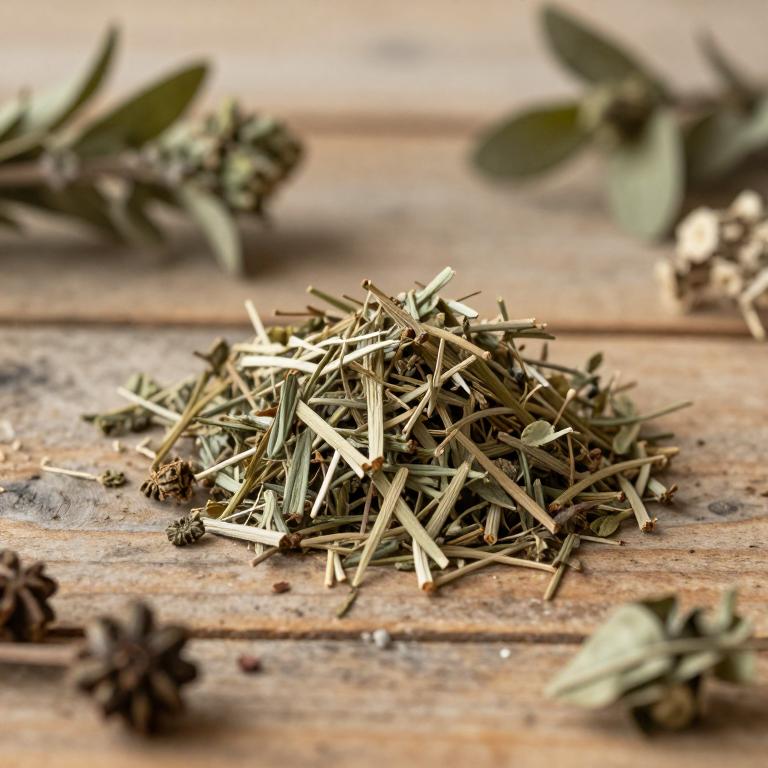
اليونانيه, scientifically known as Ferula hermonis, is a remarkable medicinal plant native to the Mediterranean region. Renowned for its potent bioactive compounds, it has been traditionally utilized in herbal medicine to treat various ailments. This study explores its pharmacological properties, highlighting its significant potential in modern therapeutic applications.
- Family
- Apiaceae
- Native range
- Asia-Temperate
- Parts used
- Root
- Common names
- Hermon Giant Fennel
- Scientific synonyms
- Not available
Names and Synonyms
Common Names
- Hermon Giant Fennel
Scientific Names
Accepted name
Ferula hermonisRegional and Traditional Names
French:
- Férule du mont Hermon
- Férule du Mont Hermon
Sources: Wikidata, Catalogue of Life
Taxonomical Classification
This plant belongs to the kingdom Plantae within the phylum Streptophyta and the class Equisetopsida. Classified under the subclass Magnoliidae and the order Apiales, it is a member of the family Apiaceae. Specifically, it is identified by the genus Ferula and the species Ferula hermonis.
| Rank | Classification |
|---|---|
| Kingdom | Plantae |
| Phylum | Streptophyta |
| Class | Equisetopsida |
| Subclass | Magnoliidae |
| Order | Apiales |
| Family | Apiaceae |
| Genus | Ferula |
Sources: The World Checklist of Vascular Plants (WCVP)
Distribution
This plant exhibits a specific geographical range primarily located within the Western Asian region. Its distribution can be traced across the territories of Lebanon and Syria. Additionally, it is found within the borders of Türkiye. These specific areas represent the core habitats where the species naturally occurs. Consequently, its presence is concentrated within these particular parts of Western Asia.
| Region | Area |
|---|---|
| Western Asia | Lebanon-Syria |
| Western Asia | Türkiye |
Sources: The World Checklist of Vascular Plants (WCVP)
Botanical Identification
Life history
The life history of Ferula hermonis is characterized by its status as a perennial species, allowing it to persist in its natural habitat over multiple growing seasons. As a perennial, the plant undergoes a complex developmental cycle that involves establishing a robust root system to support its long-term survival and reproductive efforts. This lifecycle enables the plant to withstand environmental fluctuations, as it can store nutrients during favorable periods to fuel subsequent growth and flowering phases. Unlike annuals or biennials that complete their life cycle in a single season or two, Ferula hermonis maintains a continuous presence in its ecosystem, contributing to the stability of its vegetative structure and ensuring a recurring opportunity for seed production through its perennial growth pattern.
- Lifecycle :
- perennial
Morphology
The morphology of Ferula hermonis is characterized by a robust growth habit that is strictly terrestrial in nature, as it does not exhibit aquatic or semiaquatic tendencies. As an independent organism, the plant functions without any parasitic relationship, maintaining an independent nutritional strategy rather than being an obligatory or facultative parasite. Its physical structure typically features a sturdy, erect stem and a complex root system adapted to well-drained soil environments. The foliage is characterized by deeply divided, compound leaves, while the reproductive structures consist of large, compound umbels that emerge from the terminal ends of the stems, typical of the Apiaceae family.
- Aquatic :
- terrestrial
- Parasite :
- independent
Sources: Global Inventory of Floras and Traits (GIFT)
Plant Parts
Ferula hermonis has 1 reported plant parts identified across 3 scientific publications and several other databases that are studied for medicinal purposes. The most consistently reported plant part include root.
| Plant part | Supporting sources | Consensus |
|---|---|---|
| Root | 3 supporting sources | ★★☆☆☆ |
Root
- BioMed research international
- Journal of natural products
- BMC complementary and alternative medicine
Chemicals
Ferula hermonis has 17 reported phytochemicals identified across 3 scientific publications and several other databases. The most consistently reported chemicals include Ferutinin, Jaeschkeanadiol p-hydroxybenzoate, (+)-alpha-Bisabolol, (1R,3S,8S)-3-ethoxy-8-angeloyloxydauca-4-en-9-one, (1R,4R)-4-hydroxydauca-7-ene-6,9-dione.
| Chemical | Supporting sources | Consensus |
|---|---|---|
| Ferutinin | 2 supporting sources | ★☆☆☆☆ |
| Jaeschkeanadiol p-hydroxybenzoate | 2 supporting sources | ★☆☆☆☆ |
| (+)-alpha-Bisabolol | 1 supporting sources | ★☆☆☆☆ |
| (1R,3S,8S)-3-ethoxy-8-angeloyloxydauca-4-en-9-one | 1 supporting sources | ★☆☆☆☆ |
| (1R,4R)-4-hydroxydauca-7-ene-6,9-dione | 1 supporting sources | ★☆☆☆☆ |
| 3,5-Dimethylbenzenemethanol | 1 supporting sources | ★☆☆☆☆ |
| ALPHA-PINENE | 1 supporting sources | ★☆☆☆☆ |
| BETA-PINENE | 1 supporting sources | ★☆☆☆☆ |
| Baccatin III | 1 supporting sources | ★☆☆☆☆ |
| Flavonoids | 1 supporting sources | ★☆☆☆☆ |
Ferutinin
- Drug research
- Journal of natural products
Jaeschkeanadiol p-hydroxybenzoate
- Journal of natural products
- Planta medica
(+)-alpha-Bisabolol
- Journal of natural products
(1R,3S,8S)-3-ethoxy-8-angeloyloxydauca-4-en-9-one
- Journal of natural products
(1R,4R)-4-hydroxydauca-7-ene-6,9-dione
- Journal of natural products
3,5-Dimethylbenzenemethanol
- BioMed research international
ALPHA-PINENE
- BioMed research international
BETA-PINENE
- BioMed research international
Baccatin III
- BioMed research international
Flavonoids
- Biotechnology, biotechnological equipment
Activities
Ferula hermonis has 1 reported activities identified across 3 scientific publications and several other databases. The most consistently reported activities include Antiproliferative.
| Activity | Supporting sources | Consensus |
|---|---|---|
| Antiproliferative | 1 supporting sources | ★☆☆☆☆ |
Antiproliferative
- Planta medica
Conditions
Ferula hermonis has 10 reported investigations on conditions identified across 3 scientific publications and several other databases. The most consistently reported conditions include Alzheimer's disease, Staphylococcus aureus, bacterial infections, breast cancer, colon cancer.
| Condition | Supporting sources | Consensus |
|---|---|---|
| Alzheimer's disease | 1 supporting sources | ★☆☆☆☆ |
| Staphylococcus aureus | 1 supporting sources | ★☆☆☆☆ |
| Bacterial infections | 1 supporting sources | ★☆☆☆☆ |
| Breast cancer | 1 supporting sources | ★☆☆☆☆ |
| Colon cancer | 1 supporting sources | ★☆☆☆☆ |
| Erectile dysfunction | 1 supporting sources | ★☆☆☆☆ |
| Impotence | 1 supporting sources | ★☆☆☆☆ |
| Infectious diseases | 1 supporting sources | ★☆☆☆☆ |
| Lipid peroxidation | 1 supporting sources | ★☆☆☆☆ |
| Osteoporosis | 1 supporting sources | ★☆☆☆☆ |
Alzheimer's disease
- Biotechnology, biotechnological equipment
Staphylococcus aureus
- Journal of natural products
Bacterial infections
- Planta medica
Breast cancer
- BioMed research international
Colon cancer
- BioMed research international
Erectile dysfunction
- Drug research
Impotence
- Drug research
Infectious diseases
- Biotechnology, biotechnological equipment
Lipid peroxidation
- Phytotherapy research : PTR
Osteoporosis
- Drug research
Preparations
Ferula hermonis has 4 reported preparations identified across 3 scientific publications and several other databases. The most consistently reported preparations include Ferula hermonis root hexane extract, dried roots, extracts, roots.
| Preparation | Supporting sources | Consensus |
|---|---|---|
| Ferula hermonis root hexane extract | 1 supporting sources | ★☆☆☆☆ |
| Dried roots | 1 supporting sources | ★☆☆☆☆ |
| Extracts | 1 supporting sources | ★☆☆☆☆ |
| Roots | 1 supporting sources | ★☆☆☆☆ |
Ferula hermonis root hexane extract
- BioMed research international
Dried roots
- Journal of natural products
Extracts
- Biotechnology, biotechnological equipment
Roots
- BMC complementary and alternative medicine