giant ferrel
Ferula communis · Accepted scientific name
Scientific literature: Very Sparse (25 studies) · ★☆☆☆☆
Giant fennel, scientifically known as Ferula communis, is a robust, perennial herb native to the Mediterranean region. Renowned for its towering stalks and umbrella-like yellow flowers, this plant holds significant ethnobotanical value. It is frequently utilized in traditional medicine for its diverse bioactive compounds and therapeutic properties.
- Family
- Apiaceae
- Native range
- Europe
- Parts used
- Root · Stem
- Common names
- Giant Fennel · Common Giant-Fennel · 1 more
- Scientific synonyms
- Not available
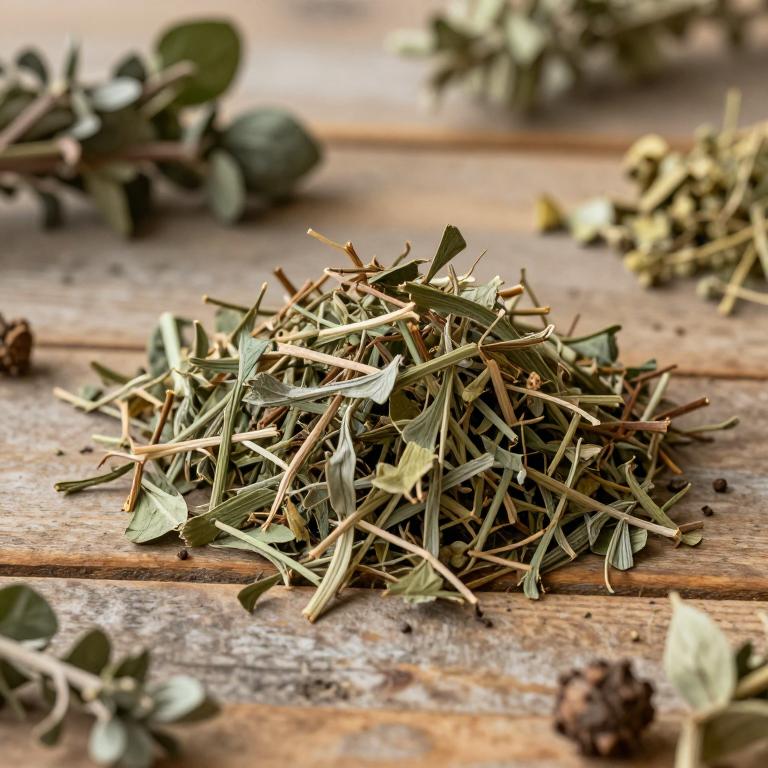
Names and Synonyms
Common Names
- Giant Fennel
- common giant-fennel
- giant-fennel
Scientific Names
Accepted name
Ferula communisRegional and Traditional Names
Spanish:
- Ferula nodiflora
- Ferula anatriches
- Peucedanum ferula
- Ferula abyssinica
- Bubon rigidior
- Ferula brevifolia
- Ferula communis var. anatriches
- Cañajelda
- Ferula montis-elgonis
- Ferula ferulago
- Ferula lobeliana
- Caña
- Cañaheja
- Caña del muermo
- Cañabeja
- Caña
- Caña del muermo
- Cañabeja
German:
- Riesenfenchel
- Gemeines Steckenkraut
- Gemeines Rutenkraut
- Gewöhnliches Steckenkraut
- Riesenfenchel
French:
- Férule commune
- Ferule commune
- Férule Commune
- Grande Férule
- Férule commune
- Grande Férule
- Ferule commune
Sources: Wikidata, Catalogue of Life
Taxonomical Classification
This plant belongs to the kingdom Plantae and is classified under the phylum Streptophyta and the class Equisetopsida. Within the subclass Magnoliidae, it falls under the order Apiales and the family Apiaceae. Finally, it is identified by its genus, Ferula.
| Rank | Classification |
|---|---|
| Kingdom | Plantae |
| Phylum | Streptophyta |
| Class | Equisetopsida |
| Subclass | Magnoliidae |
| Order | Apiales |
| Family | Apiaceae |
| Genus | Ferula |
Sources: The World Checklist of Vascular Plants (WCVP)
Distribution
This plant exhibits a specific range of occurrence across several distinct European regions. In Northern Europe, its presence is noted within Great Britain. Moving toward Southwestern Europe, it can be found inhabiting the Baleares islands. The species is also documented throughout the territory of France. Furthermore, its distribution extends to the Mediterranean islands of Corse and Sardegna.
| Region | Area |
|---|---|
| Northern Europe | Great Britain |
| Southwestern Europe | Baleares |
| Southwestern Europe | Corse |
| Southwestern Europe | France |
| Southwestern Europe | Sardegna |
| Southwestern Europe | Spain |
| Southeastern Europe | Albania |
| Southeastern Europe | Greece |
| Southeastern Europe | Italy |
| Southeastern Europe | Kriti |
Sources: The World Checklist of Vascular Plants (WCVP)
Botanical Identification
Ecology
The ecology of Ferula communis is characterized by its ability to thrive across a significant vertical gradient within its natural habitats. This species is distributed across diverse topographical landscapes, occupying an elevational range that spans from a minimum of 200 m AMSL to a maximum of 2000 m AMSL. This broad altitudinal tolerance allows the plant to adapt to various environmental conditions, ranging from lower-altitude warmer zones to higher-elevation montane environments. Such a wide range suggests a high degree of ecological plasticity, enabling the species to persist in diverse microclimates and soil compositions found within its established altitudinal limits.
- Elevational range max:
- 2000 m AMSL
- Elevational range min:
- 200 m AMSL
Life history
The life history of Ferula communis is characterized by its classification as a perennial plant, allowing it to persist through multiple growing seasons. Structurally, its growth habit is defined as a hemicryptophyte, a life form in which the perennating buds are located at the soil surface, protected by leaf litter or other organic matter during unfavorable periods. This specific developmental strategy enables the plant to survive environmental fluctuations by maintaining its vital structures close to the ground level, facilitating its long-term survival and periodic regrowth within its natural habitat.
- Life form :
- hemicryptophyte
- Lifecycle :
- perennial
Morphology
The morphology of Ferula communis is characterized by its growth form as a non-woody herb, manifesting as a self-supporting, independent organism that does not function as a parasite or an epiphyte, maintaining a strictly terrestrial existence. As a self-supporting herb, it lacks climbing tendencies such as liana or vine characteristics. The plant reaches a significant stature, with a height ranging from a minimum of 1 meter to a maximum of 3 meters. Its structural composition is entirely non-woody, consistent with its herbaceous classification.
- Aquatic :
- terrestrial
- Climber :
- self-supporting
- Epiphyte :
- terrestrial
- Growth form :
- herb
- Parasite :
- independent
- Plant height max:
- 3 m
- Plant height min:
- 1 m
- Woodiness :
- non-woody
Physiology
The physiological development of Ferula communis is characterized by a robust vegetative structure designed to maximize photosynthetic efficiency and nutrient absorption. A key component of its morphological physiology is the development of its foliage, which features a distinct linear leaf form. These leaves are capable of significant elongation, reaching a maximum leaf length of 80 cm, a trait that allows the plant to effectively compete for sunlight within its habitat. This substantial leaf surface area, coupled with the linear geometry, facilitates optimized gas exchange and transpiration processes essential for maintaining metabolic functions and supporting the plant's overall growth cycle.
- Leaf form :
- linear
- Leaf length max:
- 80 cm
Reproduction
The reproduction of Ferula communis is characterized by a distinct flowering period that typically begins in January and concludes in April, though the specific timing can be variable. The plant produces inflorescences in the form of an umbel, featuring flowers that are distinctly yellow in color. Following pollination, the plant develops fruits that generally measure between 1 cm and 1.5 cm in length. The resulting seeds exhibit a range of masses, with a minimum weight of approximately 0.00828 g, a maximum of 0.03081 g, and an average seed mass of about 0.021905556 g. Dispersal of these seeds is achieved through an anemochorous syndrome, meaning they are primarily dispersed by the wind.
- Dispersal syndrome :
- anemochorous
- Flower colour :
- yellow
- Flowering time :
- Jan
- Flowering time :
- Apr
- Fruit length max:
- 1.5 cm
- Fruit length min:
- 1 cm
- Inflorescence :
- umbel
- Seed mass max:
- 0.03081 g
- Seed mass mean:
- 0.021905556 g
- Seed mass min:
- 0.00828 g
Sources: Global Inventory of Floras and Traits (GIFT)
Plant Parts
Ferula communis has 2 reported plant parts identified across 4 scientific publications and several other databases that are studied for medicinal purposes. The most consistently reported plant part include root, stem.
| Plant part | Supporting sources | Consensus |
|---|---|---|
| Root | 3 supporting sources | ★★☆☆☆ |
| Stem | 1 supporting sources | ★☆☆☆☆ |
Root
- Ethiopian medical journal
- Fitoterapia
- Therapie
Stem
- Therapie
Chemicals
Ferula communis has 14 reported phytochemicals identified across 4 scientific publications and several other databases. The most consistently reported chemicals include Ferulenol, 4 Hydroxycoumarins, Cadinanetriol, Caryophyllene oxide, Chamazulene.
| Chemical | Supporting sources | Consensus |
|---|---|---|
| Ferulenol | 3 supporting sources | ★★☆☆☆ |
| 4 Hydroxycoumarins | 1 supporting sources | ★☆☆☆☆ |
| Cadinanetriol | 1 supporting sources | ★☆☆☆☆ |
| Caryophyllene oxide | 1 supporting sources | ★☆☆☆☆ |
| Chamazulene | 1 supporting sources | ★☆☆☆☆ |
| E-omega-benzoyloxyferulenol | 1 supporting sources | ★☆☆☆☆ |
| Ferprenin | 1 supporting sources | ★☆☆☆☆ |
| Flavonoid | 1 supporting sources | ★☆☆☆☆ |
| Flavonoids | 1 supporting sources | ★☆☆☆☆ |
| Saponins | 1 supporting sources | ★☆☆☆☆ |
Ferulenol
- Research communications in chemical pathology and pharmacology
- Phytotherapy research : PTR
- Journal of natural products
4 Hydroxycoumarins
- Therapie
Cadinanetriol
- Journal of natural products
Caryophyllene oxide
- Phytochemistry
Chamazulene
- Phytochemistry
E-omega-benzoyloxyferulenol
- Journal of natural products
Ferprenin
- Research communications in chemical pathology and pharmacology
Flavonoid
- Plants (Basel, Switzerland)
Flavonoids
- Journal of experimental pharmacology
Saponins
- Journal of experimental pharmacology
Activities
Ferula communis has 2 reported activities identified across 4 scientific publications and several other databases. The most consistently reported activities include Antibacterial, Anticoagulant.
| Activity | Supporting sources | Consensus |
|---|---|---|
| Antibacterial | 1 supporting sources | ★☆☆☆☆ |
| Anticoagulant | 1 supporting sources | ★☆☆☆☆ |
Antibacterial
- Journal of natural products
Anticoagulant
- Archives of toxicology. Supplement. = Archiv fur Toxikologie. Supplement
Conditions
Ferula communis has 3 reported investigations on conditions identified across 4 scientific publications and several other databases. The most consistently reported conditions include Leishmania donovani, Mycobacterium intracellulare, Streptococcus pneumoniae.
| Condition | Supporting sources | Consensus |
|---|---|---|
| Leishmania donovani | 1 supporting sources | ★☆☆☆☆ |
| Mycobacterium intracellulare | 1 supporting sources | ★☆☆☆☆ |
| Streptococcus pneumoniae | 1 supporting sources | ★☆☆☆☆ |
Leishmania donovani
- Journal of experimental pharmacology
Mycobacterium intracellulare
- Phytotherapy research : PTR
Streptococcus pneumoniae
- Ethiopian medical journal
Preparations
Ferula communis has 7 reported preparations identified across 4 scientific publications and several other databases. The most consistently reported preparations include 80% methanol crude extracts prepared from the roots, Eighty percent ethanol solubilized fractions, aqueous solubilized fractions, crude extracts, dry stems.
| Preparation | Supporting sources | Consensus |
|---|---|---|
| 80% methanol crude extracts prepared from the roots | 1 supporting sources | ★☆☆☆☆ |
| Eighty percent ethanol solubilized fractions | 1 supporting sources | ★☆☆☆☆ |
| Aqueous solubilized fractions | 1 supporting sources | ★☆☆☆☆ |
| Crude extracts | 1 supporting sources | ★☆☆☆☆ |
| Dry stems | 1 supporting sources | ★☆☆☆☆ |
| Hydro alcoholic solvent fractionates | 1 supporting sources | ★☆☆☆☆ |
| Roots | 1 supporting sources | ★☆☆☆☆ |
80% methanol crude extracts prepared from the roots
- Ethiopian medical journal
Eighty percent ethanol solubilized fractions
- Ethiopian medical journal
Aqueous solubilized fractions
- Ethiopian medical journal
Crude extracts
- Journal of experimental pharmacology
Dry stems
- Journal of ethnobiology and ethnomedicine
Hydro alcoholic solvent fractionates
- Ethiopian medical journal
Roots
- Fitoterapia