devil's-tongue cactus
Ferocactus latispinus · Accepted scientific name
Scientific literature: Very Sparse (9 studies) · ★☆☆☆☆
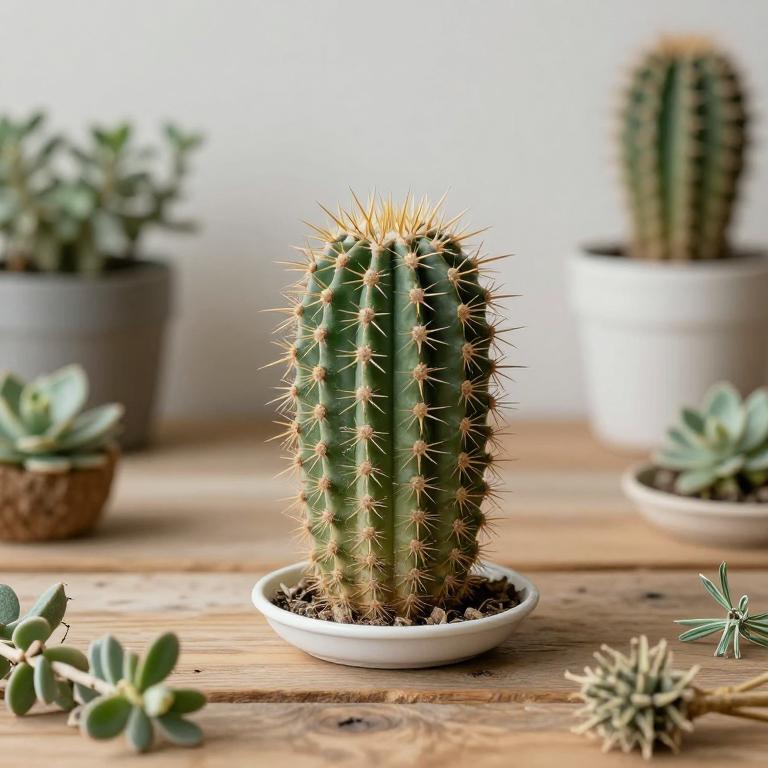
Devil's-tongue cactus, scientifically known as Ferocactus latispinus, is a rare succulent prized in traditional medicine for its potent bioactive compounds. Characterized by its distinctive broad spines, this resilient plant is utilized to treat inflammatory ailments and skin conditions, offering a unique intersection of botanical beauty and therapeutic potential.
- Family
- Cactaceae
- Native range
- Northern America
- Parts used
- Not available
- Common names
- Devil'S-Tongue Cactus · Devil'S Tongue Barrel Cactus
- Scientific synonyms
- Melocactus Latispinus · Mammillaria Latispina · 7 more
Names and Synonyms
Common Names
- devil's-tongue cactus
- Devil's Tongue Barrel Cactus
Scientific Names
Accepted name
Ferocactus latispinusSynonyms
- Melocactus latispinus
- Mammillaria latispina
- Bisnaga recurva subsp. latispina
- Echinocactus recurvus var. latispinus
- Echinocactus cornigerus var. latispinus
- Cactus latispinus
- Echinocactus latispinus
- Bisnaga latispina
- Ferocactus recurvus var. latispinus
Regional and Traditional Names
Spanish:
- Cactus recurvus
- Cactus nobilis
- Cactus latispinus
- Echinocactus spiralis
- Ferocactus nobilis
- Bisnaga cornigera
- Echinocactus cornigerus
- Echinocactus recurvus
- Ferocactus recurvus
- Bisnaga recurva
- pochas
- Biznaga ganchuda
- Biznaga manca caballos
German:
- Cactus latispinus
Sources: Wikidata, Catalogue of Life
Taxonomical Classification
This plant belongs to the kingdom Plantae and the phylum Streptophyta, situated within the class Equisetopsida and subclass Magnoliidae. It is further classified under the order Caryophyllales and the family Cactaceae. Within this hierarchy, its specific genus is identified as Ferocactus, leading to its species designation, Ferocactus latispinus.
| Rank | Classification |
|---|---|
| Kingdom | Plantae |
| Phylum | Streptophyta |
| Class | Equisetopsida |
| Subclass | Magnoliidae |
| Order | Caryophyllales |
| Family | Cactaceae |
| Genus | Ferocactus |
Sources: The World Checklist of Vascular Plants (WCVP)
Distribution
This plant, known as Ferocactus latispinus, exhibits a wide-ranging presence across several distinct regions of Mexico. Its distribution begins in the central parts of the country, specifically within Mexico Central. Moving toward the eastern coastlines, the species can also be found throughout Mexico Gulf. Additionally, the plant is documented inhabiting the landscapes of Mexico Northeast. Finally, its natural range extends into the arid terrains of Mexico Southwest.
| Region | Area |
|---|---|
| Mexico | Mexico Central |
| Mexico | Mexico Northeast |
| Mexico | Mexico Gulf |
| Mexico | Mexico Southwest |
Sources: The World Checklist of Vascular Plants (WCVP)
Botanical Identification
Reproduction
The reproduction of Ferocactus latispinus is characterized by the production of highly uniform, minute seeds that play a critical role in its dispersal and survival strategies. Analytical data regarding its seed characteristics reveals a remarkable level of consistency, with a recorded seed mass mean of 0.00025 g. This uniformity is absolute across the observed sample, as both the maximum and minimum seed mass values are identical at 0.00025 g. Such minimal and consistent seed mass suggests a reproductive strategy optimized for high-volume output, where lightweight seeds facilitate efficient movement through environmental vectors to colonize new habitats.
- Seed mass mean:
- 0.00025 g
Sources: Global Inventory of Floras and Traits (GIFT)
Chemicals
Ferocactus latispinus has 6 reported phytochemicals identified across 0 scientific publications and several other databases. The most consistently reported chemicals include CHLOROGENIC ACID, Diosmetin, Saponins, Tannins, gentisic acid.
| Chemical | Supporting sources | Consensus |
|---|---|---|
| CHLOROGENIC ACID | 1 supporting sources | ★☆☆☆☆ |
| Diosmetin | 1 supporting sources | ★☆☆☆☆ |
| Saponins | 1 supporting sources | ★☆☆☆☆ |
| Tannins | 1 supporting sources | ★☆☆☆☆ |
| gentisic acid | 1 supporting sources | ★☆☆☆☆ |
| nicotinic acid | 1 supporting sources | ★☆☆☆☆ |
CHLOROGENIC ACID
- Plants (Basel, Switzerland)
Diosmetin
- Plants (Basel, Switzerland)
Saponins
- Plants (Basel, Switzerland)
Tannins
- Plants (Basel, Switzerland)
gentisic acid
- Plants (Basel, Switzerland)
nicotinic acid
- Plants (Basel, Switzerland)
Activities
Ferocactus latispinus has 3 reported activities identified across 0 scientific publications and several other databases. The most consistently reported activities include Antimicrobial, Antioxidant, Cytotoxic.
| Activity | Supporting sources | Consensus |
|---|---|---|
| Antimicrobial | 1 supporting sources | ★☆☆☆☆ |
| Antioxidant | 1 supporting sources | ★☆☆☆☆ |
| Cytotoxic | 1 supporting sources | ★☆☆☆☆ |
Antimicrobial
- Plants (Basel, Switzerland)
Antioxidant
- Plants (Basel, Switzerland)
Cytotoxic
- Plants (Basel, Switzerland)