feijoa
Feijoa sellowiana · Accepted scientific name
Scientific literature: Extensive (186 studies) · ★★★★☆
Feijoa, scientifically known as Feijoa sellowiaana, is a versatile evergreen shrub prized for its aromatic fruit and medicinal potential. Traditionally used in folk medicine, its leaves and fruit offer antioxidant properties. Often valued in herbal remedies for digestive support and wellness, this plant remains a fascinating botanical treasure.
- Family
- Myrtaceae
- Native range
- Africa
- Parts used
- Fruit · Leaf
- Common names
- Guavasteen · Pineapple Guava
- Scientific synonyms
- Acca Sellowiana · Acca Sellowiana Var. Rugosa · 7 more
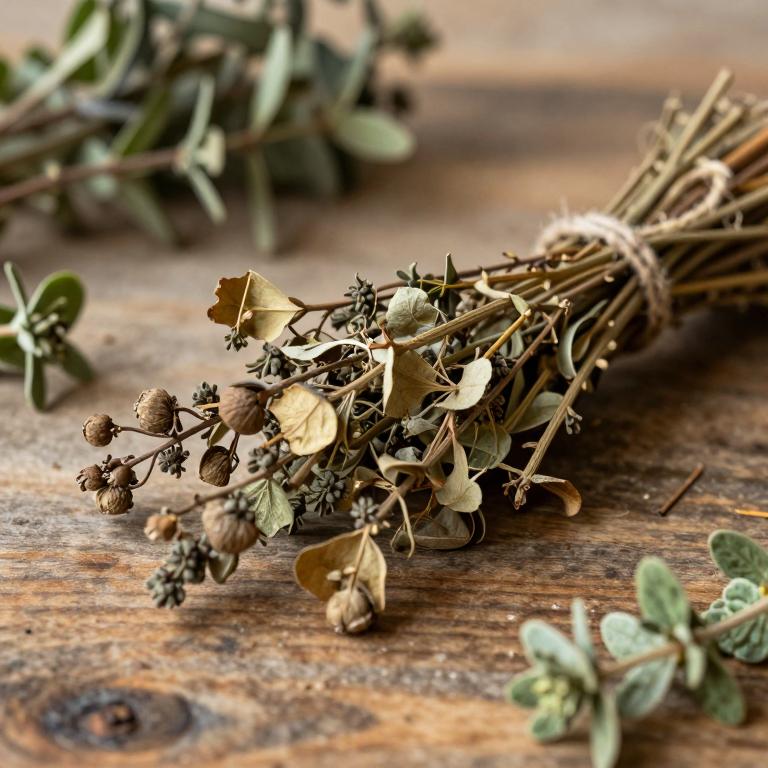
Names and Synonyms
Common Names
- Guavasteen
- Pineapple Guava
Scientific Names
Accepted name
Feijoa sellowianaSynonyms
- Acca sellowiana
- Acca sellowiana var. rugosa
- Feijoa coolidegii
- Feijoa obovata
- Feijoa schenckiana
- Feijoa sellowiana f. elongata
- Feijoa sellowiana var. rugosa
- Orthostemon obovatus
- Orthostemon sellowianus
Regional and Traditional Names
Spanish:
- Falso Guayabo
- Guayabo de Brasil
German:
- Ananas-Guave
- Feijoa
- Ananasguave
- Brasilianische Guave
French:
- Feijoa de Sellow
- Goyavier de Montevideo
- Goyavier du Brésil
Sources: Wikidata, Catalogue of Life
Taxonomical Classification
This plant, known scientifically as Feijoa sello вина, belongs to the kingdom Plantae and the phylum Streptophyta. Within the class Equisetopsida and subclass Magnoliidae, it is classified under the order Myrtales and the family Myrtaceae. It is further distinguished by its placement within the genus Feijoa.
| Rank | Classification |
|---|---|
| Kingdom | Plantae |
| Phylum | Streptophyta |
| Class | Equisetopsida |
| Subclass | Magnoliidae |
| Order | Myrtales |
| Family | Myrtaceae |
| Genus | Feijoa |
Sources: The World Checklist of Vascular Plants (WCVP)
Distribution
This plant exhibits a unique and highly fragmented geographical distribution across two distinct global regions. In East Tropical Africa, it can be found growing within the borders of Kenya, Tanzania, and Uganda. Additionally, the species has established a presence within the islands of New Zealand. Within that country, it is distributed across both New Zealand North and New Zealand South. Such a wide separation suggests a very specialized ecological range spanning multiple continents.
| Region | Area |
|---|---|
| East Tropical Africa | Kenya |
| East Tropical Africa | Tanzania |
| East Tropical Africa | Uganda |
| New Zealand | New Zealand North |
| New Zealand | New Zealand South |
| Central America | Costa Rica |
| Western South America | Colombia |
| Brazil | Brazil Southeast |
| Brazil | Brazil South |
| Southern South America | Argentina Northeast |
Sources: The World Checklist of Vascular Plants (WCVP)
Botanical Identification
Ecology
The ecology of Feijoa sellowiaana is defined by its presence in specific Brazilian biomes, primarily occurring within the Campo Limpo and the Floresta Estacional Semi-decidual habitats. This species is adapted to a diverse altitudinal gradient, occupying environments ranging from an elevation of 500 m AMSL to a maximum of 2900 m AMSL.
- Elevational range max:
- 2900 m AMSL
- Elevational range min:
- 500 m AMSL
- Habitat :
- Campo Limpo, Floresta Estacional Semidecidual
Life history
The life history of Feijoa sellowiaana is characterized by its status as a perennial organism, ensuring its persistence across multiple growing seasons. As a phanerophyte, the plant maintains its woody stems well above the ground level, a structural adaptation that supports its complex growth habit. Despite its robust stature, it can also exhibit characteristics of a nanophanerophyte depending on the specific environmental conditions and growth stage. Throughout its life cycle, the species maintains an evergreen deciduousness, meaning it retains its foliage year-round, providing continuous photosynthetic activity and structural stability within its ecological niche.
- Deciduousness :
- evergreen
- Life form :
- nanophanerophyte
- Life form :
- phanerophyte
- Lifecycle :
- perennial
Morphology
The morphology of Feijoa sellowiana is characterized by a woody growth form, specifically developing as a shrub. It is a terrestrial, self-supporting plant that does not function as a climber or a vine, nor does it exhibit any parasitic behavior, remaining entirely independent in its growth. In terms of stature, the plant typically reaches an average height of 3 m, though it can grow to a maximum height of 4 m.
- Aquatic :
- terrestrial
- Climber :
- self-supporting
- Epiphyte :
- terrestrial
- Growth form :
- shrub
- Parasite :
- independent
- Plant height max:
- 4 m
- Plant height mean:
- 3 m
- Woodiness :
- woody
Physiology
The physiology of Feijoa sellowiaana is characterized by its specific metabolic and nutritional processes, most notably its reliance on the C3 photosynthetic pathway for carbon fixation. This pathway involves the direct carboxylation of ribulose-1,5-bisphosphate by the enzyme RuBisCO, a process typical of many woody evergreen species that thrive in temperate to subtropical environments. In terms of nutrient cycling and symbiotic relationships, the plant does not function as a nitrogen fixer, meaning it lacks the specialized root nodules containing diazotrophic bacteria required to convert atmospheric nitrogen into bioavailable forms; instead, it depends on the uptake of nitrates and ammonium from the soil through its root system.
- Nitrogen fixer :
- no
- Photosynthetic pathway :
- C3
Reproduction
The reproduction of Feijoa sellowiana is characterized by a biotic pollination syndrome, relying heavily on animal intermediaries rather than abiotic factors. Specifically, the plant utilizes insect pollination, with bees serving as a primary pollinator type to facilitate the transfer of pollen. A notable reproductive trait of this species is that self-fertilization is absent, necessitating cross-pollination to ensure genetic diversity and successful seed set. The resulting seeds are notably small and uniform in size, with a recorded seed mass mean, maximum, and minimum all measuring 0.00174 g, indicating a highly consistent seed production profile.
- Pollination syndrome :
- insect
- Pollination syndrome :
- bee
- Pollination syndrome :
- biotic
- Seed mass mean:
- 0.00174 g
- Self fertilization :
- absent
Sources: Global Inventory of Floras and Traits (GIFT)
Plant Parts
Feijoa sellowiana has 3 reported plant parts identified across 4 scientific publications and several other databases that are studied for medicinal purposes. The most consistently reported plant part include fruit, leaf, seed.
| Plant part | Supporting sources | Consensus |
|---|---|---|
| Fruit | 2 supporting sources | ★☆☆☆☆ |
| Leaf | 1 supporting sources | ★☆☆☆☆ |
| Seed | 1 supporting sources | ★☆☆☆☆ |
Fruit
- Anti-cancer agents in medicinal chemistry
- Acta parasitologica
Leaf
- Heliyon
Seed
- Heliyon
Chemicals
Feijoa sellowiana has 17 reported phytochemicals identified across 4 scientific publications and several other databases. The most consistently reported chemicals include Ash, Benzyl adenine, CALCIUM, FAT, FLAVONE.
| Chemical | Supporting sources | Consensus |
|---|---|---|
| Ash | 1 supporting sources | ★☆☆☆☆ |
| Benzyl adenine | 1 supporting sources | ★☆☆☆☆ |
| CALCIUM | 1 supporting sources | ★☆☆☆☆ |
| FAT | 1 supporting sources | ★☆☆☆☆ |
| FLAVONE | 1 supporting sources | ★☆☆☆☆ |
| Flavonoid | 1 supporting sources | ★☆☆☆☆ |
| IRON | 1 supporting sources | ★☆☆☆☆ |
| Iodides | 1 supporting sources | ★☆☆☆☆ |
| MAGNESIUM | 1 supporting sources | ★☆☆☆☆ |
| PHOSPHORUS | 1 supporting sources | ★☆☆☆☆ |
Ash
- Dr. Duke
Benzyl adenine
- Heliyon
CALCIUM
- Dr. Duke
FAT
- Dr. Duke
FLAVONE
- The international journal of biochemistry & cell biology
Flavonoid
- Iranian journal of pharmaceutical research : IJPR
IRON
- Dr. Duke
Iodides
- Dr. Duke
MAGNESIUM
- Dr. Duke
PHOSPHORUS
- Dr. Duke
Activities
Feijoa sellowiana has 158 reported activities identified across 4 scientific publications and several other databases. The most consistently reported activities include Acidulant, Aldose-Reductase-Inhibitor, Analgesic, Angiotensin-Receptor-Blocker, AntiAGE.
| Activity | Supporting sources | Consensus |
|---|---|---|
| Acidulant | 1 supporting sources | ★☆☆☆☆ |
| Aldose-Reductase-Inhibitor | 1 supporting sources | ★☆☆☆☆ |
| Analgesic | 1 supporting sources | ★☆☆☆☆ |
| Angiotensin-Receptor-Blocker | 1 supporting sources | ★☆☆☆☆ |
| AntiAGE | 1 supporting sources | ★☆☆☆☆ |
| AntiCFS | 1 supporting sources | ★☆☆☆☆ |
| AntiCTS | 1 supporting sources | ★☆☆☆☆ |
| AntiCrohn's | 1 supporting sources | ★☆☆☆☆ |
| AntiLyme | 1 supporting sources | ★☆☆☆☆ |
| AntiMS | 1 supporting sources | ★☆☆☆☆ |
Acidulant
- Dr. Duke
Aldose-Reductase-Inhibitor
- Dr. Duke
Analgesic
- Dr. Duke
Angiotensin-Receptor-Blocker
- Dr. Duke
AntiAGE
- Dr. Duke
AntiCFS
- Dr. Duke
AntiCTS
- Dr. Duke
AntiCrohn's
- Dr. Duke
AntiLyme
- Dr. Duke
AntiMS
- Dr. Duke
Conditions
Feijoa sellowiana has 5 reported investigations on conditions identified across 4 scientific publications and several other databases. The most consistently reported conditions include Blood clotting, cancer, myeloid leukemia, platelet aggregation, skin diseases.
| Condition | Supporting sources | Consensus |
|---|---|---|
| Blood clotting | 1 supporting sources | ★☆☆☆☆ |
| Cancer | 1 supporting sources | ★☆☆☆☆ |
| Myeloid leukemia | 1 supporting sources | ★☆☆☆☆ |
| Platelet aggregation | 1 supporting sources | ★☆☆☆☆ |
| Skin diseases | 1 supporting sources | ★☆☆☆☆ |
Blood clotting
- Heliyon
Cancer
- Iranian journal of pharmaceutical research : IJPR
Myeloid leukemia
- The international journal of biochemistry & cell biology
Platelet aggregation
- Heliyon
Skin diseases
- Iranian journal of pharmaceutical research : IJPR
Preparations
Feijoa sellowiana has 6 reported preparations identified across 4 scientific publications and several other databases. The most consistently reported preparations include Ag-NPs-F. sellowiana, ethanol 70% extract, fruit extract, methanilic Feijoa sellowiana fruits, methanolic extract.
| Preparation | Supporting sources | Consensus |
|---|---|---|
| Ag-nps-f. sellowiana | 1 supporting sources | ★☆☆☆☆ |
| Ethanol 70% extract | 1 supporting sources | ★☆☆☆☆ |
| Fruit extract | 1 supporting sources | ★☆☆☆☆ |
| Methanilic feijoa sellowiana fruits | 1 supporting sources | ★☆☆☆☆ |
| Methanolic extract | 1 supporting sources | ★☆☆☆☆ |
| Polar and non-polar extracts | 1 supporting sources | ★☆☆☆☆ |
Ag-nps-f. sellowiana
- Acta parasitologica
Ethanol 70% extract
- Heliyon
Fruit extract
- Anti-cancer agents in medicinal chemistry
Methanilic feijoa sellowiana fruits
- Iranian journal of pharmaceutical research : IJPR
Methanolic extract
- Iranian journal of pharmaceutical research : IJPR
Polar and non-polar extracts
- Heliyon