copse bindweed
Fallopia dumetorum · Accepted scientific name
Scientific literature: Very Sparse (1 studies) · ★☆☆☆☆
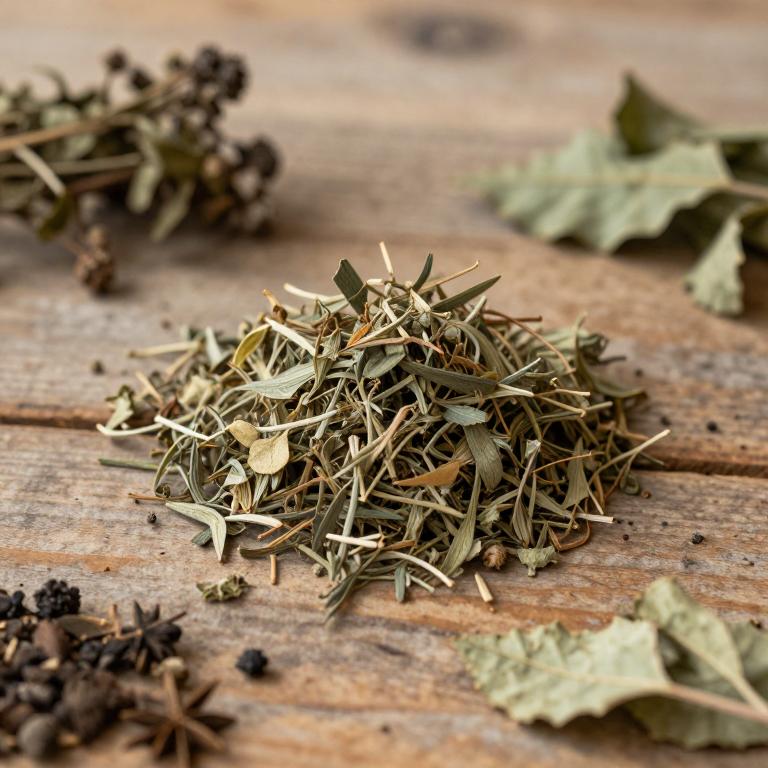
Copse bindweed, scientifically known as Fallopia dumetorum, is a resilient herbaceous perennial valued in traditional medicine. Often found in disturbed habitats, this plant contains bioactive compounds studied for their potential anti-inflammatory and antioxidant properties. Understanding its botanical characteristics and therapeutic applications offers insight into its significant ethnobotanical importance.
Names and Synonyms
Common Names
- copse bindweed
- hedge bindweed
- hedge buckwheat
- thicket bindweed
- Copse-Bindweed
- desert knotgrass
Scientific Names
Accepted name
Fallopia dumetorumSynonyms
- Polygonum scandens var. dumetorum
- Reynoutria scandens var. dumetorum
- Polygonum dumetorum
- Tiniaria dumetorum
- Bilderdykia dumetorum
- Helxine dumetorum
- Fagopyrum dumetorum
Regional and Traditional Names
Spanish:
- Enredadera de bosque
German:
- Hecken-Flügelknöterich
- Heckenknöterich
- Hechen-Flügelknöterich
- Hecken-Knöterich
- Hecken-Windenknöterich
- Hecken-Windenknoeterich
- Heckenknöterich
French:
- renouée des haies
- grande vrillée
- renouée des haies
- vrillée des buissons
- Vrillee des buissons
Sources: Wikidata, Catalogue of Life
Taxonomical Classification
This plant belongs to the kingdom Plantae and is classified under the phylum Streptophyta within the class Equisetopsida. It is further organized into the subclass Magnoliidae and the order Caryophyllales. Finally, it is a member of the family Polygonaceae and is placed within the genus Fallopia.
| Rank | Classification |
|---|---|
| Kingdom | Plantae |
| Phylum | Streptophyta |
| Class | Equisetopsida |
| Subclass | Magnoliidae |
| Order | Caryophyllales |
| Family | Polygonaceae |
| Genus | Fallopia |
Sources: The World Checklist of Vascular Plants (WCVP)
Distribution
This plant, known scientifically as Fallopia dumetorum, exhibits a specific range across Northern Europe. Its presence is documented in the country of Denmark. Furthermore, it can be found within the borders of Finland and Norway. The distribution also extends to the regions of Sweden and Great Britain. Consequently, these five nations represent its primary geographical footprint in the north.
| Region | Area |
|---|---|
| Northern Europe | Denmark |
| Northern Europe | Finland |
| Northern Europe | Great Britain |
| Northern Europe | Norway |
| Northern Europe | Sweden |
| Middle Europe | Austria |
| Middle Europe | Belgium |
| Middle Europe | Czechia-Slovakia |
| Middle Europe | Germany |
| Middle Europe | Hungary |
Sources: The World Checklist of Vascular Plants (WCVP)
Botanical Identification
Ecology
The ecology of Fallopia dumetorum is characterized by its adaptability to diverse environmental conditions, primarily flourishing within forest ecosystems, along riverbanks, and in sandy substrates. This species exhibits a broad altitudinal distribution, spanning from lowlands to high-altitude regions. Its elevational range begins as low as 80 m AMSL and extends to a maximum of 2400 m AMSL, with a mean elevation of approximately 990 m AMSL. This wide vertical range allows the plant to occupy various ecological niches, from riparian zones to montane forest environments.
- Elevational range max:
- 2400 m AMSL
- Elevational range mean:
- 990 m AMSL
- Elevational range min:
- 80 m AMSL
- Habitat :
- forest, rivers, sand
Life history
The life history of Fallopia dumetorum is characterized by a lifecycle that is classified as annual, meaning it completes its entire biological development from germination to seed production within a single growing season. As a therophyte, the plant survives the unfavorable seasons in the form of seeds, which remain dormant until environmental conditions become suitable for regrowth. This life strategy is closely linked to its deciduous nature, as the plant sheds its foliage as part of its seasonal cycle. Its structural growth pattern is defined by its status as a therophyte, emphasizing a rapid developmental strategy focused on quick maturation and efficient seed dispersal.
- Deciduousness :
- deciduous
- Life form :
- therophyte
- Lifecycle :
- annual
Morphology
The morphology of Fallopia dumetorum is characterized by its growth form as a non-woody herb and forb. It functions as an independent plant, neither acting as a parasite nor as an epiphyte, maintaining a terrestrial habitat. The plant exhibits climbing capabilities, manifesting as a vine that can also act as a self-supporting structure. In terms of stature, its height is quite variable, ranging from a minimum of 0.2 m to a maximum of 3 m, with an average plant height of approximately 1.875 m.
- Aquatic :
- terrestrial
- Climber :
- vine
- Climber :
- self-supporting
- Epiphyte :
- terrestrial
- Growth form :
- herb
- Growth form :
- forb
- Parasite :
- independent
- Plant height max:
- 3 m
- Plant height mean:
- 1.875 m
- Plant height min:
- 0.2 m
- Woodiness :
- non-woody
Physiology
The physiology of Fallopia dumetorum is characterized by a C3 photosynthetic pathway, indicating its reliance on the standard carbon fixation process typical of many temperate species. As a non-carnivorous plant, it derives all its necessary nutrients through soil absorption and photosynthesis rather than capturing prey. The leaf morphology shows significant variability, with leaf lengths ranging from a minimum of 3 cm to a maximum of 6 cm, maintaining an average length of 4.5 cm. The leaf width is similarly variable, spanning from a minimum of 1.5 cm to a maximum of 4 cm, with a calculated mean width of 2.75 cm. These dimensions contribute to an average leaf size of approximately 15.30477 cm². Furthermore, the plant exhibits a mean Specific Leaf Area (SLA) of 333.73 cm²/g, a metric that reflects its leaf mass per area and provides insight into its resource acquisition strategy and leaf thickness.
- Carnivory :
- non-carnivorous
- Leaf length max:
- 6 cm
- Leaf length mean:
- 4.5 cm
- Leaf length min:
- 3 cm
- Leaf size mean:
- 15.30477 cm²
- Leaf width max:
- 4 cm
- Leaf width mean:
- 2.75 cm
- Leaf width min:
- 1.5 cm
- Photosynthetic pathway :
- C3
- Specific Leaf Area (SLA) mean:
- 333.73 cm²/g
Reproduction
The reproduction of Fallopia dumetorum is characterized by a biotic pollination process, primarily driven by an insect pollination syndrome. The flowering period typically commences in July and extends through October. This species is capable of self-fertilization, contributing to its reproductive success. The resulting fruits are classified as dry achenes that are indehiscent in nature. These fruits vary in size, with a mean length of 0.35 cm (ranging from 0.3 cm to 0.4 cm). The seeds contained within are quite small, possessing a mean mass of approximately 0.002946 g (with a range between 0.0019 g and 0.003694 g) and a consistent volume of 3.3 mm³. Regarding dispersal, the plant utilizes zoochorous strategies, specifically exhibiting myrmecochorous tendencies, where seeds are dispersed by ants. Notably, asexual reproduction is absent in this species, making sexual reproduction through seed production the primary method of propagation.
- Dehiscence :
- indehiscent
- Dispersal syndrome :
- zoochorous
- Dispersal syndrome :
- myrmecochorous
- Flowering time :
- Jul
- Flowering time :
- Oct
- Fruit dryness :
- dry
- Fruit length max:
- 0.4 cm
- Fruit length mean:
- 0.35 cm
- Fruit length min:
- 0.3 cm
- Fruit type :
- achene
- Pollination syndrome :
- insect
- Pollination syndrome :
- biotic
- Reproduction asexual :
- absent
- Seed mass max:
- 0.003694 g
- Seed mass mean:
- 0.002946 g
- Seed mass min:
- 0.0019 g
- Seed volume max:
- 3.3 mm³
- Self fertilization :
- present
Sources: Global Inventory of Floras and Traits (GIFT)
Chemicals
Fallopia dumetorum has 1 reported phytochemicals identified across 0 scientific publications and several other databases. The most consistently reported chemicals include emodin.
| Chemical | Supporting sources | Consensus |
|---|---|---|
| emodin | 1 supporting sources | ★☆☆☆☆ |
emodin
- Journal of ethnopharmacology
Preparations
Fallopia dumetorum has 1 reported preparations identified across 0 scientific publications and several other databases. The most consistently reported preparations include methanolic extract.
| Preparation | Supporting sources | Consensus |
|---|---|---|
| Methanolic extract | 1 supporting sources | ★☆☆☆☆ |
Methanolic extract
- Journal of ethnopharmacology