Longleaf
Falcaria vulgaris · Accepted scientific name
Scientific literature: Very Sparse (35 studies) · ★☆☆☆☆
Longleaf, scientifically known as Falcaria vulgaris, is a distinctive perennial herb belonging to the Brassicaceae family. Often found in rocky, coastal habitats, it is characterized by its deeply lobed, long leaves and bright yellow flowers. Historically used in traditional medicine, this resilient plant offers unique botanical and therapeutic interest.
- Family
- Apiaceae
- Native range
- Europe
- Parts used
- Leaf
- Common names
- Longleaf
- Scientific synonyms
- Prionitis Falcaria · Seseli Falcaria · 19 more
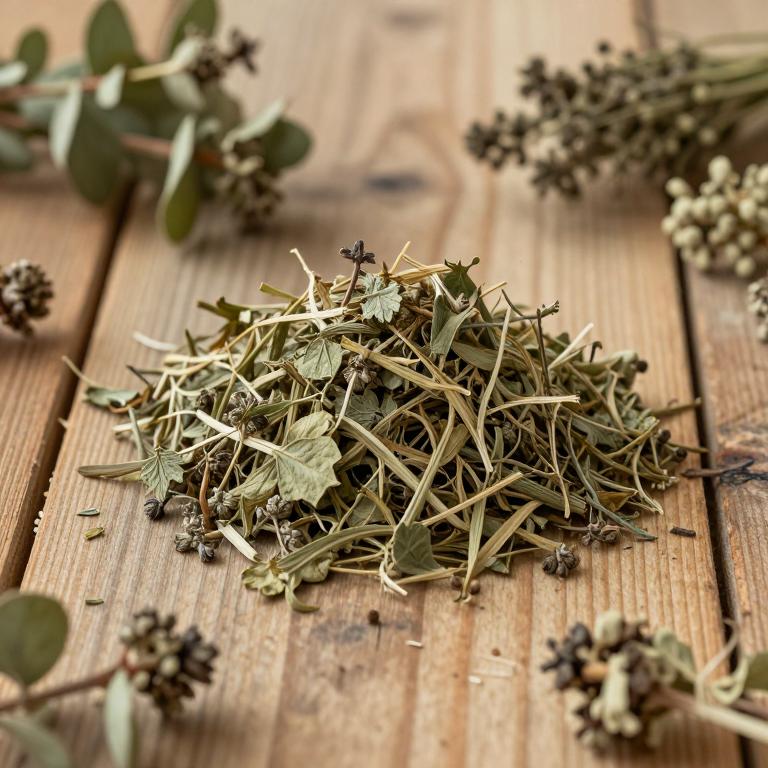
Names and Synonyms
Common Names
- Longleaf
Scientific Names
Accepted name
Falcaria vulgarisSynonyms
- Prionitis falcaria
- Seseli falcaria
- Selinum falcaria
- Bunium falcaria
- Carum falcaria
- Critamus agrestis
- Critamus falcaria
- Drepanophyllum falcaria
- Falcaria sioides
- Falcaria neglectissima
- Falcaria glauca
- Falcaria serrata
- Drepanophyllum agreste
- Drepanophyllum sioides
- Sium falcatum
- Sium falcaria
- Prionitis falcata
- Falcaria agrestis
- Helosciadium falcaria
- Falcaria persica
- Falcaria rivini
Regional and Traditional Names
German:
- Gemeine Sichelmöhre
- Sicheldolde
- Sichelmöhre
- Gewöhnliche Sichelmöhre
- Gewöhnliche Sichelmöhre
- Sicheldolde
- Gemeine Sichelmöhre
French:
- falcaire
- Falcaire commune
- Falcaire de Rivin
Sources: Wikidata, Catalogue of Life
Taxonomical Classification
This plant belongs to the kingdom Plantae and the phylum Streptophyta. It is classified within the class Equisetopsida and the subclass Magnoliidae, falling under the order Apiales. Finally, it is a member of the family Apiaceae and the genus Falcaria.
| Rank | Classification |
|---|---|
| Kingdom | Plantae |
| Phylum | Streptophyta |
| Class | Equisetopsida |
| Subclass | Magnoliidae |
| Order | Apiales |
| Family | Apiaceae |
| Genus | Falcaria |
Sources: The World Checklist of Vascular Plants (WCVP)
Distribution
This plant exhibits a broad distribution across various regions of the European continent. In Northern Europe, its presence is well-documented in Denmark and Sweden. It can also be found growing throughout the islands of Great Britain and Ireland. Moving toward the center of the continent, the species is located within Middle Europe. Specifically, it occupies parts of Austria as part of its natural range.
| Region | Area |
|---|---|
| Northern Europe | Denmark |
| Northern Europe | Great Britain |
| Northern Europe | Ireland |
| Northern Europe | Sweden |
| Middle Europe | Austria |
| Middle Europe | Belgium |
| Middle Europe | Czechia-Slovakia |
| Middle Europe | Germany |
| Middle Europe | Hungary |
| Middle Europe | Netherlands |
Sources: The World Checklist of Vascular Plants (WCVP)
Botanical Identification
Ecology
The ecology of Falcaria vulgaris is characterized by its adaptability to diverse landscapes, frequently colonizing habitats such as crop fields, forest edges, meadows, roadsides, shrubberies, and steppe environments. This species demonstrates a specific preference for certain altitudinal zones, occupying an elevational range that spans from a minimum of 1600 m AMSL to a maximum of 1800 m AMSL.
- Elevational range max:
- 1800 m AMSL
- Elevational range min:
- 1600 m AMSL
- Habitat :
- crop fields, forest edges, meadows, roadsides, shrubberies, steppe
Life history
The life history of Falcaria vulgaris is characterized by its status as a perennial plant, allowing it to persist through multiple growing seasons. Functioning as a hemicryptophyte, the plant protects its overwintering buds at the soil surface, a strategy that supports its growth patterns across various environments. It exhibits a deciduous nature, shedding its foliage as part of its seasonal cycle. This combination of a perennial lifecycle and a hemicryptophyte life form enables the species to establish a stable presence in its habitat while responding to seasonal changes through its deciduous habit.
- Deciduousness :
- deciduous
- Life form :
- hemicryptophyte
- Lifecycle :
- perennial
Morphology
The morphology of Falcaria vulgaris is characterized by its growth form as a non-woody herb and forb, which functions as a self-supporting plant rather than a climber or vine. This independent species is strictly terrestrial in its habitat, lacking any aquatic, semiaquatic, or epiphytic tendencies. In terms of stature, the plant exhibits a moderate height, typically ranging from a minimum of 0.3 m to a maximum of 0.9 m, with an average plant height of approximately 0.425 m.
- Aquatic :
- terrestrial
- Climber :
- self-supporting
- Epiphyte :
- terrestrial
- Growth form :
- herb
- Growth form :
- forb
- Parasite :
- independent
- Plant height max:
- 0.9 m
- Plant height mean:
- 0.425 m
- Plant height min:
- 0.3 m
- Woodiness :
- non-woody
Physiology
The physiology of Falcaria vulgaris is characterized by a C3 photosynthetic pathway, which dictates its carbon fixation processes and metabolic efficiency in temperate environments. The plant is strictly non-carnivorous, relying entirely on soil-derived nutrients rather than the digestion of organic matter for nitrogen and phosphorus. Its leaf morphology reflects specific resource allocation strategies, exhibiting a mean leaf size of approximately 65.03 cm². Furthermore, the plant maintains a mean Specific Leaf Area (SLA) of 130.37 cm²/g, a metric that provides insight into its leaf thickness and the investment of biomass relative to its photosynthetic surface area.
- Carnivory :
- non-carnivorous
- Leaf size mean:
- 65.03125 cm²
- Photosynthetic pathway :
- C3
- Specific Leaf Area (SLA) mean:
- 130.37 cm²/g
Reproduction
The reproduction of Falcaria vulgaris is primarily a sexual process, as asexual reproduction is absent in this species. The flowering period is relatively concentrated, typically beginning in July and concluding in August. During this time, the plant utilizes a biotic pollination syndrome, specifically relying on insects to facilitate the transfer of pollen. Following successful pollination, the plant produces seeds that exhibit a small mass, with a minimum value of 0.00056 g, a mean mass of approximately 0.0009366665 g, and a maximum mass of 0.00157 g. These seeds are dispersed through an anemochorous syndrome, meaning they are spread by the wind. Furthermore, the species possesses the capability for self-fertilization, ensuring reproductive success even under certain environmental constraints.
- Dispersal syndrome :
- anemochorous
- Flowering time :
- Jul
- Flowering time :
- Aug
- Pollination syndrome :
- insect
- Pollination syndrome :
- biotic
- Reproduction asexual :
- absent
- Seed mass max:
- 0.00157 g
- Seed mass mean:
- 0.0009366665 g
- Seed mass min:
- 0.00056 g
- Self fertilization :
- present
Sources: Global Inventory of Floras and Traits (GIFT)
Plant Parts
Falcaria vulgaris has 1 reported plant parts identified across 1 scientific publications and several other databases that are studied for medicinal purposes. The most consistently reported plant part include leaf.
| Plant part | Supporting sources | Consensus |
|---|---|---|
| Leaf | 1 supporting sources | ★☆☆☆☆ |
Leaf
- Journal of photochemistry and photobiology. B, Biology
Chemicals
Falcaria vulgaris has 15 reported phytochemicals identified across 1 scientific publications and several other databases. The most consistently reported chemicals include CARVACROL, LIMONENE, 1,8-Cineole, 3,4-Dihydroxyphenylpropionic acid, 4-Methylcatechol.
| Chemical | Supporting sources | Consensus |
|---|---|---|
| CARVACROL | 2 supporting sources | ★☆☆☆☆ |
| LIMONENE | 2 supporting sources | ★☆☆☆☆ |
| 1,8-Cineole | 1 supporting sources | ★☆☆☆☆ |
| 3,4-Dihydroxyphenylpropionic acid | 1 supporting sources | ★☆☆☆☆ |
| 4-Methylcatechol | 1 supporting sources | ★☆☆☆☆ |
| Flavonoid | 1 supporting sources | ★☆☆☆☆ |
| Germacrene D | 1 supporting sources | ★☆☆☆☆ |
| Saponins | 1 supporting sources | ★☆☆☆☆ |
| Sodium metabisulphite | 1 supporting sources | ★☆☆☆☆ |
| Spathulenol | 1 supporting sources | ★☆☆☆☆ |
CARVACROL
- Avicenna journal of phytomedicine
- Food chemistry
LIMONENE
- Avicenna journal of phytomedicine
- Natural product research
1,8-Cineole
- Natural product research
3,4-Dihydroxyphenylpropionic acid
- Molecules (Basel, Switzerland)
4-Methylcatechol
- Molecules (Basel, Switzerland)
Flavonoid
- PloS one
Germacrene D
- Natural product research
Saponins
- Avicenna journal of phytomedicine
Sodium metabisulphite
- Molecules (Basel, Switzerland)
Spathulenol
- Avicenna journal of phytomedicine
Activities
Falcaria vulgaris has 5 reported activities identified across 1 scientific publications and several other databases. The most consistently reported activities include Antioxidant, Antibacterial, Anticancer, Antifungal, Antimicrobial.
| Activity | Supporting sources | Consensus |
|---|---|---|
| Antioxidant | 3 supporting sources | ★★☆☆☆ |
| Antibacterial | 1 supporting sources | ★☆☆☆☆ |
| Anticancer | 1 supporting sources | ★☆☆☆☆ |
| Antifungal | 1 supporting sources | ★☆☆☆☆ |
| Antimicrobial | 1 supporting sources | ★☆☆☆☆ |
Antioxidant
- PloS one
- Avicenna journal of phytomedicine
- Journal of photochemistry and photobiology. B, Biology
Antibacterial
- Journal of photochemistry and photobiology. B, Biology
Anticancer
- PloS one
Antifungal
- Journal of photochemistry and photobiology. B, Biology
Antimicrobial
- Avicenna journal of phytomedicine
Conditions
Falcaria vulgaris has 6 reported investigations on conditions identified across 1 scientific publications and several other databases. The most consistently reported conditions include breast cancer, antioxidant activity, cancer, gastrointestinal disorders, liver diseases.
| Condition | Supporting sources | Consensus |
|---|---|---|
| Breast cancer | 2 supporting sources | ★☆☆☆☆ |
| Antioxidant activity | 1 supporting sources | ★☆☆☆☆ |
| Cancer | 1 supporting sources | ★☆☆☆☆ |
| Gastrointestinal disorders | 1 supporting sources | ★☆☆☆☆ |
| Liver diseases | 1 supporting sources | ★☆☆☆☆ |
| Skin ulcers | 1 supporting sources | ★☆☆☆☆ |
Breast cancer
- PloS one
- Journal of ethnopharmacology
Antioxidant activity
- Food chemistry
Cancer
- Journal of ethnopharmacology
Gastrointestinal disorders
- Journal of ethnopharmacology
Liver diseases
- Avicenna journal of phytomedicine
Skin ulcers
- Journal of ethnopharmacology
Preparations
Falcaria vulgaris has 3 reported preparations identified across 1 scientific publications and several other databases. The most consistently reported preparations include F. vulgaris extracts, hydroalcoholic extract, methanolic-water extracts.
| Preparation | Supporting sources | Consensus |
|---|---|---|
| F. vulgaris extracts | 1 supporting sources | ★☆☆☆☆ |
| Hydroalcoholic extract | 1 supporting sources | ★☆☆☆☆ |
| Methanolic-water extracts | 1 supporting sources | ★☆☆☆☆ |
F. vulgaris extracts
- Journal of ethnopharmacology
Hydroalcoholic extract
- Avicenna journal of phytomedicine
Methanolic-water extracts
- Food chemistry