Ana tree
Faidherbia albida · Accepted scientific name
Scientific literature: Very Sparse (20 studies) · ★☆☆☆☆
Ana tree, scientifically known as Faidherbia albida, is a versatile medicinal plant prized for its diverse therapeutic properties. Renowned in traditional medicine, its various parts are utilized to treat diverse ailments, ranging from skin infections to digestive issues. This resilient species offers significant potential for modern pharmacological research and development.
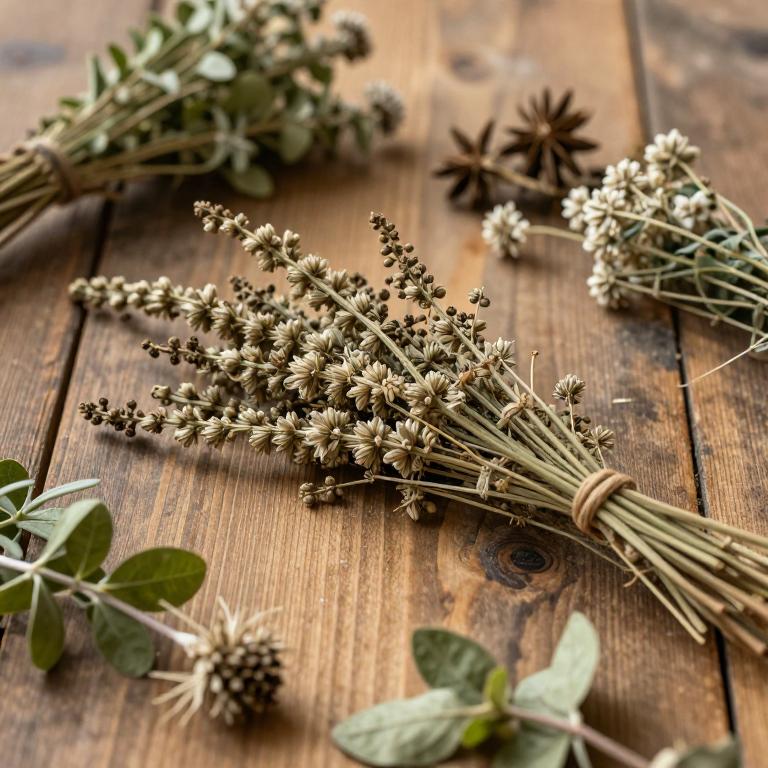
Names and Synonyms
Common Names
- anatree
- musangu tree
- whitethorn
- winterthorn
- Albida
- Apple-Ring Acacia
- Apple-Ring Thorntree
- Livingstone's Trees
- River thorn
- White Monkey Thorn
- White Monkey-Thorn
- Winter-Thorn
- applering acacia
Scientific Names
Accepted name
Faidherbia albidaSynonyms
- Acacia albida var. microfoliolata
- Acacia mossambicensis
- Acacia saccharata
- Acacia selenicarpa
- Acacia gyrocarpa
- Prosopis kirkii
- Faidherbia albida var. glabra
- Faidherbia albida var. pseudoglabra
- Acacia albida var. senegalensis
- Acacia albida var. variofoliolata
Regional and Traditional Names
Spanish:
- Acacia albida
- Espina de invierno
- espina de invierno
German:
- Anabaum
- Acacia albida
- Weiße Akazie
- Anabaum
- Apfelring Akazie
French:
- Balanzan
- Acacia albida
- arbre blanc
- Acacia chauve
Sources: Wikidata, Catalogue of Life
Taxonomical Classification
This plant belongs to the kingdom Plantae and is classified under the phylum Streptophyta and the class Equisetopsida. Within the subclass Magnoliidae, it is further categorized under the order Fabales and the family Fabaceae. Ultimately, it is identified by its specific genus, Faidherbia.
| Rank | Classification |
|---|---|
| Kingdom | Plantae |
| Phylum | Streptophyta |
| Class | Equisetopsida |
| Subclass | Magnoliidae |
| Order | Fabales |
| Family | Fabaceae |
| Genus | Faidherbia |
Sources: The World Checklist of Vascular Plants (WCVP)
Distribution
This plant exhibits a diverse geographical range stretching across several regions of the African continent. In Northern Africa, its presence is documented within the borders of Algeria and Egypt. It can also be found throughout the territories of Libya and Western Sahara. Moving southward, the species extends into the West Tropical Africa region. Specifically, its distribution includes the nation of Benin.
| Region | Area |
|---|---|
| Northern Africa | Algeria |
| Northern Africa | Egypt |
| Northern Africa | Libya |
| Northern Africa | Western Sahara |
| West Tropical Africa | Benin |
| West Tropical Africa | Burkina |
| West Tropical Africa | Gambia |
| West Tropical Africa | Ghana |
| West Tropical Africa | Guinea-Bissau |
| West Tropical Africa | Guinea |
Sources: The World Checklist of Vascular Plants (WCVP)
Botanical Identification
Ecology
The ecology of Faidherbia albida is characterized by its ability to inhabit a broad altitudinal gradient, allowing it to thrive across diverse topographical landscapes. This species demonstrates significant adaptability to varying environmental pressures, establishing itself within an elevational range that spans from a minimum of 6 m AMSL to a maximum of 1220 m AMSL. This wide vertical distribution suggests that the plant can tolerate a variety of microclimates, ranging from lowland coastal or tropical lowland conditions to higher-altitude montane environments. Such ecological plasticity enables the species to occupy multiple niches, potentially encountering different soil compositions, moisture availability, and temperature regimes throughout its natural habitat.
- Elevational range max:
- 1220 m AMSL
- Elevational range min:
- 6 m AMSL
Life history
The life history of Faidherbia albida is characterized by its status as a perennial species, allowing it to persist in its ecosystem over many years. It adopts a phanerophyte life form, specifically categorized as both a phanerophyte and a nanophanerophyte, which indicates that its buds are located on aerial parts well above the ground level. Furthermore, the plant exhibits a deciduous nature, shedding its foliage seasonally as part of its biological cycle.
- Deciduousness :
- deciduous
- Life form :
- phanerophyte
- Lifecycle :
- perennial
Morphology
The morphology of Faidherbia albida is characterized by its growth form as a woody tree. As a terrestrial species, it is an independent organism that does not function as a parasite or an epiphyte. The plant is self-supporting and does not exhibit climbing behavior. In terms of stature, it reaches significant heights, with a minimum height of 3 m, a mean height of 25 m, and a maximum height of up to 30 m.
- Aquatic :
- terrestrial
- Climber :
- self-supporting
- Epiphyte :
- terrestrial
- Growth form :
- tree
- Parasite :
- independent
- Plant height max:
- 30 m
- Plant height mean:
- 25 m
- Plant height min:
- 3 m
- Woodiness :
- woody
Physiology
The physiology of Faidherbia albida is characterized by its specialized metabolic processes, most notably its utilization of the C3 photosynthetic pathway to convert light energy, water, and carbon dioxide into chemical energy. This carbon fixation strategy is complemented by a highly efficient nitrogen metabolism, as the plant functions as a nitrogen fixer. Through a symbiotic relationship with soil bacteria, it possesses the biological capability to convert atmospheric nitrogen into a usable form, which significantly influences its nutrient cycling and ecological role.
- Nitrogen fixer :
- yes
- Photosynthetic pathway :
- C3
Reproduction
The reproduction of Faidherbia albida is driven by biotic pollination syndromes, primarily facilitated by insects, with butterflies playing a specific role in the pollination process. The plant is capable of self-fertilization, ensuring reproductive success through the presence of self-fertilization mechanisms. The resulting fruit is classified as a pod, which is characterized by a dehiscence mechanism, allowing the fruit to split open at maturity to release its seeds. The seeds produced vary significantly in size, with a minimum seed mass of 0.01661 g and a maximum seed mass reaching 0.17082 g, resulting in an average seed mass of approximately 0.093038571 g.
- Dehiscence :
- dehiscent
- Fruit type :
- pod
- Pollination syndrome :
- insect
- Pollination syndrome :
- butterfly
- Pollination syndrome :
- biotic
- Seed mass max:
- 0.17082 g
- Seed mass mean:
- 0.093038571 g
- Seed mass min:
- 0.01661 g
- Self fertilization :
- present
Sources: Global Inventory of Floras and Traits (GIFT)
Plant Parts
Faidherbia albida has 2 reported plant parts identified across 2 scientific publications and several other databases that are studied for medicinal purposes. The most consistently reported plant part include leaf, root.
| Plant part | Supporting sources | Consensus |
|---|---|---|
| Leaf | 1 supporting sources | ★☆☆☆☆ |
| Root | 1 supporting sources | ★☆☆☆☆ |
Leaf
- Heliyon
Root
- Heliyon
Chemicals
Faidherbia albida has 6 reported phytochemicals identified across 2 scientific publications and several other databases. The most consistently reported chemicals include Coumarins, Flavonoids, Glycosides, Phenols, Saponins.
| Chemical | Supporting sources | Consensus |
|---|---|---|
| Coumarins | 1 supporting sources | ★☆☆☆☆ |
| Flavonoids | 1 supporting sources | ★☆☆☆☆ |
| Glycosides | 1 supporting sources | ★☆☆☆☆ |
| Phenols | 1 supporting sources | ★☆☆☆☆ |
| Saponins | 1 supporting sources | ★☆☆☆☆ |
| Tannins | 1 supporting sources | ★☆☆☆☆ |
Coumarins
- Heliyon
Flavonoids
- Heliyon
Glycosides
- Heliyon
Phenols
- Heliyon
Saponins
- Heliyon
Tannins
- Heliyon
Conditions
Faidherbia albida has 2 reported investigations on conditions identified across 2 scientific publications and several other databases. The most consistently reported conditions include Caenorhabditis elegans, onchocerciasis.
| Condition | Supporting sources | Consensus |
|---|---|---|
| Caenorhabditis elegans | 1 supporting sources | ★☆☆☆☆ |
| Onchocerciasis | 1 supporting sources | ★☆☆☆☆ |
Caenorhabditis elegans
- Heliyon
Onchocerciasis
- Heliyon