Cape Jitta
Fagraea berteroana · Accepted scientific name
Scientific literature: Very Sparse (3 studies) · ★☆☆☆☆
Cape Jitta, scientifically known as Fagraea berteroana, is a remarkable medicinal plant native to specific tropical regions. Renowned for its diverse therapeutic properties, this species is utilized in traditional medicine to treat various ailments. Understanding its phytochemical profile offers exciting potential for modern pharmacological research and natural healing practices.
- Family
- Gentianaceae
- Native range
- Asia-Tropical
- Parts used
- Fruit
- Common names
- Cape Jitta
- Scientific synonyms
- Fagraea Berteroana Var. Kusaiana · Fagraea Pluvialis · 25 more
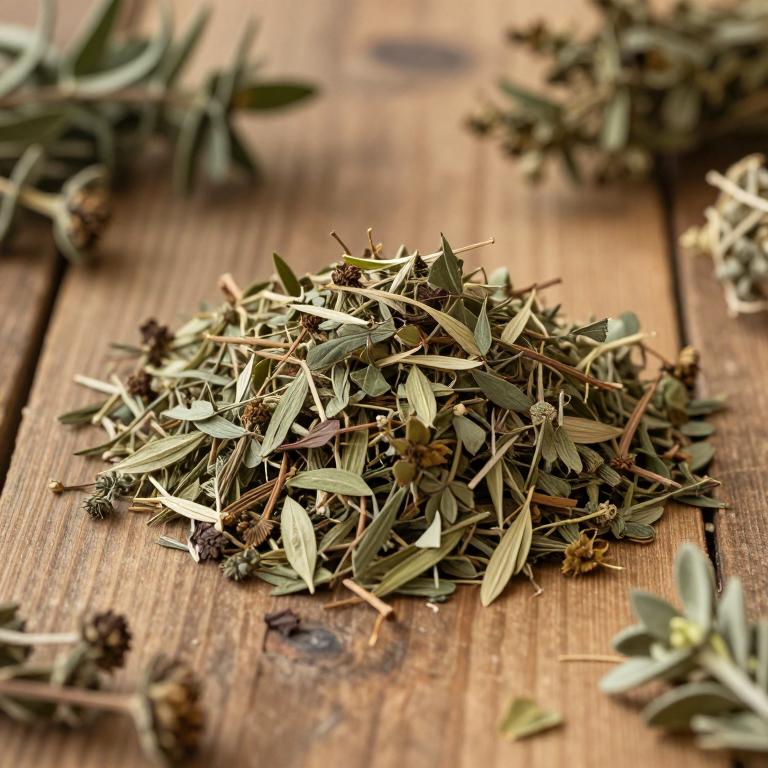
Names and Synonyms
Common Names
- Cape jitta
Scientific Names
Accepted name
Fagraea berteroanaSynonyms
- Fagraea berteroana var. kusaiana
- Fagraea pluvialis
- Fagraea pua
- Fagraea rosenstromii
- Fagraea samoensis
- Fagraea tahitensis
- Fagraea galilai
- Fagraea ksid
- Fagraea kusaiana
- Carissa grandis
- Fagraea affinis
- Fagraea berteroana var. galilai
- Fagraea berteroana var. ladronica
- Fagraea berteroana var. marquisensis
- Fagraea berteroana var. pogas
- Fagraea berteroana var. sair
- Fagraea calophylloides
- Fagraea longituba
- Fagraea novae-guineae
- Fagraea obovata var. papuana
- Fagraea pachypoda
- Fagraea peekelii
- Fagraea vitiensis
- Fagraea sair
- Fagraea sair var. pogas
- Fagraea salomonensis
- Fagraea schlechteri
Regional and Traditional Names
French:
- Bois tabou
- Bois tabou
Sources: Wikidata, Catalogue of Life
Taxonomical Classification
This plant, Fagraea berteroana, belongs to the kingdom Plantae and the phylum Streptophyta. Within the class Equisetopsida and subclass Magnoliidae, it is classified under the order Gentianales. Finally, it is a member of the family Gentianaceae and the genus Fagraea.
| Rank | Classification |
|---|---|
| Kingdom | Plantae |
| Phylum | Streptophyta |
| Class | Equisetopsida |
| Subclass | Magnoliidae |
| Order | Gentianales |
| Family | Gentianaceae |
| Genus | Fagraea |
Sources: The World Checklist of Vascular Plants (WCVP)
Distribution
This plant exhibits a broad geographical distribution across several key regions of the Oceania and Australasia territories. Within the Papuasian region, it can be found spanning the Bismarck Archipelago, New Guinea, and the Solomon Islands. Its range also extends southward to include the Queensland region of Australia. Additionally, the species reaches into the Southwestern Pacific, specifically inhabiting Fiji. Together, these locations highlight the plant's presence across various island ecosystems and coastal areas.
| Region | Area |
|---|---|
| Papuasia | Bismarck Archipelago |
| Papuasia | New Guinea |
| Papuasia | Solomon Is. |
| Australia | Queensland |
| Southwestern Pacific | Fiji |
| Southwestern Pacific | Gilbert Is. |
| Southwestern Pacific | Nauru |
| Southwestern Pacific | Niue |
| Southwestern Pacific | New Caledonia |
| Southwestern Pacific | Samoa |
Sources: The World Checklist of Vascular Plants (WCVP)
Botanical Identification
Ecology
The ecology of Fagraea berteroana is characterized by its broad adaptability across diverse environmental settings, ranging from lush rain forests and dry forests to specialized halophytic vegetation. It is also capable of colonizing dense secondary shrublands and ruderal vegetation, demonstrating a resilient capacity to inhabit disturbed or transitional landscapes. This species thrives across a significant altitudinal gradient, occupying elevations starting from as low as 6 m AMSL and extending up to a maximum of 1000 m AMSL. Its growth and distribution are further influenced by the geological substrate, as it is commonly found growing in volcanic bedrock.
- Bedrock :
- volcanic
- Elevational range max:
- 1000 m AMSL
- Elevational range min:
- 6 m AMSL
- Habitat :
- rain forest, dry forest, halophytic vegetation, dense secondary shrub and ruderal vegetation
Life history
The life history of Fagraea berteroana is characterized by its nature as a perennial organism, allowing it to persist in its ecosystem through multiple growing seasons. As a long-lived species, it follows a developmental trajectory that moves beyond the single-season constraints of annuals or the two-year cycle of biennials, establishing a stable presence within its habitat. This perennial lifecycle supports continuous structural growth and enables the plant to invest significant energy into reproductive maturity, ensuring its long-term survival and ability to contribute to the local flora over many years.
- Lifecycle :
- perennial
Morphology
The morphology of Fagrea berteroana is characterized by its growth form as a woody tree, reaching a mean and maximum height of approximately 15 m. As a terrestrial species, it does not exhibit aquatic or epiphytic tendencies, maintaining a stable existence on land. Furthermore, the plant is classified as self-supporting, meaning it possesses the structural integrity to stand upright without the need for climbing mechanisms such as lianas or vines.
- Aquatic :
- terrestrial
- Climber :
- self-supporting
- Epiphyte :
- terrestrial
- Growth form :
- tree
- Plant height mean:
- 15 m
- Woodiness :
- woody
Physiology
The physiology of Fagraea berteroana is characterized by specific morphological dimensions and metabolic profiles that define its vegetative structure. The leaves exhibit a significant range in size, with lengths varying from a minimum of 9.5 cm to a maximum of 18 cm, while the leaf width spans from a minimum of 3.3 cm to a maximum of 10 cm. In terms of water management and tissue composition, the plant does not exhibit succulence, indicating a standard cellular structure for moisture retention rather than specialized water-storing tissues. Furthermore, the species does not function as a nitrogen fixer, meaning it lacks the symbiotic relationship with nitrogen-fixing bacteria required to convert atmospheric nitrogen into usable forms, relying instead on the availability of nitrogen within the soil substrate.
- Leaf length max:
- 18 cm
- Leaf length min:
- 9.5 cm
- Leaf width max:
- 10 cm
- Leaf width min:
- 3.3 cm
- Nitrogen fixer :
- no
- Succulence :
- no
Reproduction
The reproduction of Fagrea berteroana is characterized by a biotic pollination syndrome, specifically facilitated by insects, which target its white-colored flowers. These flowers are relatively large, with widths ranging from a minimum of 9 cm to a maximum of 11 cm. Following successful pollination, the plant develops fleshy fruits that vary in length from 3 cm to a maximum of 4.5 cm. The seeds produced are quite small and uniform in their physical properties, featuring a seed mass of exactly 0.0012 g, a seed volume of 34 mm³, and dimensions ranging from 1.7 to 1.8 mm in length and a maximum width of 1 mm. The dispersal of these reproductive units is classified as anthropochorous, indicating human-mediated movement within its environment.
- Dispersal syndrome :
- anthropochorous
- Flower colour :
- white
- Flower width max:
- 11 cm
- Flower width min:
- 9 cm
- Fruit dryness :
- fleshy
- Fruit length max:
- 4.5 cm
- Fruit length min:
- 3 cm
- Pollination syndrome :
- insect
- Pollination syndrome :
- biotic
- Seed length max:
- 1.8 mm
- Seed length min:
- 1.7 mm
- Seed mass mean:
- 0.0012 g
- Seed volume max:
- 34 mm³
- Seed width max:
- 1 mm
Sources: Global Inventory of Floras and Traits (GIFT)
Plant Parts
Fagraea berteroana has 1 reported plant parts identified across 1 scientific publications and several other databases that are studied for medicinal purposes. The most consistently reported plant part include fruit.
| Plant part | Supporting sources | Consensus |
|---|---|---|
| Fruit | 1 supporting sources | ★☆☆☆☆ |
Fruit
- Molecules (Basel, Switzerland)
Chemicals
Fagraea berteroana has 2 reported phytochemicals identified across 1 scientific publications and several other databases. The most consistently reported chemicals include Iridoids, Secoiridoids.
| Chemical | Supporting sources | Consensus |
|---|---|---|
| Iridoids | 1 supporting sources | ★☆☆☆☆ |
| Secoiridoids | 1 supporting sources | ★☆☆☆☆ |
Iridoids
- Molecules (Basel, Switzerland)
Secoiridoids
- Molecules (Basel, Switzerland)