golden buckwheat
Fagopyrum cymosum · Accepted scientific name
Scientific literature: Sparse (62 studies) · ★★☆☆☆
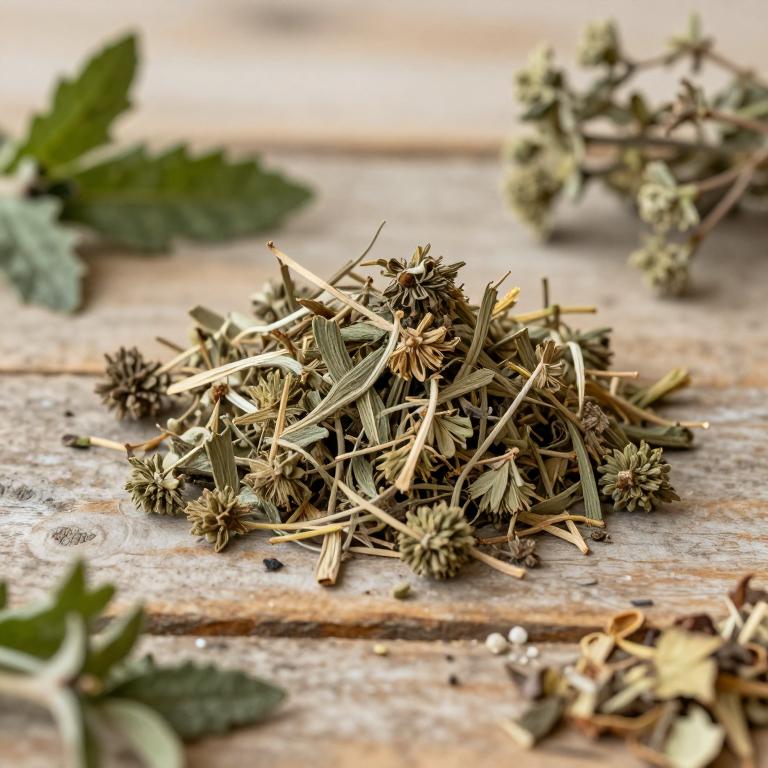
Golden buckwheat, scientifically known as Fagopyrum cymosum, is a versatile perennial herb native to Africa. Valued for its nutritious seeds and medicinal properties, it serves as a resilient food security crop. This plant is widely utilized in traditional medicine to manage various ailments and enhance overall nutritional wellness.
Names and Synonyms
Common Names
- golden buckwheat
- tall buckwheat
- Perennial Buckwheat
Scientific Names
Accepted name
Fagopyrum cymosumSynonyms
- Fagopyrum dibotrys
- Fagopyrum tristachyum
- Phegopyrum cymosum
- Helxine acutata
- Polygonum labordei
- Polygonum rugosum
- Polygonum volubile
- Polygonum dibotrys
- Coccoloba cymosa
- Fagopyrum chinense
- Fagopyrum megaspartanium
- Fagopyrum pilus
- Fagopyrum triangulare
- Polygonum tristachyum
Regional and Traditional Names
French:
- Epinard arbustif
- Epinard d'Asie
- Sarrasin en cyme
- Sarrasin à deux grappes
Sources: Wikidata, Catalogue of Life
Taxonomical Classification
This plant belongs to the kingdom Plantae within the phylum Streptophyta and the class Equisetopsida. It is further classified under the subclass Magnoliidae and the order Caryophyllales. Finally, it is a member of the family Polygonaceae and falls under the genus Fagopyrum.
| Rank | Classification |
|---|---|
| Kingdom | Plantae |
| Phylum | Streptophyta |
| Class | Equisetopsida |
| Subclass | Magnoliidae |
| Order | Caryophyllales |
| Family | Polygonaceae |
| Genus | Fagopyrum |
Sources: The World Checklist of Vascular Plants (WCVP)
Distribution
This plant exhibits a wide-ranging geographical distribution across several continents. In Northern Europe, its presence is recorded in Great Britain. Moving toward Southwestern Europe, it can be found throughout France. Its distribution extends significantly into Asia, specifically within the China South-Central region. Finally, the species is also documented in both China North-Central and China Southeast.
| Region | Area |
|---|---|
| Northern Europe | Great Britain |
| Southwestern Europe | France |
| China | China South-Central |
| China | China North-Central |
| China | China Southeast |
| China | Tibet |
| Eastern Asia | Japan |
| Indian Subcontinent | Assam |
| Indian Subcontinent | East Himalaya |
| Indian Subcontinent | India |
Sources: The World Checklist of Vascular Plants (WCVP)
Botanical Identification
Ecology
The ecology of Fagopyrum cymosum is characterized by a broad altitudinal distribution that allows it to occupy diverse environmental niches. The species is found across a wide elevational range, beginning at lowlands as low as 250 m AMSL and extending to high-altitude regions reaching a maximum of 3500 m AMSL. On average, the plant thrives at a mean elevation of 1725 m AMSL, demonstrating a significant capacity to adapt to varying atmospheric pressures and temperature gradients throughout its habitat.
- Elevational range max:
- 3500 m AMSL
- Elevational range mean:
- 1725 m AMSL
- Elevational range min:
- 250 m AMSL
- Habitat :
- Lowland
Life history
The life history of Fagopyrum cymosum is characterized by its perennial lifecycle, allowing the plant to persist across multiple growing seasons. In terms of its structural growth strategy, it is classified as a phanerophyte, specifically exhibiting characteristics consistent with both phanerophyte and nanophanerophyte life forms, which indicates that its perennating buds are located above the ground level.
- Life form :
- phanerophyte
- Lifecycle :
- perennial
Morphology
The morphology of Fagopyrum cymosum is characterized by its growth form as a non-woody herb. It is a self-supporting plant that does not function as a climber or a liana, and it grows in a terrestrial habitat rather than being aquatic or epiphytic. As an independent organism, it does not exhibit parasitic behavior. In terms of stature, the plant reaches a mean height of approximately 1 meter, with a maximum potential height of up to 1.5 meters.
- Aquatic :
- terrestrial
- Climber :
- self-supporting
- Epiphyte :
- terrestrial
- Growth form :
- herb
- Parasite :
- independent
- Plant height max:
- 1.5 m
- Plant height mean:
- 1 m
- Woodiness :
- non-woody
Physiology
The physiology of Fagopyrum cymosum is characterized by significant morphological plasticity in its foliar structures, which plays a crucial role in its photosynthetic efficiency and environmental adaptation. The leaves exhibit a wide range of dimensions, with a mean leaf length of 8 cm, though they can fluctuate between a minimum of 4 cm and a maximum of 12 cm. This variability in longitudinal growth is complemented by a substantial breadth in leaf width, which ranges from a minimum of 3 cm to a maximum of 11 cm. Such fluctuations in leaf surface area suggest a dynamic physiological response to light interception and transpiration demands, allowing the plant to optimize its metabolic processes across varying microclimates.
- Leaf length max:
- 12 cm
- Leaf length mean:
- 8 cm
- Leaf length min:
- 4 cm
- Leaf width max:
- 11 cm
- Leaf width min:
- 3 cm
Reproduction
The reproduction of Fagopyrum cymosum involves both sexual and asexual mechanisms, with the sexual process characterized by bisexual flowers. The flowering period typically begins in June and extends through October. During this cycle, the plant relies on a biotic pollination syndrome, specifically utilizing insects to facilitate fertilization, as self-fertilization is noted to be absent. Following successful pollination, the plant produces fruits that generally range in length from a minimum of 0.6 cm to a maximum of 0.8 cm, with an average length of 0.7 cm. These fruits are prolific, containing a high seed count that ranges between 101 and 1000 seeds per fruit. Each individual seed possesses a mean mass of 0.02 g. Regarding seed dissemination, the plant exhibits an unspecialized dispersal syndrome, though it is also categorized as anthropochorous, indicating that human activity plays a role in its dispersal.
- Dispersal syndrome :
- unspecialized
- Dispersal syndrome :
- anthropochorous
- Flowering time :
- Jun
- Flowering time :
- Oct
- Fruit length max:
- 0.8 cm
- Fruit length mean:
- 0.7 cm
- Fruit length min:
- 0.6 cm
- Pollination syndrome :
- insect
- Pollination syndrome :
- biotic
- Reproduction asexual :
- present
- Reproduction sexual :
- bisexual
- Seed mass mean:
- 0.02 g
- Seeds_per_fruit :
- 101-1000
- Self fertilization :
- absent
Sources: Global Inventory of Floras and Traits (GIFT)
Plant Parts
Fagopyrum cymosum has 2 reported plant parts identified across 5 scientific publications and several other databases that are studied for medicinal purposes. The most consistently reported plant part include rhizome, root.
| Plant part | Supporting sources | Consensus |
|---|---|---|
| Rhizome | 4 supporting sources | ★★☆☆☆ |
| Root | 1 supporting sources | ★☆☆☆☆ |
Rhizome
- Yao xue xue bao = Acta pharmaceutica Sinica
- Frontiers in physiology
- Zhongguo Zhong yao za zhi = Zhongguo zhongyao zazhi = China journal of Chinese materia medica
- Heliyon
Root
- Plant science : an international journal of experimental plant biology
Chemicals
Fagopyrum cymosum has 32 reported phytochemicals identified across 5 scientific publications and several other databases. The most consistently reported chemicals include Flavonoids, Epicatechin, RUTIN, Proanthocyanidin, quercetin.
| Chemical | Supporting sources | Consensus |
|---|---|---|
| Flavonoids | 7 supporting sources | ★★★★☆ |
| Epicatechin | 3 supporting sources | ★★☆☆☆ |
| RUTIN | 3 supporting sources | ★★☆☆☆ |
| Proanthocyanidin | 2 supporting sources | ★☆☆☆☆ |
| quercetin | 2 supporting sources | ★☆☆☆☆ |
| (+)-Epicatechin | 1 supporting sources | ★☆☆☆☆ |
| (+)-catechin | 1 supporting sources | ★☆☆☆☆ |
| (-)-Catechin gallate | 1 supporting sources | ★☆☆☆☆ |
| (-)-Epicatechin | 1 supporting sources | ★☆☆☆☆ |
| BETA-SITOSTEROL | 1 supporting sources | ★☆☆☆☆ |
Flavonoids
- Yao xue xue bao = Acta pharmaceutica Sinica
- Physiologia plantarum
- Frontiers in plant science
- The New phytologist
- PeerJ
View 2 additional sources
- Heliyon
- BMC plant biology
Epicatechin
- Frontiers in plant science
- BMC plant biology
- Frontiers in microbiology
RUTIN
- Zhongguo Zhong yao za zhi = Zhongguo zhongyao zazhi = China journal of Chinese materia medica
- Plant science : an international journal of experimental plant biology
- Molecules (Basel, Switzerland)
Proanthocyanidin
- Frontiers in physiology
- Frontiers in microbiology
quercetin
- Zhongguo Zhong yao za zhi = Zhongguo zhongyao zazhi = China journal of Chinese materia medica
- Heliyon
(+)-Epicatechin
- Heliyon
(+)-catechin
- Heliyon
(-)-Catechin gallate
- Heliyon
(-)-Epicatechin
- Zhongguo Zhong yao za zhi = Zhongguo zhongyao zazhi = China journal of Chinese materia medica
BETA-SITOSTEROL
- Zhongguo Zhong yao za zhi = Zhongguo zhongyao zazhi = China journal of Chinese materia medica
Activities
Fagopyrum cymosum has 4 reported activities identified across 5 scientific publications and several other databases. The most consistently reported activities include Antitumor, Antibacterial, Anticancer, Hepatoprotective.
| Activity | Supporting sources | Consensus |
|---|---|---|
| Antitumor | 2 supporting sources | ★☆☆☆☆ |
| Antibacterial | 1 supporting sources | ★☆☆☆☆ |
| Anticancer | 1 supporting sources | ★☆☆☆☆ |
| Hepatoprotective | 1 supporting sources | ★☆☆☆☆ |
Antitumor
- Frontiers in pharmacology
- International journal of molecular sciences
Antibacterial
- Heliyon
Anticancer
- Heliyon
Hepatoprotective
- International journal of molecular sciences
Conditions
Fagopyrum cymosum has 1 reported investigations on conditions identified across 5 scientific publications and several other databases. The most consistently reported conditions include snakebite.
| Condition | Supporting sources | Consensus |
|---|---|---|
| Snakebite | 1 supporting sources | ★☆☆☆☆ |
Snakebite
- Journal of ethnopharmacology
Preparations
Fagopyrum cymosum has 12 reported preparations identified across 5 scientific publications and several other databases. The most consistently reported preparations include FdNVs, aerial parts, ethanol (E) extract, ethanolic extracts of the aerial parts, ethyl acetate (EA) extract.
| Preparation | Supporting sources | Consensus |
|---|---|---|
| Fdnvs | 1 supporting sources | ★☆☆☆☆ |
| Aerial parts | 1 supporting sources | ★☆☆☆☆ |
| Ethanol (e) extract | 1 supporting sources | ★☆☆☆☆ |
| Ethanolic extracts of the aerial parts | 1 supporting sources | ★☆☆☆☆ |
| Ethyl acetate (ea) extract | 1 supporting sources | ★☆☆☆☆ |
| Leaves | 1 supporting sources | ★☆☆☆☆ |
| Petroleum ether (p) extract | 1 supporting sources | ★☆☆☆☆ |
| Rhizome | 1 supporting sources | ★☆☆☆☆ |
| Rhizomes | 1 supporting sources | ★☆☆☆☆ |
| Stems | 1 supporting sources | ★☆☆☆☆ |
Fdnvs
- Frontiers in pharmacology
Aerial parts
- Heliyon
Ethanol (e) extract
- Molecules (Basel, Switzerland)
Ethanolic extracts of the aerial parts
- Zhongguo Zhong yao za zhi = Zhongguo zhongyao zazhi = China journal of Chinese materia medica
Ethyl acetate (ea) extract
- Molecules (Basel, Switzerland)
Leaves
- Heliyon
Petroleum ether (p) extract
- Molecules (Basel, Switzerland)
Rhizome
- Zhongguo Zhong yao za zhi = Zhongguo zhongyao zazhi = China journal of Chinese materia medica
Rhizomes
- Heliyon
Stems
- Heliyon