Fabiana punensis
Fabiana punensis · Accepted scientific name
Scientific literature: Very Sparse (8 studies) · ★☆☆☆☆
, scientifically known as Fabiana punensis, is a remarkable medicinal plant valued for its diverse therapeutic properties. Often found in specific tropical ecosystems, it holds significant potential in traditional medicine. Researchers are increasingly exploring its bioactive compounds to develop novel treatments for various ailments, highlighting its immense pharmacological importance.
- Family
- Solanaceae
- Native range
- Southern America
- Parts used
- Not available
- Common names
- Not available
- Scientific synonyms
- Not available
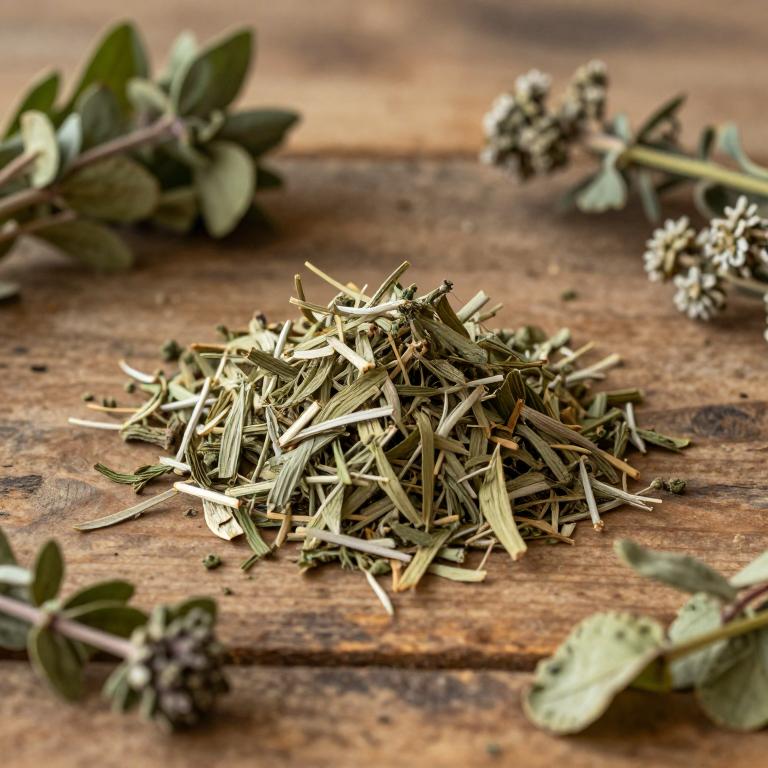
Names and Synonyms
Scientific Names
Accepted name
Fabiana punensisSources: Wikidata
Taxonomical Classification
This plant belongs to the kingdom Plantae and is classified under the phylum Streptophyta within the class Equisetopsida. As a member of the subclass Magnoliidae, it falls under the order Solanales and the family Solanaceae. Finally, its specific taxonomic identity is defined by the genus Fabiana.
| Rank | Classification |
|---|---|
| Kingdom | Plantae |
| Phylum | Streptophyta |
| Class | Equisetopsida |
| Subclass | Magnoliidae |
| Order | Solanales |
| Family | Solanaceae |
| Genus | Fabiana |
Sources: The World Checklist of Vascular Plants (WCVP)
Distribution
This plant, known scientifically as Fabiana punensis, possesses a highly specific geographical range. Its distribution is localized within the Southern South America region. More precisely, it can be found inhabiting the Northwest of Argentina. This narrow occurrence suggests that the species is adapted to the particular environmental conditions of that area. Consequently, understanding its niche in the Argentine Northwest is essential for its conservation.
| Region | Area |
|---|---|
| Southern South America | Argentina Northwest |
Sources: The World Checklist of Vascular Plants (WCVP)
Botanical Identification
Ecology
The ecology of Fabiana puneensis is defined by its specialized adaptation to high-altitude montane environments, specifically within high-elevation Andean ecosystems. This species occupies a distinct vertical niche, thriving within an elevational range that spans from a minimum of 2,200 m AMSL to a maximum of 4,100 m AMSL. By inhabiting these high-altitude zones, the plant is subject to intense solar radiation, significant diurnal temperature fluctuations, and potentially thin, nutrient-poor soils characteristic of the alpine or puna landscapes. Its ability to persist across this wide altitudinal gradient suggests a robust physiological capacity to manage varying levels of atmospheric pressure and moisture availability found between the montane forests and the higher, more arid paramo or puna ecosystems.
- Elevational range max:
- 4100 m AMSL
- Elevational range min:
- 2200 m AMSL
Life history
The life history of Fabiana puneensis is characterized by its status as a perennial species, allowing it to persist in its environment over multiple growing seasons. Unlike annuals that complete their life cycle in a single year or biennials that require two, this plant maintains a long-term presence, contributing to the stability of its native habitat. This perennial nature enables it to undergo repeated cycles of vegetative growth and reproductive phases, adapting to seasonal shifts through sustained biological activity.
- Lifecycle :
- perennial
Morphology
The morphology of Fabiana puneensis is characterized by a woody growth form, specifically categorized as a shrub. This plant exhibits a self-supporting structure, functioning as an independent organism rather than a parasite or an epiphyte, with its primary growth occurring in terrestrial habitats. Although its environmental tolerance spans across aquatic, semiaquatic, and terrestrial classifications, its physical habit is defined by its robust, woody nature and its capacity to maintain an upright, shrubby stature without the need for climbing supports.
- Aquatic :
- terrestrial
- Climber :
- self-supporting
- Epiphyte :
- terrestrial
- Growth form :
- shrub
- Parasite :
- independent
- Woodiness :
- woody
Sources: Global Inventory of Floras and Traits (GIFT)
Chemicals
Fabiana punensis has 2 reported phytochemicals identified across 0 scientific publications and several other databases. The most consistently reported chemicals include Flavonoids, apigenin.
| Chemical | Supporting sources | Consensus |
|---|---|---|
| Flavonoids | 1 supporting sources | ★☆☆☆☆ |
| apigenin | 1 supporting sources | ★☆☆☆☆ |
Flavonoids
- Molecules (Basel, Switzerland)
apigenin
- Molecules (Basel, Switzerland)
Activities
Fabiana punensis has 1 reported activities identified across 0 scientific publications and several other databases. The most consistently reported activities include Antiseptic.
| Activity | Supporting sources | Consensus |
|---|---|---|
| Antiseptic | 1 supporting sources | ★☆☆☆☆ |
Antiseptic
- Journal of ethnopharmacology
Conditions
Fabiana punensis has 4 reported investigations on conditions identified across 0 scientific publications and several other databases. The most consistently reported conditions include anti-inflammatories, antiseptic, bacterial infections, bone fractures.
| Condition | Supporting sources | Consensus |
|---|---|---|
| Anti-inflammatories | 1 supporting sources | ★☆☆☆☆ |
| Antiseptic | 1 supporting sources | ★☆☆☆☆ |
| Bacterial infections | 1 supporting sources | ★☆☆☆☆ |
| Bone fractures | 1 supporting sources | ★☆☆☆☆ |
Anti-inflammatories
- Journal of ethnopharmacology
Antiseptic
- Journal of ethnopharmacology
Bacterial infections
- Journal of ethnopharmacology
Bone fractures
- Journal of ethnopharmacology
Preparations
Fabiana punensis has 8 reported preparations identified across 0 scientific publications and several other databases. The most consistently reported preparations include alcoholic extract, alcoholic extracts obtained via maceration (M), alcoholic extracts obtained via ultrasound-assisted extraction (UAE), aqueous extracts, maceration.
| Preparation | Supporting sources | Consensus |
|---|---|---|
| Alcoholic extract | 1 supporting sources | ★☆☆☆☆ |
| Alcoholic extracts obtained via maceration (m) | 1 supporting sources | ★☆☆☆☆ |
| Alcoholic extracts obtained via ultrasound-assisted extraction (uae) | 1 supporting sources | ★☆☆☆☆ |
| Aqueous extracts | 1 supporting sources | ★☆☆☆☆ |
| Maceration | 1 supporting sources | ★☆☆☆☆ |
| Microwave-assisted extraction | 1 supporting sources | ★☆☆☆☆ |
| Tinctures | 1 supporting sources | ★☆☆☆☆ |
| Ultrasound-assisted extraction | 1 supporting sources | ★☆☆☆☆ |
Alcoholic extract
- Journal of ethnopharmacology
Alcoholic extracts obtained via maceration (m)
- Plants (Basel, Switzerland)
Alcoholic extracts obtained via ultrasound-assisted extraction (uae)
- Plants (Basel, Switzerland)
Aqueous extracts
- Journal of ethnopharmacology
Maceration
- Molecules (Basel, Switzerland)
Microwave-assisted extraction
- Molecules (Basel, Switzerland)
Tinctures
- Journal of ethnopharmacology
Ultrasound-assisted extraction
- Molecules (Basel, Switzerland)