Fabiana densa
Fabiana densa · Accepted scientific name
Scientific literature: Very Sparse (5 studies) · ★☆☆☆☆
Fabiana densa, scientifically known as Fabiana densa, is a resilient shrub native to the rugged terrains of South America. Renowned for its dense, evergreen foliage, this medicinal plant is highly valued in traditional healing practices for its diverse therapeutic properties, offering potential benefits in treating various ailments and inflammatory conditions.
- Family
- Solanaceae
- Native range
- Southern America
- Parts used
- Not available
- Common names
- Not available
- Scientific synonyms
- Fabiana Clarenii
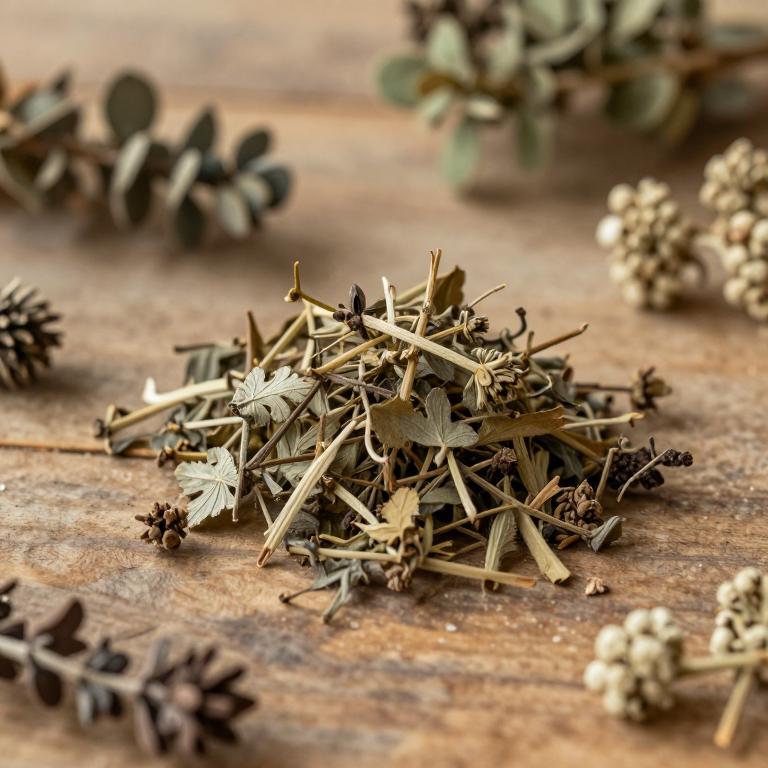
Names and Synonyms
Scientific Names
Accepted name
Fabiana densaSynonyms
- Fabiana clarenii
Sources: Wikidata, Catalogue of Life
Taxonomical Classification
This plant belongs to the kingdom Plantae and is classified under the phylum Streptophyta and the class Equisetopsida. Within the subclass Magnoliidae, it is categorized under the order Solanales and the family Solanaceae. It is further identified by its specific genus, Fabiana.
| Rank | Classification |
|---|---|
| Kingdom | Plantae |
| Phylum | Streptophyta |
| Class | Equisetopsida |
| Subclass | Magnoliidae |
| Order | Solanales |
| Family | Solanaceae |
| Genus | Fabiana |
Sources: The World Checklist of Vascular Plants (WCVP)
Distribution
This plant exhibits a specific distribution pattern across the South American continent. It can be found in the western regions of the continent, specifically within Bolivia. Moving toward the southern part of the continent, its range extends into the northwest of Argentina. Additionally, the species is present in the northern portions of Chile. Consequently, its habitat spans several distinct geographical zones across western and southern South America.
| Region | Area |
|---|---|
| Western South America | Bolivia |
| Southern South America | Argentina Northwest |
| Southern South America | Chile North |
Sources: The World Checklist of Vascular Plants (WCVP)
Botanical Identification
Ecology
The ecology of Fabiana densa is characterized by its ability to thrive within specific high-altitude montane environments, occupying a distinct niche in the landscape. This species is primarily distributed across an elevational range that extends from a minimum of 2700 m AMSL to a maximum of 4500 m AMSL. Such a wide vertical distribution suggests an evolutionary adaptation to the varying atmospheric pressures, temperature fluctuations, and intense ultraviolet radiation typical of high-elevation ecosystems. By occupying these high-altitude zones, the plant plays a vital role in the specialized ecological communities found in these montane habitats, where it must contend with the unique soil compositions and climatic constraints of the Andean highlands.
- Elevational range max:
- 4500 m AMSL
- Elevational range min:
- 2700 m AMSL
Life history
The life history of Fabiana densa is characterized by its status as a perennial species, allowing it to persist in its environment through multiple growing seasons. As a long-lived plant, it avoids the rapid turnover associated with annuals or biennials, instead investing energy into sustained structural growth and long-term survival. This perennial lifecycle enables the plant to establish a stable presence within its ecological niche, undergoing repeated cycles of vegetative growth and seasonal development over several years.
- Lifecycle :
- perennial
Morphology
The morphology of Fabiana densa is characterized by its robust and woody structure, defining it as a woody shrub. As a self-supporting plant, it does not exhibit climbing tendencies such as being a liana or a vine, nor does it function as an obligatory or facultative climber. Its growth habit is strictly terrestrial, lacking any epiphytic qualities; it is neither a holoepiphyte, hemiepiphyte, nor any other form of epiphyte, maintaining a firm terrestrial existence. Furthermore, the plant is biologically independent, showing no parasitic behavior, and its habitat ranges across aquatic, semiaquatic, and terrestrial environments, though it maintains its primary terrestrial growth form.
- Aquatic :
- terrestrial
- Climber :
- self-supporting
- Epiphyte :
- terrestrial
- Growth form :
- shrub
- Parasite :
- independent
- Woodiness :
- woody
Sources: Global Inventory of Floras and Traits (GIFT)
Activities
Fabiana densa has 1 reported activities identified across 0 scientific publications and several other databases. The most consistently reported activities include Antiseptic.
| Activity | Supporting sources | Consensus |
|---|---|---|
| Antiseptic | 1 supporting sources | ★☆☆☆☆ |
Antiseptic
- Journal of ethnopharmacology
Conditions
Fabiana densa has 4 reported investigations on conditions identified across 0 scientific publications and several other databases. The most consistently reported conditions include anti-inflammatories, antiseptic, bacterial infections, bone fractures.
| Condition | Supporting sources | Consensus |
|---|---|---|
| Anti-inflammatories | 1 supporting sources | ★☆☆☆☆ |
| Antiseptic | 1 supporting sources | ★☆☆☆☆ |
| Bacterial infections | 1 supporting sources | ★☆☆☆☆ |
| Bone fractures | 1 supporting sources | ★☆☆☆☆ |
Anti-inflammatories
- Journal of ethnopharmacology
Antiseptic
- Journal of ethnopharmacology
Bacterial infections
- Journal of ethnopharmacology
Bone fractures
- Journal of ethnopharmacology
Preparations
Fabiana densa has 2 reported preparations identified across 0 scientific publications and several other databases. The most consistently reported preparations include aqueous extracts, tinctures.
| Preparation | Supporting sources | Consensus |
|---|---|---|
| Aqueous extracts | 1 supporting sources | ★☆☆☆☆ |
| Tinctures | 1 supporting sources | ★☆☆☆☆ |
Aqueous extracts
- Journal of ethnopharmacology
Tinctures
- Journal of ethnopharmacology