Eysenhardtia platycarpa
Eysenhardtia platycarpa · Accepted scientific name
Scientific literature: Very Sparse (15 studies) · ★☆☆☆☆
, scientifically known as Eysenaerdtia platycarpa, is a distinctive medicinal plant valued for its diverse therapeutic properties. Native to specific tropical regions, this species is traditionally utilized in various herbal remedies to treat diverse ailments. Understanding its chemical composition is essential for exploring its potential in modern pharmacological applications.
- Family
- Fabaceae
- Native range
- Northern America
- Parts used
- Leaf
- Common names
- Not available
- Scientific synonyms
- Eysenhardtia Cobriformis
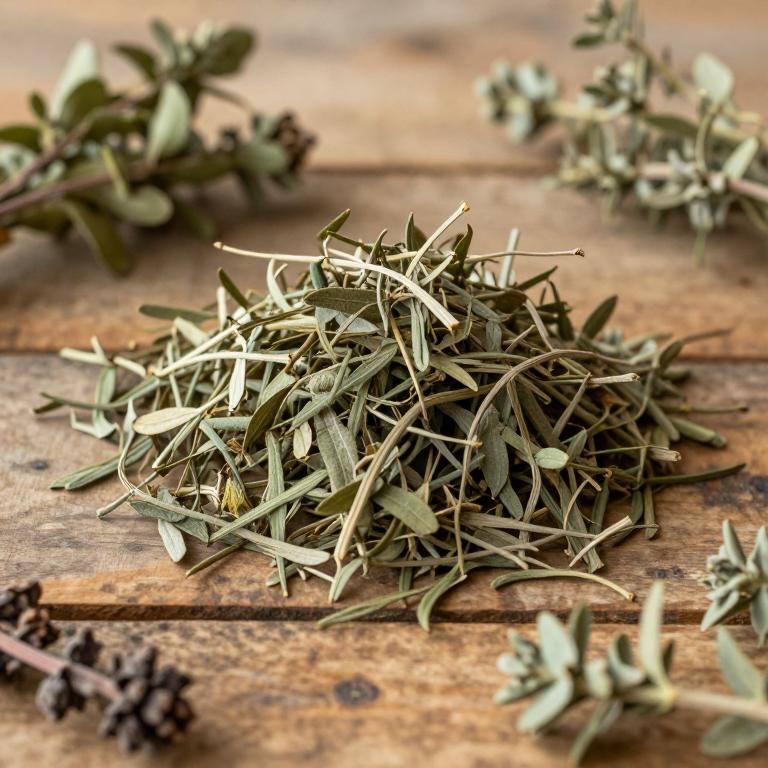
Names and Synonyms
Scientific Names
Accepted name
Eysenhardtia platycarpaSynonyms
- Eysenhardtia cobriformis
Regional and Traditional Names
Spanish:
- Coatle
- Palo dulce
Sources: Wikidata, Catalogue of Life
Taxonomical Classification
This plant belongs to the kingdom Plantae and is classified within the phylum Streptophyta and the class Equisetopsida. As a member of the subclass Magnoliidae and the order Fabales, it is further categorized under the family Fabaceae. Specifically, its taxonomic identity is defined by the genus Eysenhardtia.
| Rank | Classification |
|---|---|
| Kingdom | Plantae |
| Phylum | Streptophyta |
| Class | Equisetopsida |
| Subclass | Magnoliidae |
| Order | Fabales |
| Family | Fabaceae |
| Genus | Eysenhardtia |
Sources: The World Checklist of Vascular Plants (WCVP)
Distribution
This plant exhibits a widespread presence throughout various regions of Mexico. Its geographical range includes a significant distribution across Mexico Central. Additionally, the species can be found growing in Mexico Northeast and Mexico Northwest. It also inhabits the landscapes of Mexico Southwest. Finally, the plant is documented within the territories of Mexico Southeast.
| Region | Area |
|---|---|
| Mexico | Mexico Central |
| Mexico | Mexico Northeast |
| Mexico | Mexico Northwest |
| Mexico | Mexico Southwest |
| Mexico | Mexico Southeast |
Sources: The World Checklist of Vascular Plants (WCVP)
Botanical Identification
Morphology
The morphology of Eysenhardtia platycarpa is characterized by a woody growth form that manifests as both a tree and a shrub. It is an independent organism, functioning as a non-parasitic species, and maintains a terrestrial habit rather than being aquatic or epiphytic. In terms of its structural support, the plant is self-supporting, exhibiting a growth habit that does not require climbing mechanisms such as lianas or vines.
- Aquatic :
- terrestrial
- Climber :
- self-supporting
- Epiphyte :
- terrestrial
- Growth form :
- tree
- Growth form :
- shrub
- Parasite :
- independent
- Woodiness :
- woody
Sources: Global Inventory of Floras and Traits (GIFT)
Plant Parts
Eysenhardtia platycarpa has 1 reported plant parts identified across 2 scientific publications and several other databases that are studied for medicinal purposes. The most consistently reported plant part include leaf.
| Plant part | Supporting sources | Consensus |
|---|---|---|
| Leaf | 2 supporting sources | ★☆☆☆☆ |
Leaf
- Journal of natural products
- Plants (Basel, Switzerland)
Chemicals
Eysenhardtia platycarpa has 5 reported phytochemicals identified across 2 scientific publications and several other databases. The most consistently reported chemicals include D-Pinitol, Hexadecanoic acid, STIGMASTEROL, Steroids, Sugars.
| Chemical | Supporting sources | Consensus |
|---|---|---|
| D-Pinitol | 1 supporting sources | ★☆☆☆☆ |
| Hexadecanoic acid | 1 supporting sources | ★☆☆☆☆ |
| STIGMASTEROL | 1 supporting sources | ★☆☆☆☆ |
| Steroids | 1 supporting sources | ★☆☆☆☆ |
| Sugars | 1 supporting sources | ★☆☆☆☆ |
D-Pinitol
- Plants (Basel, Switzerland)
Hexadecanoic acid
- Plants (Basel, Switzerland)
STIGMASTEROL
- Plants (Basel, Switzerland)
Steroids
- Plants (Basel, Switzerland)
Sugars
- Plants (Basel, Switzerland)
Preparations
Eysenhardtia platycarpa has 2 reported preparations identified across 2 scientific publications and several other databases. The most consistently reported preparations include leaves (LEP), methanolic extracts from branches (BEP).
| Preparation | Supporting sources | Consensus |
|---|---|---|
| Leaves (lep) | 1 supporting sources | ★☆☆☆☆ |
| Methanolic extracts from branches (bep) | 1 supporting sources | ★☆☆☆☆ |
Leaves (lep)
- Journal of natural products
Methanolic extracts from branches (bep)
- Journal of natural products