broad leaved cherry
Exocarpos latifolius · Accepted scientific name
Scientific literature: Very Sparse (11 studies) · ★☆☆☆☆
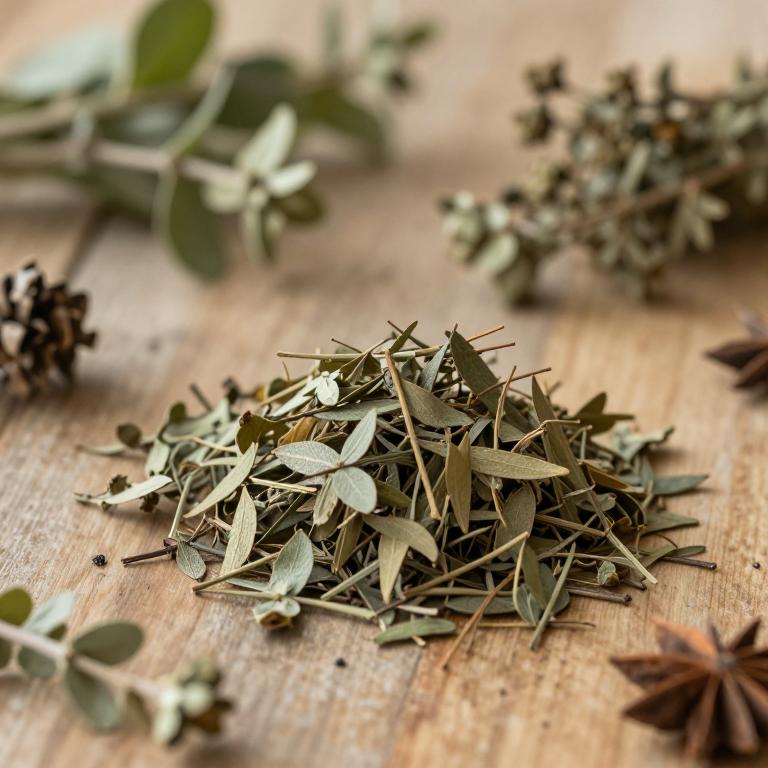
Broad leaved cherry, scientifically known as Exocarpos latifolius, is a resilient Australian native prized for its medicinal potential. Often found in coastal and woodland habitats, this unique species offers various bioactive compounds. Traditionally used in indigenous practices, it remains a subject of interest for modern pharmacological research and natural wellness.
Names and Synonyms
Common Names
- Broad Leaved Native Cherry
- Broad-leaved Ballart
- broad leaved cherry
Scientific Names
Accepted name
Exocarpos latifoliusSynonyms
- Exocarpos floribundus
- Exocarpos miniatus
- Exocarpos ovatus
- Sarcocalyx miniatus
- Xylophyllos latifolius
- Canopus luzonensis
- Exocarpos luzonensis
Sources: Wikidata, Catalogue of Life
Taxonomical Classification
This plant belongs to the kingdom Plantae and is classified under the phylum Streptophyta and class Equisetopsida. Within the subclass Magnoliidae, it falls under the order Santalales and the family Santalaceae. Finally, its taxonomic identity is defined by the genus Exocarpos.
| Rank | Classification |
|---|---|
| Kingdom | Plantae |
| Phylum | Streptophyta |
| Class | Equisetopsida |
| Subclass | Magnoliidae |
| Order | Santalales |
| Family | Santalaceae |
| Genus | Exocarpos |
Sources: The World Checklist of Vascular Plants (WCVP)
Distribution
This plant is native to the diverse tropical regions of the Malesia botanical zone. Its geographical range includes the large island of Borneo, where it thrives in specific forest habitats. It is also widely distributed across Jawa and throughout the various islands of the Lesser Sunda archipelago. Furthermore, the species can be found within the Maluku islands, extending its presence across the Indonesian maritime landscape. Finally, its distribution reaches northward into the Philippines, marking a broad coverage across Southeast Asia.
| Region | Area |
|---|---|
| Malesia | Borneo |
| Malesia | Jawa |
| Malesia | Lesser Sunda Is. |
| Malesia | Maluku |
| Malesia | Philippines |
| Malesia | Sulawesi |
| Papuasia | New Guinea |
| Australia | New South Wales |
| Australia | Northern Territory |
| Australia | Queensland |
Sources: The World Checklist of Vascular Plants (WCVP)
Botanical Identification
Life history
The life history of Exocarpos latifolius is characterized by its status as a perennial species, allowing it to establish long-term presence within its ecosystem. As a perennial, the plant undergoes multiple reproductive cycles over several years, rather than completing its life cycle in a single growing season like annuals or biennial species. This enduring lifecycle enables the plant to develop extensive root systems and robust woody structures, contributing to its stability and ability to persist through varying environmental conditions. Through its sustained growth pattern, Exocarpos latifolius maintains its biological continuity, investing energy into long-term survival and periodic reproductive efforts that define its ecological role.
- Lifecycle :
- perennial
Morphology
The morphology of Exocarpos latifolius is characterized by a woody growth form that exhibits versatility, manifesting as both a tree and a shrub. This plant is strictly terrestrial, existing as an independent organism without parasitic tendencies. In terms of stature, it is a self-supporting species that reaches a maximum plant height of 10 m, with a mean height of approximately 10 m and a minimum height of 1.5 m. Unlike climbing vines or lianas, its structure is entirely self-supporting, maintaining a stable woody architecture within its terrestrial habitat.
- Aquatic :
- terrestrial
- Climber :
- self-supporting
- Epiphyte :
- terrestrial
- Growth form :
- tree
- Growth form :
- shrub
- Parasite :
- independent
- Plant height mean:
- 10 m
- Plant height min:
- 1.5 m
- Woodiness :
- woody
Physiology
The physiology of Exocarpos latifolius is characterized by specific morphological dimensions and nutritional strategies that define its vegetative development. The plant's foliar structure exhibits significant variability in size, with leaf lengths ranging from a minimum of 3 cm to a maximum of 7 cm. Accompanying this longitudinal variation is a corresponding width profile, where leaves measure between a minimum of 2 cm and a maximum of 4 cm in width. In terms of its metabolic interaction with soil nutrients, the species does not function as a nitrogen fixer, meaning it lacks the symbiotic relationship with nitrogen-fixing bacteria required to convert atmospheric nitrogen into a usable form, and must instead rely on the uptake of available nitrogen from the substrate to support its physiological processes.
- Leaf length max:
- 7 cm
- Leaf length min:
- 3 cm
- Leaf width max:
- 4 cm
- Leaf width min:
- 2 cm
- Nitrogen fixer :
- no
Reproduction
The reproduction of Exocarpos latifolius is characterized by the development of a specific fruit type and a particular method of seed dispersal. The plant produces a fruit classified as a drupe, which typically consists of a fleshy outer part surrounding a single hard shell or stone that contains the seed. Regarding the release of its seeds, the fruit is indehiscent, meaning it does not split open at maturity to release its contents; instead, the seeds remain enclosed within the fruit structure until it decays or is consumed by fauna.
- Dehiscence :
- indehiscent
- Fruit type :
- drupe
Sources: Global Inventory of Floras and Traits (GIFT)
Plant Parts
Exocarpos latifolius has 1 reported plant parts identified across 1 scientific publications and several other databases that are studied for medicinal purposes. The most consistently reported plant part include stem.
| Plant part | Supporting sources | Consensus |
|---|---|---|
| Stem | 1 supporting sources | ★☆☆☆☆ |
Stem
- BMC complementary medicine and therapies
Chemicals
Exocarpos latifolius has 3 reported phytochemicals identified across 1 scientific publications and several other databases. The most consistently reported chemicals include Antioxidant Activity, Flavonoids, Saponins.
| Chemical | Supporting sources | Consensus |
|---|---|---|
| Antioxidant Activity | 1 supporting sources | ★☆☆☆☆ |
| Flavonoids | 1 supporting sources | ★☆☆☆☆ |
| Saponins | 1 supporting sources | ★☆☆☆☆ |
Antioxidant Activity
- BMC complementary medicine and therapies
Flavonoids
- BMC complementary medicine and therapies
Saponins
- BMC complementary medicine and therapies
Activities
Exocarpos latifolius has 1 reported activities identified across 1 scientific publications and several other databases. The most consistently reported activities include Antioxidant.
| Activity | Supporting sources | Consensus |
|---|---|---|
| Antioxidant | 1 supporting sources | ★☆☆☆☆ |
Antioxidant
- BMC complementary medicine and therapies
Conditions
Exocarpos latifolius has 1 reported investigations on conditions identified across 1 scientific publications and several other databases. The most consistently reported conditions include wounds.
| Condition | Supporting sources | Consensus |
|---|---|---|
| Wounds | 1 supporting sources | ★☆☆☆☆ |
Wounds
- BMC complementary medicine and therapies
Preparations
Exocarpos latifolius has 1 reported preparations identified across 1 scientific publications and several other databases. The most consistently reported preparations include crude extracts.
| Preparation | Supporting sources | Consensus |
|---|---|---|
| Crude extracts | 1 supporting sources | ★☆☆☆☆ |
Crude extracts
- BMC complementary medicine and therapies