Eurycoma harmandiana
Eurycoma harmandiana · Accepted scientific name
Scientific literature: Very Sparse (9 studies) · ★☆☆☆☆
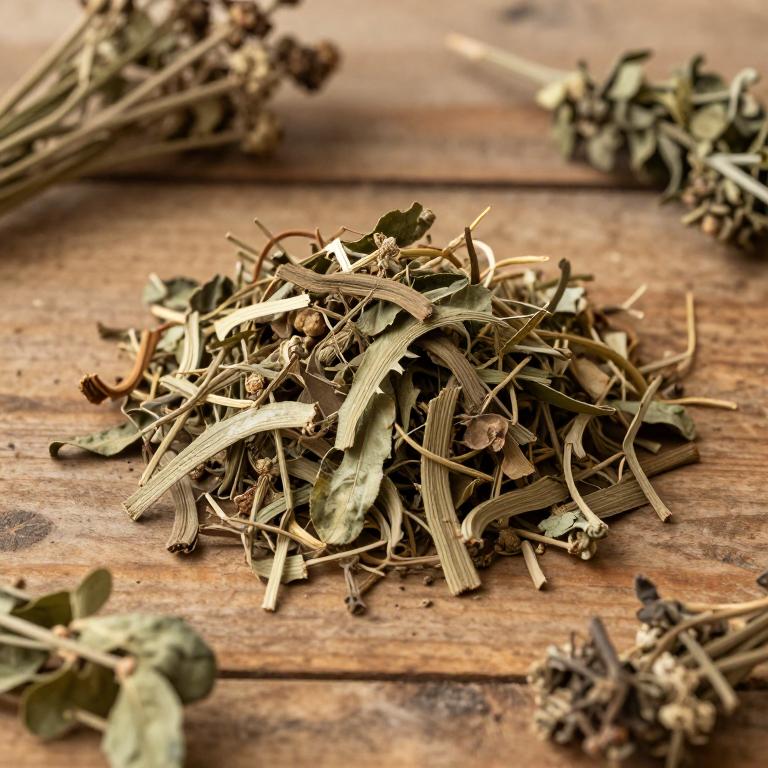
Eurycoma longifolia, scientifically known as Eurycoma harmandiaana, is a powerful medicinal shrub native to Southeast Asia. Renowned for its potent bioactive compounds, it is widely used in traditional medicine to boost energy, enhance libido, and combat malaria. This versatile plant remains a cornerstone of natural health and vitality.
- Family
- Simaroubaceae
- Native range
- Asia-Tropical
- Parts used
- Root
- Common names
- Not available
- Scientific synonyms
- Not available
Names and Synonyms
Scientific Names
Accepted name
Eurycoma harmandianaSources: Wikidata, Catalogue of Life
Taxonomical Classification
This plant belongs to the kingdom Plantae and is classified within the phylum Streptophyta and the class Equisetopsida. As a member of the subclass Magnoliidae and the order Sapindales, it is placed in the family Simaroubaceae. It is specifically identified under the genus Eurycoma.
| Rank | Classification |
|---|---|
| Kingdom | Plantae |
| Phylum | Streptophyta |
| Class | Equisetopsida |
| Subclass | Magnoliidae |
| Order | Sapindales |
| Family | Simaroubaceae |
| Genus | Eurycoma |
Sources: The World Checklist of Vascular Plants (WCVP)
Distribution
This plant, Eurycoma longifolia (commonly referred to as Eurycoma harmandiana in certain taxonomical contexts), exhibits a specific range within the Indo-China region. Its natural habitat is primarily concentrated in the tropical landscapes of Southeast Asia. Specifically, the species can be found growing across the country of Cambodia. It also maintains a significant presence throughout the various terrains of Thailand. Furthermore, its geographical distribution extends into the forested areas of Vietnam.
| Region | Area |
|---|---|
| Indo-China | Cambodia |
| Indo-China | Thailand |
| Indo-China | Vietnam |
Sources: The World Checklist of Vascular Plants (WCVP)
Plant Parts
Eurycoma harmandiana has 1 reported plant parts identified across 2 scientific publications and several other databases that are studied for medicinal purposes. The most consistently reported plant part include root.
| Plant part | Supporting sources | Consensus |
|---|---|---|
| Root | 2 supporting sources | ★☆☆☆☆ |
Root
- Phytochemistry
- Chemistry & biodiversity
Chemicals
Eurycoma harmandiana has 4 reported phytochemicals identified across 2 scientific publications and several other databases. The most consistently reported chemicals include 9-Hydroxycanthin-6-one, 9-Methoxycanthin-6-one, Canthin, Canthin-6-one.
| Chemical | Supporting sources | Consensus |
|---|---|---|
| 9-Hydroxycanthin-6-one | 1 supporting sources | ★☆☆☆☆ |
| 9-Methoxycanthin-6-one | 1 supporting sources | ★☆☆☆☆ |
| Canthin | 1 supporting sources | ★☆☆☆☆ |
| Canthin-6-one | 1 supporting sources | ★☆☆☆☆ |
9-Hydroxycanthin-6-one
- Chemistry & biodiversity
9-Methoxycanthin-6-one
- Chemistry & biodiversity
Canthin
- Chemistry & biodiversity
Canthin-6-one
- Chemistry & biodiversity
Preparations
Eurycoma harmandiana has 1 reported preparations identified across 2 scientific publications and several other databases. The most consistently reported preparations include intact roots.
| Preparation | Supporting sources | Consensus |
|---|---|---|
| Intact roots | 1 supporting sources | ★☆☆☆☆ |
Intact roots
- Chemistry & biodiversity