Euploca rariflora
Euploca rariflora · Accepted scientific name
Scientific literature: Very Sparse (10 studies) · ★☆☆☆☆
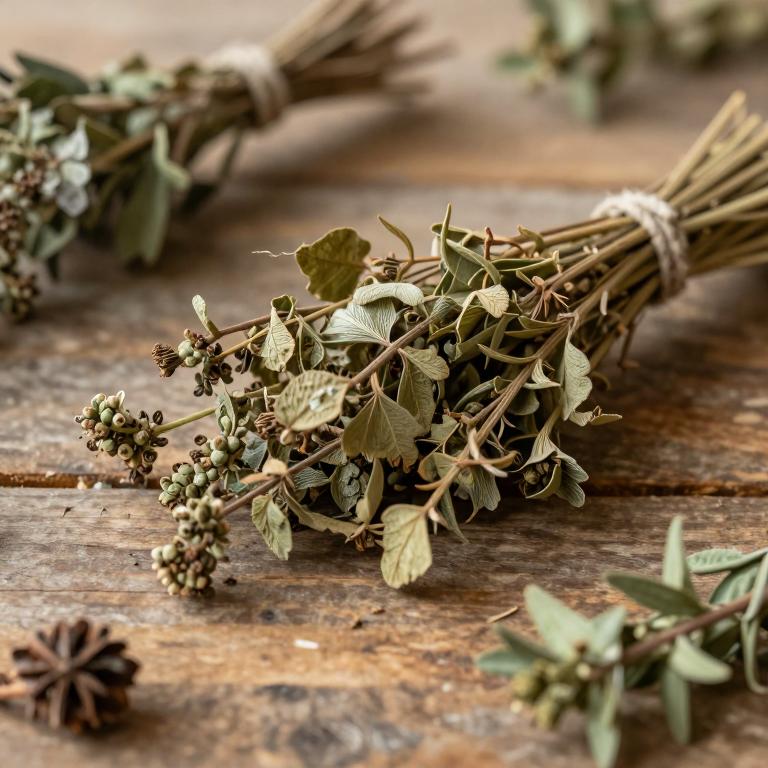
, scientifically known as Euploca rariflora, is a remarkable medicinal plant valued for its diverse therapeutic properties. Traditionally used in various herbal practices, it offers significant potential in treating inflammatory conditions and supporting overall wellness. Exploring its botanical characteristics and bioactive compounds reveals its vital role in natural medicine.
- Family
- Boraginaceae
- Native range
- Africa
- Parts used
- Leaf · Root
- Common names
- Not available
- Scientific synonyms
- Heliotropium Rariflorum
Names and Synonyms
Scientific Names
Accepted name
Euploca rarifloraSynonyms
- Heliotropium rariflorum
Sources: Wikidata
Taxonomical Classification
This plant belongs to the kingdom Plantae and the phylum Streptophyta, falling under the class Equisetopsida and subclass Magnoliidae. It is further classified within the order Boraginales and the family Boraginaceae. Finally, its specific taxonomic identification is established within the genus Euploca.
| Rank | Classification |
|---|---|
| Kingdom | Plantae |
| Phylum | Streptophyta |
| Class | Equisetopsida |
| Subclass | Magnoliidae |
| Order | Boraginales |
| Family | Boraginaceae |
| Genus | Euploca |
Sources: The World Checklist of Vascular Plants (WCVP)
Distribution
This plant exhibits a specific geographical distribution spanning several regions across the African continent. In West Tropical Africa, its presence is documented in Mauritania and Niger. Moving eastward, the species is also found within the Northeast Tropical Africa region. Specifically, it inhabits the territories of Chad and Djibouti. Finally, the distribution extends further into the Horn of Africa, reaching as far as Eritrea.
| Region | Area |
|---|---|
| West Tropical Africa | Mauritania |
| West Tropical Africa | Niger |
| Northeast Tropical Africa | Chad |
| Northeast Tropical Africa | Djibouti |
| Northeast Tropical Africa | Eritrea |
| Northeast Tropical Africa | Ethiopia |
| Northeast Tropical Africa | Socotra |
| Northeast Tropical Africa | Somalia |
| Northeast Tropical Africa | Sudan-South Sudan |
| East Tropical Africa | Kenya |
Sources: The World Checklist of Vascular Plants (WCVP)
Botanical Identification
Ecology
The ecology of Euploca rariflora is characterized by its ability to inhabit a diverse range of altitudinal gradients, demonstrating significant adaptability to varying topographical conditions. This species is found across a broad vertical distribution, ranging from low-lying areas at a minimum elevation of 168 m AMSL to higher montane or sub-montane regions reaching a maximum elevation of 1850 m AMSL. This expansive elevational range suggests that the plant can thrive in various microclimates, potentially encountering a wide spectrum of temperature regimes, moisture levels, and atmospheric pressures as it scales from near sea level to high-altitude environments.
- Elevational range max:
- 1850 m AMSL
- Elevational range min:
- 168 m AMSL
Life history
The life history of Euploca rariflora is characterized by a perennial lifecycle, allowing the plant to persist through multiple growing seasons. In terms of its structural life form, it is classified as a chamaephyte, a designation that reflects its growth habit where the permanent shoots are located close to the soil surface, often protected by a layer of leaf litter or ground cover. This chamaephyte classification is consistently applied across its morphological descriptions, indicating a strategy suited for survival in its specific ecological niche through this low-growing, perennial stature.
- Life form :
- chamaephyte
- Lifecycle :
- perennial
Morphology
The morphology of Euploca rariflora is characterized by a shrubby growth form, manifesting as a woody plant that maintains a self-supporting structure rather than acting as a climber. It typically reaches a plant height ranging from a minimum of 0.3 m to a maximum of 1 m. Although categorized within a spectrum that includes aquatic and semiaquatic types, its specific habit is terrestrial, and it functions as an independent organism rather than a parasite or an epiphyte.
- Aquatic :
- terrestrial
- Climber :
- self-supporting
- Epiphyte :
- terrestrial
- Growth form :
- shrub
- Parasite :
- independent
- Plant height max:
- 1 m
- Plant height min:
- 0.3 m
- Woodiness :
- woody
Reproduction
Reproduction in Euploca rariflora is characterized by the production of remarkably uniform and lightweight seeds, which play a critical role in its dispersal and propagation strategies. Quantitative analysis of its reproductive output reveals a highly consistent seed profile, with a recorded seed mass mean of 0.00106 g. This consistency is further evidenced by the fact that the seed mass maximum and minimum values are identical, both measured at 0.00106 g. Such precise uniformity in seed mass suggests a highly standardized developmental process during seed maturation, ensuring that each individual unit produced for the next generation maintains a specific, minimal weight.
- Seed mass mean:
- 0.00106 g
Sources: Global Inventory of Floras and Traits (GIFT)
Plant Parts
Euploca rariflora has 3 reported plant parts identified across 3 scientific publications and several other databases that are studied for medicinal purposes. The most consistently reported plant part include leaf, root, stem.
| Plant part | Supporting sources | Consensus |
|---|---|---|
| Leaf | 1 supporting sources | ★☆☆☆☆ |
| Root | 1 supporting sources | ★☆☆☆☆ |
| Stem | 1 supporting sources | ★☆☆☆☆ |
Leaf
- Chemistry & biodiversity
Root
- Chemistry & biodiversity
Stem
- Chemistry & biodiversity
Chemicals
Euploca rariflora has 7 reported phytochemicals identified across 3 scientific publications and several other databases. The most consistently reported chemicals include 2,4-DIMETHYLFURAN, 3,5-Dimethylpyrazole, 6-Octadecenoic acid, 9,12-Octadecadienoic acid (Z,Z)-, CA.
| Chemical | Supporting sources | Consensus |
|---|---|---|
| 2,4-DIMETHYLFURAN | 1 supporting sources | ★☆☆☆☆ |
| 3,5-Dimethylpyrazole | 1 supporting sources | ★☆☆☆☆ |
| 6-Octadecenoic acid | 1 supporting sources | ★☆☆☆☆ |
| 9,12-Octadecadienoic acid (Z,Z)- | 1 supporting sources | ★☆☆☆☆ |
| CA | 1 supporting sources | ★☆☆☆☆ |
| CU | 1 supporting sources | ★☆☆☆☆ |
| cis-7-Dodecen-1-yl acetate | 1 supporting sources | ★☆☆☆☆ |
2,4-DIMETHYLFURAN
- Chemistry & biodiversity
3,5-Dimethylpyrazole
- Chemistry & biodiversity
6-Octadecenoic acid
- Chemistry & biodiversity
9,12-Octadecadienoic acid (Z,Z)-
- Chemistry & biodiversity
CA
- Chemistry & biodiversity
CU
- Chemistry & biodiversity
cis-7-Dodecen-1-yl acetate
- Chemistry & biodiversity