Large-flowered Sticky Eyebright
Euphrasia officinalis subsp. pratensis · Accepted scientific name
Scientific literature: Very Sparse (18 studies) · ★☆☆☆☆
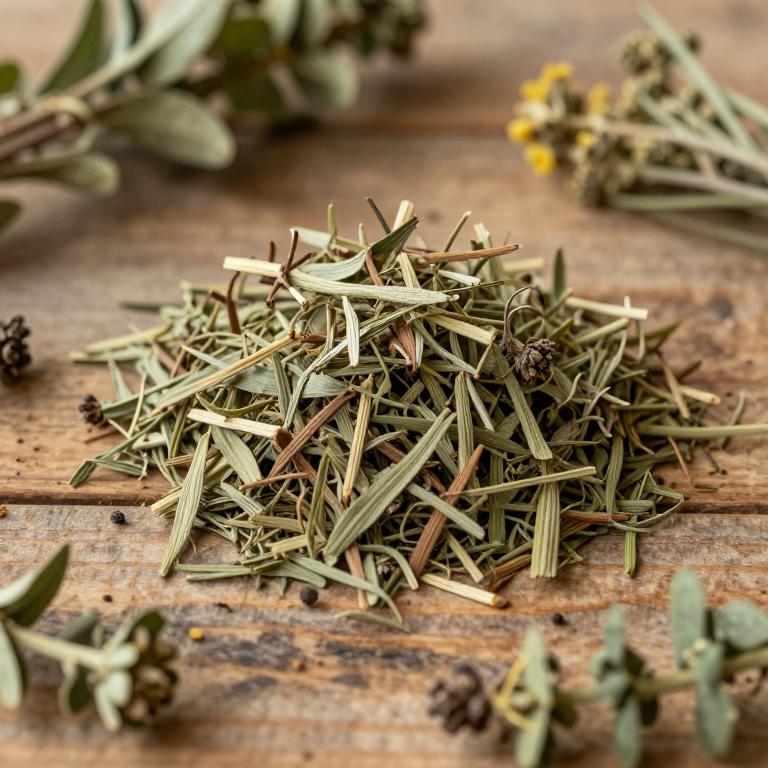
Large-flowered Sticky Eyebright, scientifically known as Euphrasia officiinali subsp. pratensis, is a delicate perennial herb celebrated for its traditional medicinal properties. Renowned for its historical use in supporting ocular health, this plant features charming blossoms and is a vital component in herbal remedies aimed at soothing eye irritations.
Names and Synonyms
Common Names
- Large-flowered Sticky Eyebright
- Common eyebright
- eyewort
Scientific Names
Accepted name
Euphrasia officinalis subsp. pratensisSynonyms
- Euphrasia stricta var. puberula
- Euphrasia officinalis var. minor
- Euphrasia rostkoviana subsp. grandiflora
- Euphrasia officinalis subsp. rostkoviana
- Euphrasia pectinata var. puberula
- Euphrasia salisburgensis proles soyeri
- Euphrasia officinalis var. puberula
- Euphrasia rostkoviana subsp. pratensis
- Euphrasia tatarica var. cebennensis
- Euphrasia nemorosa subsp. cebennensis
- Euphrasia officinalis f. lapponica
- Euphrasia rostkoviana var. jetteri
- Euphrasia officinalis var. neglecta
- Euphrasia officinalis var. alpestris
- Euphrasia officinalis var. purpureocaerulea
- Euphrasia officinalis var. flava
- Euphrasia ramosa
- Euphrasia rostkoviana
- Euphrasia sintenisii
- Euphrasia soyeri
- Euphrasia subalpina
- Euphrasia transiens
- Euphrasia uliginosa
- Euphrasia vulgaris
- Euphrasia capitulata
- Euphrasia carniolica
- Euphrasia cebennensis
- Euphrasia cuspidatissima
- Euphrasia danica
- Euphrasia exigua
- Euphrasia imbricata
- Euphrasia jordaniana
- Euphrasia lapeyrousei
- Euphrasia minor
- Euphrasia olympica
- Euphrasia parvula
- Euphrasia pubibunda
- Euphrasia puberula
- Euphrasia officinalis subsp. minor
- Euphrasia agrestis
- Euphrasia officinalis f. brevidens
- Euphrasia fennica f. brevidens
- Euphrasia officinalis var. pratensis
- Euphrasia rostkoviana subsp. kreiselii
Regional and Traditional Names
Spanish:
- Ojo brillante
German:
- Berg-Augentrost
- Berg-Wiesen-Augentrost
- Feld-Augentrost
- Wiesen-Augentrost
- Echter Augentrost
- Gemeiner Augentrost
French:
- Euphraise de Rostkov
Sources: Wikidata, Catalogue of Life
Taxonomical Classification
This plant belongs to the kingdom Plantae within the phylum Streptophyta and the class Equisetopsida. It is further classified under the subclass Magnoliidae and the order Lamiales, falling into the family Orobanchaceae. Finally, it is situated within the genus Euphrasia as the subspecies pratensis.
| Rank | Classification |
|---|---|
| Kingdom | Plantae |
| Phylum | Streptophyta |
| Class | Equisetopsida |
| Subclass | Magnoliidae |
| Order | Lamiales |
| Family | Orobanchaceae |
| Genus | Euphrasia |
Sources: The World Checklist of Vascular Plants (WCVP)
Distribution
This plant exhibits a specific distribution pattern primarily concentrated within the regions of Northern Europe. Its presence is documented across several key countries, including Denmark and Finland. Furthermore, it can be found growing within the territories of Great Britain and Ireland. The geographical range also extends to the Scandinavian nation of Sweden. Collectively, these locations define the northern European habitats where this subspecies thrives.
| Region | Area |
|---|---|
| Northern Europe | Denmark |
| Northern Europe | Finland |
| Northern Europe | Great Britain |
| Northern Europe | Ireland |
| Northern Europe | Sweden |
| Middle Europe | Austria |
| Middle Europe | Belgium |
| Middle Europe | Czechia-Slovakia |
| Middle Europe | Germany |
| Middle Europe | Hungary |
Sources: The World Checklist of Vascular Plants (WCVP)
Chemicals
Euphrasia officinalis subsp. pratensis has 10 reported phytochemicals identified across 0 scientific publications and several other databases. The most consistently reported chemicals include RUTIN, ANETHOLE, CHLOROGENIC ACID, Flavonoids, Hydroxycinnamic Acids.
| Chemical | Supporting sources | Consensus |
|---|---|---|
| RUTIN | 2 supporting sources | ★☆☆☆☆ |
| ANETHOLE | 1 supporting sources | ★☆☆☆☆ |
| CHLOROGENIC ACID | 1 supporting sources | ★☆☆☆☆ |
| Flavonoids | 1 supporting sources | ★☆☆☆☆ |
| Hydroxycinnamic Acids | 1 supporting sources | ★☆☆☆☆ |
| Iridoids | 1 supporting sources | ★☆☆☆☆ |
| Linalool | 1 supporting sources | ★☆☆☆☆ |
| MYRISTIC ACID | 1 supporting sources | ★☆☆☆☆ |
| THYMOL | 1 supporting sources | ★☆☆☆☆ |
| n-Hexadecanoic acid | 1 supporting sources | ★☆☆☆☆ |
RUTIN
- Phytochemistry
- Plants (Basel, Switzerland)
ANETHOLE
- Evidence-based complementary and alternative medicine : eCAM
CHLOROGENIC ACID
- Plants (Basel, Switzerland)
Flavonoids
- Phytochemistry
Hydroxycinnamic Acids
- Phytochemistry
Iridoids
- Phytochemistry
Linalool
- Evidence-based complementary and alternative medicine : eCAM
MYRISTIC ACID
- Evidence-based complementary and alternative medicine : eCAM
THYMOL
- Evidence-based complementary and alternative medicine : eCAM
n-Hexadecanoic acid
- Evidence-based complementary and alternative medicine : eCAM
Activities
Euphrasia officinalis subsp. pratensis has 3 reported activities identified across 0 scientific publications and several other databases. The most consistently reported activities include Antimicrobial, Antioxidant, Antiproliferative.
| Activity | Supporting sources | Consensus |
|---|---|---|
| Antimicrobial | 1 supporting sources | ★☆☆☆☆ |
| Antioxidant | 1 supporting sources | ★☆☆☆☆ |
| Antiproliferative | 1 supporting sources | ★☆☆☆☆ |
Antimicrobial
- Plants (Basel, Switzerland)
Antioxidant
- Plants (Basel, Switzerland)
Antiproliferative
- Plants (Basel, Switzerland)
Conditions
Euphrasia officinalis subsp. pratensis has 1 reported investigations on conditions identified across 0 scientific publications and several other databases. The most consistently reported conditions include cancer.
| Condition | Supporting sources | Consensus |
|---|---|---|
| Cancer | 1 supporting sources | ★☆☆☆☆ |
Cancer
- Plants (Basel, Switzerland)