spurge
Euphorbia · Accepted scientific name
Scientific literature: Sparse (76 studies) · ★★☆☆☆
Spurge, scientifically known as Euphorbia, is a vast and diverse genus encompassing over two thousand species worldwide. Renowned for their unique milky latex, these plants range from ornamental succulents to hardy wildflowers. While many species offer significant medicinal potential, their potent chemical compounds require careful handling and expert knowledge.
- Family
- Euphorbiaceae
- Native range
- Europe
- Parts used
- Root · Leaf
- Common names
- Spurge · Spurges
- Scientific synonyms
- Cyathophora · Cubanthus · 64 more
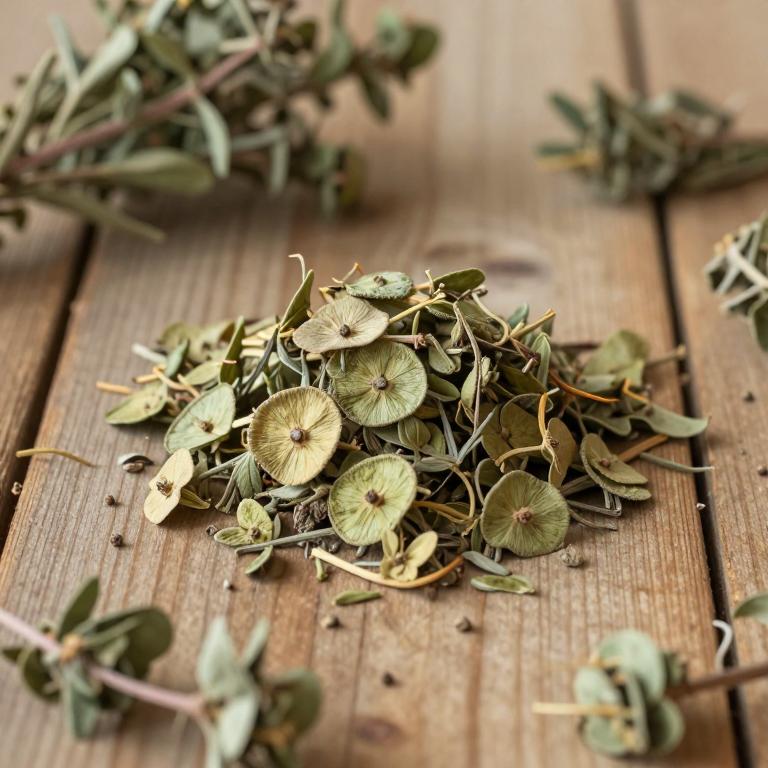
Names and Synonyms
Common Names
- spurge
- Spurges
Scientific Names
Accepted name
EuphorbiaSynonyms
- Cyathophora
- Cubanthus
- Pleuradena
- Stenadenium
- Zygophyllidium
- Xamesike
- Murtekias
- Treisia
- Tumalis
- Lepadena
- Tirucalia
- Tithymalopsis
- Tithymalus
- Kobiosis
- Lacanthis
- Hexadenia
- Euphorbiastrum
- Euphorbion
- Cystidospermum
- Euphorbiodendron
- Dactylanthes
- Ditritra
- Diplocyathium
- Dichylium
- Chylogala
- Dematra
- Characias
- Chamaesyce
- Arthrothamnus
- Alectoroctonum
- Lortia
- Eumecanthus
- Anthacantha
- Aplarina
- Epurga
- Allobia
- Aklema
- Agaloma
- Nisomenes
- Torfasadis
- Monadenium
- Elaeophorbia
- Tithymaloides
- Pythius
- Euphorbium
- Ctenadena
- Tithymalus
- Galarhoeus
- Galorhoeus
- Synadenium
- Poinsettia
- Kanopikon
- Keraselma
- Trichosterigma
- Sclerocyathium
- Sterigmanthe
- Medusea
- Peccana
- Pyretrum
- Esula
- Zalitea
- Lophobios
- Endoisila
- Endadenium
- Adenorima
- Diadenaria
Regional and Traditional Names
German:
- Wolfsmilch
- Euphorbie
- Giftmilch
- Euphorbien
- Damarawolfsmilch
- Besenwolfsmilch
- Wolfsmilch
French:
- Euphorbe
- euphorbes
- Euphorbe
Sources: Wikidata, Catalogue of Life
Taxonomical Classification
This plant belongs to the kingdom Plantae and the phylum Streptophyta, falling under the class Equisetopsida and subclass Magnoliidae. It is further classified within the order Malpighiales and the family Euphorbiaceae. Finally, the medicinal plant is identified by its genus, Euphorbia.
| Rank | Classification |
|---|---|
| Kingdom | Plantae |
| Phylum | Streptophyta |
| Class | Equisetopsida |
| Subclass | Magnoliidae |
| Order | Malpighiales |
| Family | Euphorbiaceae |
| Genus | Euphorbia |
Sources: The World Checklist of Vascular Plants (WCVP)
Distribution
This plant exhibits a specific distribution pattern across the northernmost regions of the European continent. Within Northern Europe, its presence can be identified in the territories of Denmark and Finland. The species also extends to the island nations of Iceland and the Førøya islands. Additionally, its geographical range encompasses the landmass of Great Britain. Together, these locations define the northern limits of its natural habitat.
| Region | Area |
|---|---|
| Northern Europe | Denmark |
| Northern Europe | Finland |
| Northern Europe | Føroyar |
| Northern Europe | Great Britain |
| Northern Europe | Iceland |
| Northern Europe | Ireland |
| Northern Europe | Norway |
| Northern Europe | Sweden |
| Middle Europe | Austria |
| Middle Europe | Belgium |
Sources: The World Checklist of Vascular Plants (WCVP)
Plant Parts
Euphorbia has 3 reported plant parts identified across 4 scientific publications and several other databases that are studied for medicinal purposes. The most consistently reported plant part include root, leaf, stem.
| Plant part | Supporting sources | Consensus |
|---|---|---|
| Root | 2 supporting sources | ★☆☆☆☆ |
| Leaf | 1 supporting sources | ★☆☆☆☆ |
| Stem | 1 supporting sources | ★☆☆☆☆ |
Root
- Current topics in medicinal chemistry
- Journal of ethnopharmacology
Leaf
- Current topics in medicinal chemistry
Stem
- Current topics in medicinal chemistry
Chemicals
Euphorbia has 21 reported phytochemicals identified across 4 scientific publications and several other databases. The most consistently reported chemicals include Flavonoids, triterpenoids, Cycloartenol, Euphol, Euphorbia factor L3.
| Chemical | Supporting sources | Consensus |
|---|---|---|
| Flavonoids | 3 supporting sources | ★★☆☆☆ |
| triterpenoids | 2 supporting sources | ★☆☆☆☆ |
| Cycloartenol | 1 supporting sources | ★☆☆☆☆ |
| Euphol | 1 supporting sources | ★☆☆☆☆ |
| Euphorbia factor L3 | 1 supporting sources | ★☆☆☆☆ |
| Ingenol 3-angelate | 1 supporting sources | ★☆☆☆☆ |
| Ingenol mebutate | 1 supporting sources | ★☆☆☆☆ |
| LYSOZYME | 1 supporting sources | ★☆☆☆☆ |
| Lectin | 1 supporting sources | ★☆☆☆☆ |
| Lupane | 1 supporting sources | ★☆☆☆☆ |
Flavonoids
- Current topics in medicinal chemistry
- Biomolecules
- Frontiers in plant science
triterpenoids
- Plants (Basel, Switzerland)
- Molecules (Basel, Switzerland)
Cycloartenol
- Plants (Basel, Switzerland)
Euphol
- Plants (Basel, Switzerland)
Euphorbia factor L3
- Molecules (Basel, Switzerland)
Ingenol 3-angelate
- Progress in the chemistry of organic natural products
Ingenol mebutate
- Progress in the chemistry of organic natural products
LYSOZYME
- Plants (Basel, Switzerland)
Lectin
- Plants (Basel, Switzerland)
Lupane
- Molecules (Basel, Switzerland)
Activities
Euphorbia has 11 reported activities identified across 4 scientific publications and several other databases. The most consistently reported activities include Antioxidant, Cytotoxic, Antibacterial, Anticancer, Antiviral.
| Activity | Supporting sources | Consensus |
|---|---|---|
| Antioxidant | 4 supporting sources | ★★☆☆☆ |
| Cytotoxic | 4 supporting sources | ★★☆☆☆ |
| Antibacterial | 3 supporting sources | ★★☆☆☆ |
| Anticancer | 3 supporting sources | ★★☆☆☆ |
| Antiviral | 2 supporting sources | ★☆☆☆☆ |
| Antidiabetic | 1 supporting sources | ★☆☆☆☆ |
| Antifungal | 1 supporting sources | ★☆☆☆☆ |
| Antimicrobial | 1 supporting sources | ★☆☆☆☆ |
| Antiproliferative | 1 supporting sources | ★☆☆☆☆ |
| Genotoxic | 1 supporting sources | ★☆☆☆☆ |
Antioxidant
- Foods (Basel, Switzerland)
- Plants (Basel, Switzerland)
- Frontiers in plant science
- Advances in pharmacological and pharmaceutical sciences
Cytotoxic
- Current topics in medicinal chemistry
- Frontiers in plant science
- Advances in pharmacological and pharmaceutical sciences
- Molecules (Basel, Switzerland)
Antibacterial
- Current topics in medicinal chemistry
- Plants (Basel, Switzerland)
- Frontiers in plant science
Anticancer
- Current topics in medicinal chemistry
- Plants (Basel, Switzerland)
- Advances in pharmacological and pharmaceutical sciences
Antiviral
- Plants (Basel, Switzerland)
- Advances in pharmacological and pharmaceutical sciences
Antidiabetic
- Advances in pharmacological and pharmaceutical sciences
Antifungal
- Plants (Basel, Switzerland)
Antimicrobial
- Advances in pharmacological and pharmaceutical sciences
Antiproliferative
- Plants (Basel, Switzerland)
Genotoxic
- Frontiers in plant science
Conditions
Euphorbia has 16 reported investigations on conditions identified across 4 scientific publications and several other databases. The most consistently reported conditions include cancer, pregnancy, actinic keratosis, amaurosis, cancers.
| Condition | Supporting sources | Consensus |
|---|---|---|
| Cancer | 3 supporting sources | ★★☆☆☆ |
| Pregnancy | 2 supporting sources | ★☆☆☆☆ |
| Actinic keratosis | 1 supporting sources | ★☆☆☆☆ |
| Amaurosis | 1 supporting sources | ★☆☆☆☆ |
| Cancers | 1 supporting sources | ★☆☆☆☆ |
| Deafness | 1 supporting sources | ★☆☆☆☆ |
| Dropsy | 1 supporting sources | ★☆☆☆☆ |
| Herpes simplex virus type 2 | 1 supporting sources | ★☆☆☆☆ |
| Inflammation | 1 supporting sources | ★☆☆☆☆ |
| Paralysis | 1 supporting sources | ★☆☆☆☆ |
Cancer
- BMC cancer
- Biomolecules
- Molecules (Basel, Switzerland)
Pregnancy
- Current topics in medicinal chemistry
- Molecules (Basel, Switzerland)
Actinic keratosis
- Progress in the chemistry of organic natural products
Amaurosis
- Frontiers in plant science
Cancers
- Memorias do Instituto Oswaldo Cruz
Deafness
- Frontiers in plant science
Dropsy
- Frontiers in plant science
Herpes simplex virus type 2
- Memorias do Instituto Oswaldo Cruz
Inflammation
- Biomolecules
Paralysis
- Frontiers in plant science
Preparations
Euphorbia has 9 reported preparations identified across 4 scientific publications and several other databases. The most consistently reported preparations include honey, latex, crude extracts, essential oil, essential oils.
| Preparation | Supporting sources | Consensus |
|---|---|---|
| Honey | 2 supporting sources | ★☆☆☆☆ |
| Latex | 2 supporting sources | ★☆☆☆☆ |
| Crude extracts | 1 supporting sources | ★☆☆☆☆ |
| Essential oil | 1 supporting sources | ★☆☆☆☆ |
| Essential oils | 1 supporting sources | ★☆☆☆☆ |
| Extracts | 1 supporting sources | ★☆☆☆☆ |
| Phenolic extracts | 1 supporting sources | ★☆☆☆☆ |
| Pure compounds | 1 supporting sources | ★☆☆☆☆ |
| White sticky latex sap | 1 supporting sources | ★☆☆☆☆ |
Honey
- Foods (Basel, Switzerland)
- Journal of evidence-based integrative medicine
Latex
- Frontiers in plant science
- Studies in ancient medicine
Crude extracts
- Current topics in medicinal chemistry
Essential oil
- Pharmaceuticals (Basel, Switzerland)
Essential oils
- Biomolecules
Extracts
- Biomolecules
Phenolic extracts
- Foods (Basel, Switzerland)
Pure compounds
- Biomolecules
White sticky latex sap
- Plants (Basel, Switzerland)