Russian leafy spurge
Euphorbia uralensis · Accepted scientific name
Scientific literature: Very Sparse (10 studies) · ★☆☆☆☆
Russian leafy spurge, scientifically known as Euphorbia uralensis, is a perennial herb noted for its medicinal properties in traditional practices. While often classified as an invasive weed, its bioactive compounds offer potential therapeutic benefits. Understanding its chemical composition is essential for exploring its role in modern pharmacological research and herbalism.
- Family
- Euphorbiaceae
- Native range
- Europe
- Parts used
- Not available
- Common names
- Russian Leafy Spurge
- Scientific synonyms
- Tithymalus Uralensis · Euphorbia Esula Var. Uralensis · 2 more
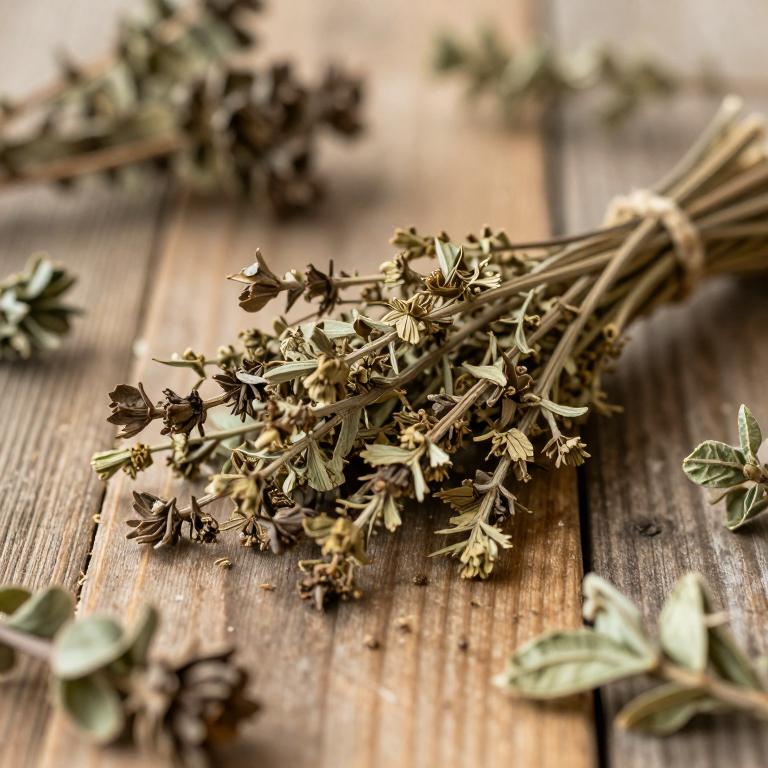
Names and Synonyms
Common Names
- Russian leafy spurge
Scientific Names
Accepted name
Euphorbia uralensisSynonyms
- Tithymalus uralensis
- Euphorbia esula var. uralensis
- Euphorbia virgata var. uralensis
- Galarhoeus uralensis
Sources: Wikidata, Catalogue of Life
Taxonomical Classification
This plant belongs to the kingdom Plantae and the phylum Streptophyta within the class Equisetopsida. It is further classified under the subclass Magnoliidae and the order Malpighiales. Finally, it is a member of the family Euphorbiaceae and falls under the genus Euphorbia.
| Rank | Classification |
|---|---|
| Kingdom | Plantae |
| Phylum | Streptophyta |
| Class | Equisetopsida |
| Subclass | Magnoliidae |
| Order | Malpighiales |
| Family | Euphorbiaceae |
| Genus | Euphorbia |
Sources: The World Checklist of Vascular Plants (WCVP)
Distribution
This plant exhibits a broad distribution across various regions of Eastern Europe. It can be found throughout the diverse territories of Central European Russia. Its presence extends further into the expansive landscapes of East European Russia and North European Russia. Additionally, the species is documented within the regions of South European Russia. Finally, its geographical range reaches into Siberia, specifically within the Altay region.
| Region | Area |
|---|---|
| Eastern Europe | Central European Russia |
| Eastern Europe | East European Russia |
| Eastern Europe | North European Russia |
| Eastern Europe | South European Russia |
| Siberia | Altay |
| Siberia | Buryatiya |
| Siberia | Irkutsk |
| Siberia | Krasnoyarsk |
| Siberia | Tuva |
| Siberia | West Siberia |
Sources: The World Checklist of Vascular Plants (WCVP)
Botanical Identification
Ecology
The ecology of Euphorbia uralensis is characterized by its remarkable adaptability to a diverse range of environmental conditions and substrates. It thrives in varied landscapes, ranging from managed agricultural settings like crop fields to natural ecosystems such as forests, meadows, and steppes. This species demonstrates a high tolerance for varying moisture levels, inhabiting both wet environments near lakes and rivers as well as drier, stony places and old fields. Furthermore, it is frequently found in disturbed or ruderal sites and can tolerate saline places, suggesting a resilience to soil salinity and human-impacted habitats. Its ability to colonize both shrubberies and open, transitional zones highlights its role as a versatile component of multiple ecological niches.
- Habitat :
- crop fields, forest, lakes, meadows: wet, old fields, rivers, ruderal sites, saline places, shrubberies, steppe, stony places
Life history
The life history of Euphorbia uralensis is characterized by its status as a perennial species, allowing it to persist through multiple growing seasons. As a perennial, the plant establishes a stable presence in its habitat, often relying on a robust root system to survive dormant periods and facilitate regrowth in subsequent years. This long-term lifecycle enables the plant to invest energy into structural development and repeated reproductive cycles, distinguishing it from annual or biennial species that complete their life history in a single season. Through this perennial strategy, Euphorbia uralensis can maintain its ecological niche and contribute to the stability of its surrounding environment over an extended duration.
- Lifecycle :
- perennial
Morphology
The morphology of Euphorbia uralensis is characterized by its growth form as a non-woody herb and forb. It functions as a self-supporting plant, requiring no external structures for support during its development. In terms of stature, the plant exhibits a relatively modest height, typically ranging from a minimum of 0.2 m to a maximum of 1 m.
- Climber :
- self-supporting
- Growth form :
- herb
- Growth form :
- forb
- Plant height max:
- 1 m
- Plant height min:
- 0.2 m
- Woodiness :
- non-woody
Physiology
The physiology of Euphorbia uraulensis is characterized by a specialized metabolic framework adapted to its arid and semi-arid habitats. As a member of the Euphorbiaceae family, its primary mode of carbon assimilation follows the C3 photosynthetic pathway, which involves the direct fixation of atmospheric carbon dioxide by the enzyme RuBisCO within the mesophyll cells. This C3 pathway dictates the plant's water-use efficiency and transpiration rates, requiring specific stomatal regulation to balance gas exchange with the prevention of desiccation in harsh environments. Beyond carbon fixation, the plant exhibits complex secondary metabolic processes, particularly the synthesis of bioactive diterpenoids and specialized latex. This latex serves a physiological role in both defense against herbivory and wound healing, functioning through a rapid coagulation mechanism. Furthermore, its physiological resilience is supported by robust osmotic adjustment capabilities, allowing the plant to maintain cellular turgor and metabolic activity despite fluctuating soil moisture levels.
- Photosynthetic pathway :
- C3
Reproduction
The reproduction of Euphorbia uralensis is characterized by a specific seasonal flowering cycle that facilitates its pollination and subsequent seed production. The flowering period for this species typically commences in June, marking the onset of its reproductive phase. This blooming process continues through the early summer months, reaching its conclusion in July. This relatively concentrated flowering window ensures that the plant's reproductive efforts are synchronized with specific environmental conditions during the mid-year transition.
- Flowering time :
- Jun
- Flowering time :
- Jul
Sources: Global Inventory of Floras and Traits (GIFT)
Chemicals
Euphorbia uralensis has 9 reported phytochemicals identified across 0 scientific publications and several other databases. The most consistently reported chemicals include Fatty acids, Flavonoids, Phenols, Pubinernoid A, Sesquiterpenes.
| Chemical | Supporting sources | Consensus |
|---|---|---|
| Fatty acids | 1 supporting sources | ★☆☆☆☆ |
| Flavonoids | 1 supporting sources | ★☆☆☆☆ |
| Phenols | 1 supporting sources | ★☆☆☆☆ |
| Pubinernoid A | 1 supporting sources | ★☆☆☆☆ |
| Sesquiterpenes | 1 supporting sources | ★☆☆☆☆ |
| Steroids | 1 supporting sources | ★☆☆☆☆ |
| Triterpenes | 1 supporting sources | ★☆☆☆☆ |
| naringenin | 1 supporting sources | ★☆☆☆☆ |
| palmitic acid | 1 supporting sources | ★☆☆☆☆ |
Fatty acids
- International journal of molecular sciences
Flavonoids
- International journal of molecular sciences
Phenols
- International journal of molecular sciences
Pubinernoid A
- International journal of molecular sciences
Sesquiterpenes
- International journal of molecular sciences
Steroids
- International journal of molecular sciences
Triterpenes
- International journal of molecular sciences
naringenin
- International journal of molecular sciences
palmitic acid
- International journal of molecular sciences
Preparations
Euphorbia uralensis has 2 reported preparations identified across 0 scientific publications and several other databases. The most consistently reported preparations include dichloromethane (Fr-E) fraction, petroleum ether (Fr-S) fraction.
| Preparation | Supporting sources | Consensus |
|---|---|---|
| Dichloromethane (fr-e) fraction | 1 supporting sources | ★☆☆☆☆ |
| Petroleum ether (fr-s) fraction | 1 supporting sources | ★☆☆☆☆ |
Dichloromethane (fr-e) fraction
- International journal of molecular sciences
Petroleum ether (fr-s) fraction
- International journal of molecular sciences