Euphorbia poissonii
Euphorbia poissonii · Accepted scientific name
Scientific literature: Very Sparse (6 studies) · ★☆☆☆☆
, scientifically known as Euphorbia poissonii, is a specialized medicinal plant valued for its unique therapeutic properties. Found in specific ecological niches, this species is often utilized in traditional healing practices to address various ailments. Understanding its botanical characteristics and chemical composition is essential for exploring its potential pharmacological benefits.
- Family
- Euphorbiaceae
- Native range
- Africa
- Parts used
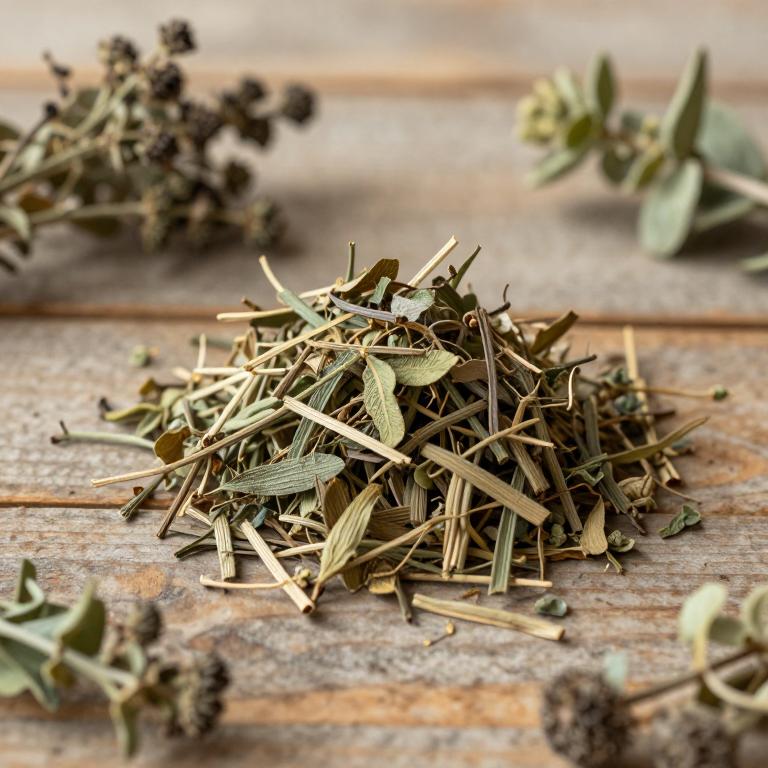
- Leaf
- Common names
- Not available
- Scientific synonyms
- Not available
Names and Synonyms
Scientific Names
Accepted name
Euphorbia poissoniiSources: Wikidata, Catalogue of Life
Taxonomical Classification
This plant belongs to the kingdom Plantae and the phylum Streptophyta, falling under the class Equisetopsida and subclass Magnoliidae. It is categorized within the order Malpighiales and the family Euphorbiaceae. Ultimately, its specific taxonomic placement is defined by the genus Euphorbia.
| Rank | Classification |
|---|---|
| Kingdom | Plantae |
| Phylum | Streptophyta |
| Class | Equisetopsida |
| Subclass | Magnoliidae |
| Order | Malpighiales |
| Family | Euphorbiaceae |
| Genus | Euphorbia |
Sources: The World Checklist of Vascular Plants (WCVP)
Distribution
This plant, Euphorbia poissonii, is primarily distributed across the region of West Tropical Africa. Its presence is documented in several specific countries within this geographic belt. For instance, it can be found growing in the territories of Benin and Burkina. Furthermore, the species extends its range into the nations of Ghana and Guinea. Finally, the plant is also known to inhabit the landscape of the Ivory Coast.
| Region | Area |
|---|---|
| West Tropical Africa | Benin |
| West Tropical Africa | Burkina |
| West Tropical Africa | Ghana |
| West Tropical Africa | Guinea |
| West Tropical Africa | Ivory Coast |
| West Tropical Africa | Mali |
| West Tropical Africa | Nigeria |
| West Tropical Africa | Togo |
| West-Central Tropical Africa | Central African Republic |
| West-Central Tropical Africa | Gabon |
Sources: The World Checklist of Vascular Plants (WCVP)
Botanical Identification
Life history
The life history of Euphorbia poissonii is characterized by its status as a perennial organism, allowing it to persist through multiple growing seasons. Structurally, the plant exhibits complex growth forms, classified both as a phanerophyte and a nanophanerophyte, indicating that its shoots are elevated above the ground level but remain relatively low or compact in stature. Throughout its development, it maintains an evergreen deciduousness, ensuring that its foliage remains functional and present across different seasonal cycles rather than shedding all leaves annually.
- Deciduousness :
- evergreen
- Life form :
- nanophanerophyte
- Life form :
- phanerophyte
- Lifecycle :
- perennial
Morphology
The morphology of Euphorbia poissonii is characterized by a woody, shrubby growth form that functions as a self-supporting plant. It typically reaches an average height of approximately 1.5 m, though individual specimens can grow to a maximum height of up to 1.828822238 m. As an independent organism, it does not exhibit parasitic behavior and grows in a terrestrial manner rather than as an epiphyte.
- Climber :
- self-supporting
- Epiphyte :
- terrestrial
- Growth form :
- shrub
- Parasite :
- independent
- Plant height max:
- 1.828822238 m
- Plant height mean:
- 1.5 m
- Woodiness :
- woody
Physiology
The physiology of Euphorbia poissonii is characterized by specialized metabolic pathways typical of the Euphorbiaceae family, often involving the production of complex diterpene esters and secondary metabolites within its specialized laticifers. These laticifers facilitate the movement of latex throughout the plant tissues, serving both a defensive role and a transport mechanism for bioactive compounds. In terms of nutrient cycling and symbiotic relationships, the plant does not exhibit the physiological capacity for biological nitrogen fixation; therefore, it is classified as a non-nitrogen fixer (trait_1: Nitrogen fixer, trait_2: Nitrogen_fix_1, trait_value: no, trait_units: yes, no). Its metabolic processes are primarily geared toward carbon sequestration through photosynthesis and the regulation of water loss, often employing specialized stomatal control to thrive in its specific ecological niche.
- Nitrogen fixer :
- no
Reproduction
The reproduction of Euphorbia poissonii is driven by a biotic pollination syndrome, relying on living organisms rather than abiotic factors to facilitate the transfer of genetic material. This reproductive process is specifically characterized by an insect-mediated mechanism, where various insect species play a critical role in the movement of pollen between flowers. Within this insect-driven framework, bees serve as a primary pollination agent, acting as key vectors in the plant's life cycle to ensure successful fertilization and subsequent seed production.
- Pollination syndrome :
- insect
- Pollination syndrome :
- bee
- Pollination syndrome :
- biotic
Sources: Global Inventory of Floras and Traits (GIFT)
Plant Parts
Euphorbia poissonii has 1 reported plant parts identified across 1 scientific publications and several other databases that are studied for medicinal purposes. The most consistently reported plant part include leaf.
| Plant part | Supporting sources | Consensus |
|---|---|---|
| Leaf | 1 supporting sources | ★☆☆☆☆ |
Leaf
- Veterinary world
Chemicals
Euphorbia poissonii has 1 reported phytochemicals identified across 1 scientific publications and several other databases. The most consistently reported chemicals include Resiniferonol.
| Chemical | Supporting sources | Consensus |
|---|---|---|
| Resiniferonol | 1 supporting sources | ★☆☆☆☆ |
Resiniferonol
- Studies in health technology and informatics
Conditions
Euphorbia poissonii has 2 reported investigations on conditions identified across 1 scientific publications and several other databases. The most consistently reported conditions include dengue fever, viral disease.
| Condition | Supporting sources | Consensus |
|---|---|---|
| Dengue fever | 1 supporting sources | ★☆☆☆☆ |
| Viral disease | 1 supporting sources | ★☆☆☆☆ |
Dengue fever
- Studies in health technology and informatics
Viral disease
- Veterinary world