Euphorbia petiolata
Euphorbia petiolata · Accepted scientific name
Scientific literature: Very Sparse (11 studies) · ★☆☆☆☆
Euphorbia petiolata, scientifically known as Euphorbia petiolata, is a versatile medicinal shrub valued in traditional herbalism. Native to various tropical regions, this plant is frequently utilized for its diverse therapeutic properties, ranging from treating skin ailments to managing inflammatory conditions, offering significant potential for modern pharmacological research and development.
- Family
- Euphorbiaceae
- Native range
- Africa
- Parts used
- Not available
- Common names
- Not available
- Scientific synonyms
- Cystidospermum Petiolatum · Dematra Petiolata · 1 more
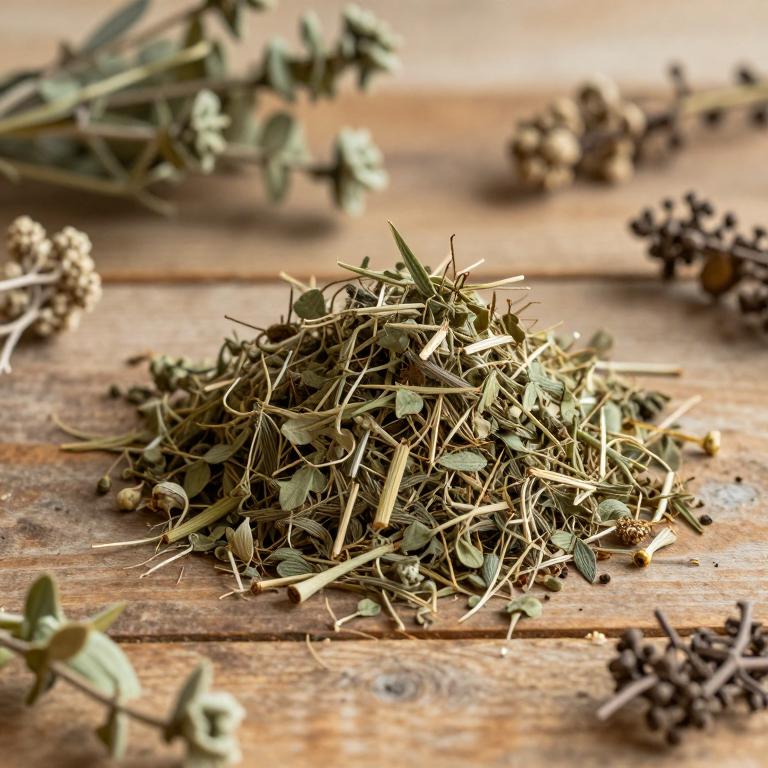
Names and Synonyms
Scientific Names
Accepted name
Euphorbia petiolataSynonyms
- Cystidospermum petiolatum
- Dematra petiolata
- Tithymalus petiolatus
Sources: Wikidata, Catalogue of Life
Taxonomical Classification
This plant belongs to the kingdom Plantae and the phylum Streptophyta, situated within the class Equisetopsida and subclass Magnoliidae. Following the order Malpighiales, it is classified under the family Euphorbiaceae. Finally, it is identified by its genus, Euphorbia, and its specific species name, petiolata.
| Rank | Classification |
|---|---|
| Kingdom | Plantae |
| Phylum | Streptophyta |
| Class | Equisetopsida |
| Subclass | Magnoliidae |
| Order | Malpighiales |
| Family | Euphorbiaceae |
| Genus | Euphorbia |
Sources: The World Checklist of Vascular Plants (WCVP)
Distribution
This plant exhibits a diverse geographical distribution spanning several distinct regions. In Northern Africa, its presence is documented within the territories of Algeria and Egypt. Moving into Western Asia, the species can be found growing in Cyprus and Iran. Its range also extends into Central Asia, specifically within Turkmenistan. Collectively, these locations highlight the wide environmental adaptability of Euphorbia petiolata.
| Region | Area |
|---|---|
| Northern Africa | Algeria |
| Northern Africa | Egypt |
| Central Asia | Turkmenistan |
| Western Asia | Cyprus |
| Western Asia | Iran |
| Western Asia | Iraq |
| Western Asia | Lebanon-Syria |
| Western Asia | Palestine |
| Western Asia | Sinai |
| Western Asia | Türkiye |
Sources: The World Checklist of Vascular Plants (WCVP)
Botanical Identification
Ecology
The ecology of Euphorbia petiolata is characterized by its opportunistic growth patterns and high adaptability to disturbed environments. It is frequently classified as a weed, thriving in disturbed soils where competition from established vegetation is minimal. This plant commonly colonizes open areas, roadsides, agricultural fields, and fallow lands, utilizing its ability to rapidly exploit nutrient-rich or cleared patches of earth. By occupying these ruderal habitats, Euphorbia petiolata manages to establish dominance in early successional stages, often outcompeting other pioneer species through efficient resource acquisition in transient ecological niches.
- Habitat :
- weed
Life history
The life history of Euphorbia petiolata is characterized by an annual lifecycle, meaning the plant completes its entire biological progression from germination to seed production within a single growing season. In terms of its ecological classification and growth habit, it is categorized as a therophyte, a life form defined by plants that survive unfavorable seasons as ephemeral seeds, rather than through persistent vegetative structures. This specific life form, identified through both its therophyte status and its classification within the broader spectrum of plant growth strategies, allows the species to rapidly exploit seasonal resources before retreating into a seed bank to await more favorable conditions.
- Life form :
- therophyte
- Lifecycle :
- annual
Morphology
The morphology of Euphorbia petiolata is characterized by its growth form as a non-woody herb. The plant typically exhibits an erect shoot orientation and is a self-supporting species that does not function as a climber or an epiphyte, maintaining a terrestrial existence. It grows as an independent organism rather than a parasite. In terms of stature, the plant is relatively small, with a height ranging from a minimum of 0.15 m to a maximum of 0.3 m.
- Aquatic :
- terrestrial
- Climber :
- self-supporting
- Epiphyte :
- terrestrial
- Growth form :
- herb
- Parasite :
- independent
- Plant height max:
- 0.3 m
- Plant height min:
- 0.15 m
- Shoot orientation :
- erect
- Woodiness :
- non-woody
Reproduction
The reproduction of Euphorbia petiolata is characterized by its specific flowering phenology, which is governed by seasonal environmental cues. The flowering process follows a distinct temporal pattern, with the flowering start occurring in June. This reproductive phase is relatively concentrated, as the flowering end also aligns with the month of June, indicating a brief or highly specific window for pollination and subsequent seed development. While the potential for flowering can be variable across different ecological contexts, the primary reproductive activity is centered around this mid-year period.
- Flowering time :
- Jun
Sources: Global Inventory of Floras and Traits (GIFT)
Chemicals
Euphorbia petiolata has 9 reported phytochemicals identified across 0 scientific publications and several other databases. The most consistently reported chemicals include 2-hydroxydihydrocinnamic acid, Esculetin, Kaempferol 3-O-glucoside, MYRICETIN 3-O-GLUCOSIDE, Myricetin 3-O-rhamnoside.
| Chemical | Supporting sources | Consensus |
|---|---|---|
| 2-hydroxydihydrocinnamic acid | 1 supporting sources | ★☆☆☆☆ |
| Esculetin | 1 supporting sources | ★☆☆☆☆ |
| Kaempferol 3-O-glucoside | 1 supporting sources | ★☆☆☆☆ |
| MYRICETIN 3-O-GLUCOSIDE | 1 supporting sources | ★☆☆☆☆ |
| Myricetin 3-O-rhamnoside | 1 supporting sources | ★☆☆☆☆ |
| Quercetin 3-O-glucoside | 1 supporting sources | ★☆☆☆☆ |
| Quercetin 3-O-rhamnoside | 1 supporting sources | ★☆☆☆☆ |
| Quercetin 3-O-rutinoside | 1 supporting sources | ★☆☆☆☆ |
| kaempferol 3-O-rhamnoside | 1 supporting sources | ★☆☆☆☆ |
2-hydroxydihydrocinnamic acid
- Journal of natural medicines
Esculetin
- Journal of natural medicines
Kaempferol 3-O-glucoside
- Journal of natural medicines
MYRICETIN 3-O-GLUCOSIDE
- Journal of natural medicines
Myricetin 3-O-rhamnoside
- Journal of natural medicines
Quercetin 3-O-glucoside
- Journal of natural medicines
Quercetin 3-O-rhamnoside
- Journal of natural medicines
Quercetin 3-O-rutinoside
- Journal of natural medicines
kaempferol 3-O-rhamnoside
- Journal of natural medicines
Conditions
Euphorbia petiolata has 1 reported investigations on conditions identified across 0 scientific publications and several other databases. The most consistently reported conditions include cancer.
| Condition | Supporting sources | Consensus |
|---|---|---|
| Cancer | 1 supporting sources | ★☆☆☆☆ |
Cancer
- Asian Pacific journal of cancer prevention : APJCP