Euphorbia mongolica
Euphorbia mongolica · Accepted scientific name
Scientific literature: Very Sparse (0 studies) · ★☆☆☆☆
Euphorbia mongolica is a specialized plant species primarily valued for its unique pharmacological potential. Research focuses on the medicinal properties found within its dried aerial parts, which are often utilized in traditional preparations. A significant area of interest involves its efficacy in addressing complex biological challenges, specifically regarding multidrug resistance. By studying this botanical specimen, scientists aim to uncover new pathways for overcoming resistant pathogens. Understanding its chemical composition remains vital for advancing modern therapeutic strategies.
- Synonyms
- Tithymalus Mongolicus
- Common names
- Not available
- Family
- Euphorbiaceae
- Distribution
- Not available
- Plant Parts
- Not available
Classification
Common Names
Euphorbia mongolica is a distinctive species widely recognized by its common name, the Mongolian spurge. In various regions, this plant is also referred to by the Russian name Молочай монгольский. These diverse naming conventions reflect the plant's geographic significance and its presence across different linguistic landscapes. Understanding these local identifiers helps botanists and enthusiasts connect with the species in its native habitat. Consequently, knowing both the English and Russian terms ensures accurate identification during field studies.
Sources: Catalogue of Life (COL)
Synonyms
Euphorbia mongolica is a distinctive species that is often identified in botanical literature by its synonym, Tithymalus mongolicus. This nomenclatural overlap can sometimes cause confusion for researchers studying its specific evolutionary lineage. Understanding these taxonomic shifts is essential for maintaining accurate records of the plant's distribution and characteristics. By recognizing both names, botanists can better synthesize data collected across different scientific eras. Ultimately, clarifying these relationships ensures a more cohesive study of the genus.
Sources: The World Checklist of Vascular Plants (WCVP)
Taxonomy
Euphorbia mongolica is a fascinating species that belongs to the kingdom Plantae. Within this vast biological kingdom, it is classified under the class Equisetopsida. It further falls into the order Malpighiales, showcasing its specific evolutionary lineage. As a member of the Euphorbiaceae family, it shares characteristics with many other diverse succulents and shrubs. Finally, its precise identity is defined by its placement within the well-known genus Euphorbia.
| Rank | Classification |
|---|---|
| Kingdom | Plantae |
| Phylum | Streptophyta |
| Class | Equisetopsida |
| Subclass | Magnoliidae |
| Order | Malpighiales |
| Family | Euphorbiaceae |
| Genus | Euphorbia |
Sources: The World Checklist of Vascular Plants (WCVP)
Distribution
Geographic Regions
Euphorbia mongolica is a distinct plant species primarily found within the temperate regions of Asia. Its natural distribution is concentrated in specific areas of China, particularly throughout the vast landscapes of Inner Mongolia. This specialized habitat allows the species to thrive under the unique environmental conditions of the steppe. By understanding its geographic range, researchers can better appreciate its ecological role within these central Asian territories. Consequently, the plant serves as an important botanical representative of the region's diverse flora.
Sources: The World Checklist of Vascular Plants (WCVP)
Identification
Morphology
Euphorbia mongolica is a self-supporting herb that displays a modest yet resilient growth form. This plant typically maintains a compact stature, reaching a maximum height of approximately 0.42 m. Depending on its specific environmental conditions, its size can vary, with a minimum height of around 0.08 m. Such characteristics make it a distinct component of its native landscape.
Sources: Global Inventory of Floras and Traits (GIFT)
Biological Activities
Compounds
Conditions
Euphorbia mongolica contains jatrophane diterpenoids that act as effective modulators against multidrug resistance. Researchers isolated three new acylated polyhydroxy diterpenoids from the dried aerial parts of this specific plant. These chemical compounds were identified through advanced NMR techniques and mass spectrometry to establish their complex structures. When tested on L5178 mouse lymphoma cells, the isolates demonstrated a clear ability to inhibit efflux pump activity. This inhibition occurs in a concentration-dependent manner, proving the plant's potential to reverse multidrug resistance in tumor cells.
Preparations
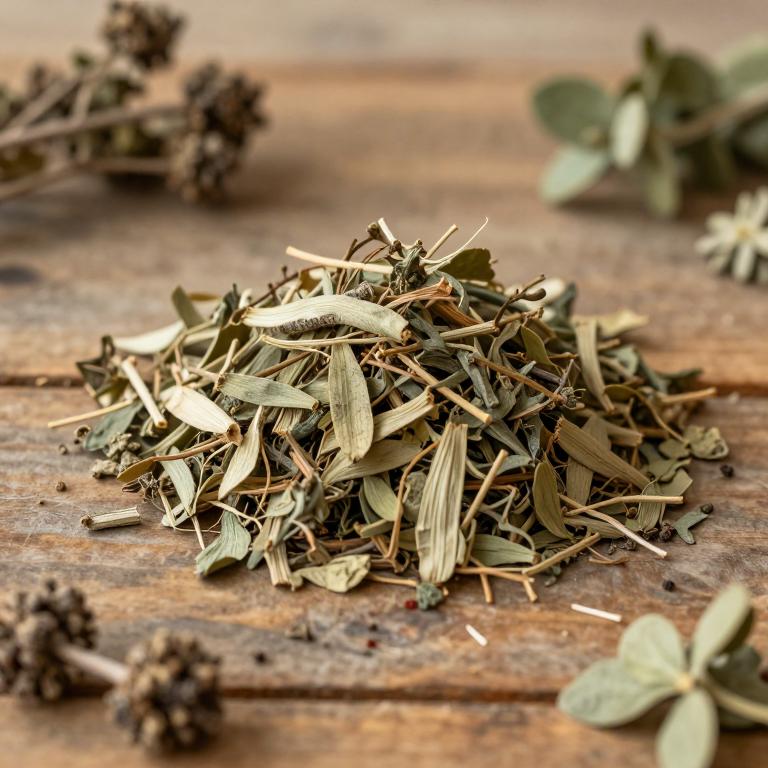
Euphorbia mongolica is prepared as dried aerial parts for chemical investigation. These specific plant components were utilized to afford three new acylated polyhydroxy diterpenoids based on the jatrophane framework. Researchers used these isolates to study their potential as modulators of multidrug resistance in L5178 mouse lymphoma cells. The structural identification of the compounds derived from these dried parts was achieved through NMR techniques and mass spectrometry. Ultimately, the extracts from these aerial parts demonstrated a concentration-dependent effect in inhibiting efflux pump activity.