Jerusalem Spurge
Euphorbia hierosolymitana · Accepted scientific name
Scientific literature: Very Sparse (10 studies) · ★☆☆☆☆
Jerusalem Spurge, scientifically known as Euphorbia hierosolymitana, is a distinctive medicinal plant native to specific Mediterranean landscapes. Renowned for its unique succulent structure, this species contains bioactive compounds traditionally utilized in herbal remedies. Understanding its botanical properties and therapeutic potential offers valuable insights into natural pharmacology and traditional healing.
- Family
- Euphorbiaceae
- Native range
- Africa
- Parts used
- Not available
- Common names
- Jerusalem Spurge
- Scientific synonyms
- Euphorbia Thamnoides Var. Hierosolymitana
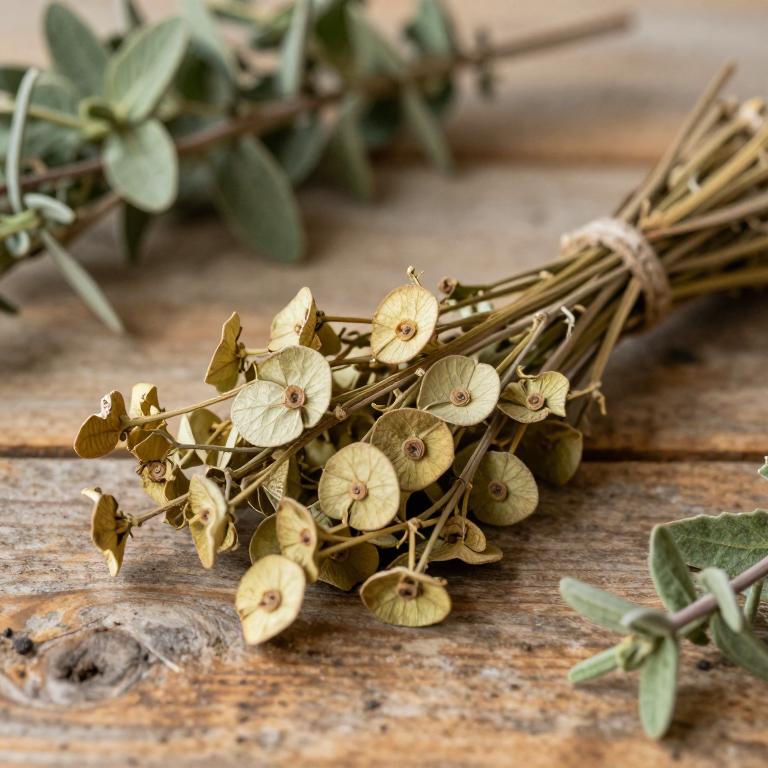
Names and Synonyms
Common Names
- Jerusalem Spurge
Scientific Names
Accepted name
Euphorbia hierosolymitanaSynonyms
- Euphorbia thamnoides var. hierosolymitana
Sources: Wikidata, Catalogue of Life
Taxonomical Classification
This plant belongs to the kingdom Plantae and the phylum Streptophyta, falling under the class Equisetopsida and subclass Magnoliidae. It is classified within the order Malpighiales and the family Euphorbiaceae. Finally, its taxonomic identity is defined by the genus Euphorbia.
| Rank | Classification |
|---|---|
| Kingdom | Plantae |
| Phylum | Streptophyta |
| Class | Equisetopsida |
| Subclass | Magnoliidae |
| Order | Malpighiales |
| Family | Euphorbiaceae |
| Genus | Euphorbia |
Sources: The World Checklist of Vascular Plants (WCVP)
Distribution
This plant exhibits a broad geographical range spanning across several distinct regions. In Northern Africa, its presence is documented within the borders of Egypt. The distribution extends into the Caucasus region, specifically encompassing the Transcaucasus. Moving into Western Asia, it can be found throughout the East Aegean Islands and the territories of Lebanon and Syria. Finally, its habitat reaches into the area of Palestine.
| Region | Area |
|---|---|
| Northern Africa | Egypt |
| Caucasus | Transcaucasus |
| Western Asia | East Aegean Is. |
| Western Asia | Lebanon-Syria |
| Western Asia | Palestine |
| Western Asia | Sinai |
| Western Asia | Türkiye |
Sources: The World Checklist of Vascular Plants (WCVP)
Botanical Identification
Life history
The life history of Euphorbia hierosolymitana is characterized by a growth habit that transitions through specific structural classifications, primarily functioning as a phanerophyte and a nanophanerophyte. As a phanerophyte, the plant maintains its elevating shoots well above the soil surface, allowing it to occupy specific ecological niches within its habitat. This structural strategy is further refined by its classification as a nanophanerophyte, indicating that while it possesses permanent woody or semi-woody stems, these are relatively short in stature. This combination of life forms suggests a developmental pattern adapted to managing resource allocation between stem height and structural stability, ensuring the plant can persist through seasonal changes while maintaining a compact profile.
- Life form :
- nanophanerophyte
- Life form :
- phanerophyte
Morphology
The morphology of Euphorbia hierosolymitana is characterized by a growth form that functions as a woody subshrub, exhibiting a robust and self-supporting structure. It is a terrestrial species, existing independently without the need for a host, and does not exhibit parasitic, epiphytic, or aquatic tendencies, remaining firmly grounded in its soil substrate. Unlike climbing lianas or vines, this plant is strictly self-supporting and maintains its upright posture through its woody development.
- Aquatic :
- terrestrial
- Climber :
- self-supporting
- Epiphyte :
- terrestrial
- Growth form :
- shrub
- Growth form :
- subshrub
- Parasite :
- independent
- Woodiness :
- woody
Reproduction
Reproduction in Euphorbia hierosolymitana is characterized by the production of specialized seeds that play a critical role in the species' dispersal and survival strategies. Detailed morphological analysis of the seeds reveals a highly consistent size profile, with no observed variance across different samples. The seed mass is precisely measured at a mean of 0.0037 g, a value that is mirrored by both the maximum and minimum recorded seed mass of 0.0037 g. This uniformity in seed mass suggests a highly regulated reproductive process, ensuring that each propagule carries a standardized amount of resources to support early seedling development.
- Seed mass mean:
- 0.0037 g
Sources: Global Inventory of Floras and Traits (GIFT)
Chemicals
Euphorbia hierosolymitana has 7 reported phytochemicals identified across 0 scientific publications and several other databases. The most consistently reported chemicals include Fatty acids, Flavonoids, Phytoestrogens, Phytosterols, Tannins.
| Chemical | Supporting sources | Consensus |
|---|---|---|
| Fatty acids | 1 supporting sources | ★☆☆☆☆ |
| Flavonoids | 1 supporting sources | ★☆☆☆☆ |
| Phytoestrogens | 1 supporting sources | ★☆☆☆☆ |
| Phytosterols | 1 supporting sources | ★☆☆☆☆ |
| Tannins | 1 supporting sources | ★☆☆☆☆ |
| Terpenes | 1 supporting sources | ★☆☆☆☆ |
| coumarin | 1 supporting sources | ★☆☆☆☆ |
Fatty acids
- Journal of infection in developing countries
Flavonoids
- Journal of infection in developing countries
Phytoestrogens
- Journal of infection in developing countries
Phytosterols
- Journal of infection in developing countries
Tannins
- Journal of infection in developing countries
Terpenes
- Journal of infection in developing countries
coumarin
- Journal of infection in developing countries
Conditions
Euphorbia hierosolymitana has 3 reported investigations on conditions identified across 0 scientific publications and several other databases. The most consistently reported conditions include Acinetobacter baumannii, Klebsiella pneumoniae, Proteus mirabilis.
| Condition | Supporting sources | Consensus |
|---|---|---|
| Acinetobacter baumannii | 1 supporting sources | ★☆☆☆☆ |
| Klebsiella pneumoniae | 1 supporting sources | ★☆☆☆☆ |
| Proteus mirabilis | 1 supporting sources | ★☆☆☆☆ |
Acinetobacter baumannii
- Journal of infection in developing countries
Klebsiella pneumoniae
- Journal of infection in developing countries
Proteus mirabilis
- Journal of infection in developing countries
Preparations
Euphorbia hierosolymitana has 1 reported preparations identified across 0 scientific publications and several other databases. The most consistently reported preparations include ethanolic extracts.
| Preparation | Supporting sources | Consensus |
|---|---|---|
| Ethanolic extracts | 1 supporting sources | ★☆☆☆☆ |
Ethanolic extracts
- Journal of infection in developing countries