Euphorbia greenwayi
Euphorbia greenwayi · Accepted scientific name
Scientific literature: Very Sparse (14 studies) · ★☆☆☆☆
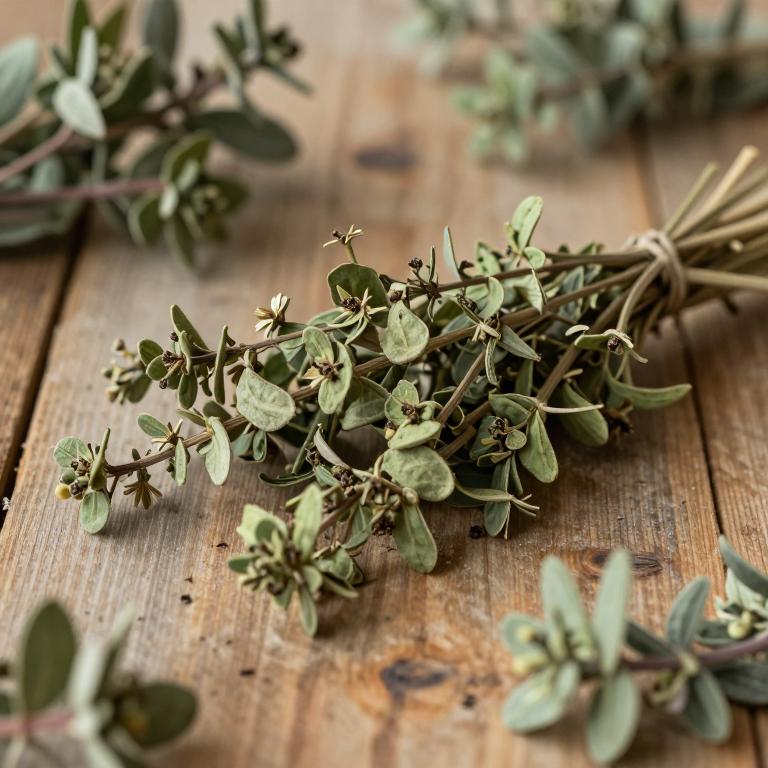
, scientifically known as Euphorbia greenwayi, is a fascinating succulent species valued for its unique aesthetic and potential medicinal properties. Native to specific arid regions, this plant belongs to the Euphorbiaceae family. While primarily ornamental, its bioactive compounds offer intriguing possibilities for pharmacological research and traditional healing practices.
- Family
- Euphorbiaceae
- Native range
- Africa
- Parts used
- Not available
- Common names
- Not available
- Scientific synonyms
- Not available
Names and Synonyms
Scientific Names
Accepted name
Euphorbia greenwayiSources: Wikidata
Taxonomical Classification
This plant belongs to the kingdom Plantae within the phylum Streptophyta and the class Equisetopsida. It is further classified under the subclass Magnoliidae and the order Malpighiales. Finally, it is a member of the family Euphorbiaceae, specifically falling under the genus Euphorbia.
| Rank | Classification |
|---|---|
| Kingdom | Plantae |
| Phylum | Streptophyta |
| Class | Equisetopsida |
| Subclass | Magnoliidae |
| Order | Malpighiales |
| Family | Euphorbiaceae |
| Genus | Euphorbia |
Sources: The World Checklist of Vascular Plants (WCVP)
Distribution
This plant exhibits a very specific and localized geographical distribution. It is primarily found within the region of East Tropical Africa. Specifically, its occurrence is documented in the country of Tanzania. Due to this narrow range, it can be considered an endemic species to this particular area. Understanding this limited habitat is essential for the conservation of the species.
| Region | Area |
|---|---|
| East Tropical Africa | Tanzania |
Sources: The World Checklist of Vascular Plants (WCVP)
Botanical Identification
Life history
The life history of Euphorbia greenwayi is characterized by a growth habit classified as a chamaephyte, a life form where the majority of the plant's regenerative buds are located near or just above the soil surface. This strategic positioning allows the species to navigate its specific environmental niches, often utilizing its perennial nature to withstand seasonal fluctuations. Depending on the specific environmental pressures and resource availability, its development may exhibit characteristics overlapping with other life forms such as nanophanerophytes or hemicryptophytes, yet it remains fundamentally defined by its low-growing, woody, or semi-woody structure. Throughout its life cycle, the plant focuses on maintaining its metabolic functions close to the substrate, ensuring resilience against herbivory and climatic shifts while facilitating successful reproductive cycles through its specialized floral structures.
- Life form :
- chamaephyte
Morphology
The morphology of Euphorbia greenwayi is characterized by a shrub growth form that exhibits a distinctly woody structure. As a terrestrial plant, it thrives in soil-based environments rather than as an epiphyte, maintaining an independent existence without acting as a parasite on other organisms. While it possesses a robust and sturdy physical presence, its climbing mechanism is classified as self-supporting, allowing the plant to maintain its upright posture through its own structural integrity.
- Climber :
- self-supporting
- Epiphyte :
- terrestrial
- Growth form :
- shrub
- Parasite :
- independent
- Woodiness :
- woody
Sources: Global Inventory of Floras and Traits (GIFT)
Chemicals
Euphorbia greenwayi has 6 reported phytochemicals identified across 0 scientific publications and several other databases. The most consistently reported chemicals include 1,8-Cineole, LIMONENE, SABINENE, Tricin, quercetin.
| Chemical | Supporting sources | Consensus |
|---|---|---|
| 1,8-Cineole | 1 supporting sources | ★☆☆☆☆ |
| LIMONENE | 1 supporting sources | ★☆☆☆☆ |
| SABINENE | 1 supporting sources | ★☆☆☆☆ |
| Tricin | 1 supporting sources | ★☆☆☆☆ |
| quercetin | 1 supporting sources | ★☆☆☆☆ |
| xanthurenic acid | 1 supporting sources | ★☆☆☆☆ |
1,8-Cineole
- Chemistry & biodiversity
LIMONENE
- Chemistry & biodiversity
SABINENE
- Chemistry & biodiversity
Tricin
- Biomedical chromatography : BMC
quercetin
- Biomedical chromatography : BMC
xanthurenic acid
- Biomedical chromatography : BMC
Activities
Euphorbia greenwayi has 5 reported activities identified across 0 scientific publications and several other databases. The most consistently reported activities include Antiaging, Anticancer, Antioxidant, Antiproliferative, Cytotoxic.
| Activity | Supporting sources | Consensus |
|---|---|---|
| Antiaging | 1 supporting sources | ★☆☆☆☆ |
| Anticancer | 1 supporting sources | ★☆☆☆☆ |
| Antioxidant | 1 supporting sources | ★☆☆☆☆ |
| Antiproliferative | 1 supporting sources | ★☆☆☆☆ |
| Cytotoxic | 1 supporting sources | ★☆☆☆☆ |
Antiaging
- Biomedical chromatography : BMC
Anticancer
- Chemistry & biodiversity
Antioxidant
- Chemistry & biodiversity
Antiproliferative
- Chemistry & biodiversity
Cytotoxic
- Chemistry & biodiversity
Conditions
Euphorbia greenwayi has 2 reported investigations on conditions identified across 0 scientific publications and several other databases. The most consistently reported conditions include breast cancer, liver cancer.
| Condition | Supporting sources | Consensus |
|---|---|---|
| Breast cancer | 1 supporting sources | ★☆☆☆☆ |
| Liver cancer | 1 supporting sources | ★☆☆☆☆ |
Breast cancer
- Chemistry & biodiversity
Liver cancer
- Chemistry & biodiversity
Preparations
Euphorbia greenwayi has 3 reported preparations identified across 0 scientific publications and several other databases. The most consistently reported preparations include EG1:EG5, Euphorbia greenwayi essential oil, Fraction EG5.
| Preparation | Supporting sources | Consensus |
|---|---|---|
| Eg1:eg5 | 1 supporting sources | ★☆☆☆☆ |
| Euphorbia greenwayi essential oil | 1 supporting sources | ★☆☆☆☆ |
| Fraction eg5 | 1 supporting sources | ★☆☆☆☆ |
Eg1:eg5
- Biomedical chromatography : BMC
Euphorbia greenwayi essential oil
- Chemistry & biodiversity
Fraction eg5
- Biomedical chromatography : BMC