Euphorbia depauperata
Euphorbia depauperata · Accepted scientific name
Scientific literature: Very Sparse (7 studies) · ★☆☆☆☆
scientifically known as Euphorbia depauperata, is a distinctive medicinal plant valued for its unique therapeutic properties. Often found in specific ecological niches, this species is utilized in traditional medicine to treat various ailments. Understanding its chemical composition and pharmacological potential offers promising insights into modern herbal pharmacology and healthcare.
- Family
- Euphorbiaceae
- Native range
- Africa
- Parts used
- Not available
- Common names
- Not available
- Scientific synonyms
- Tithymalus Depauperatus
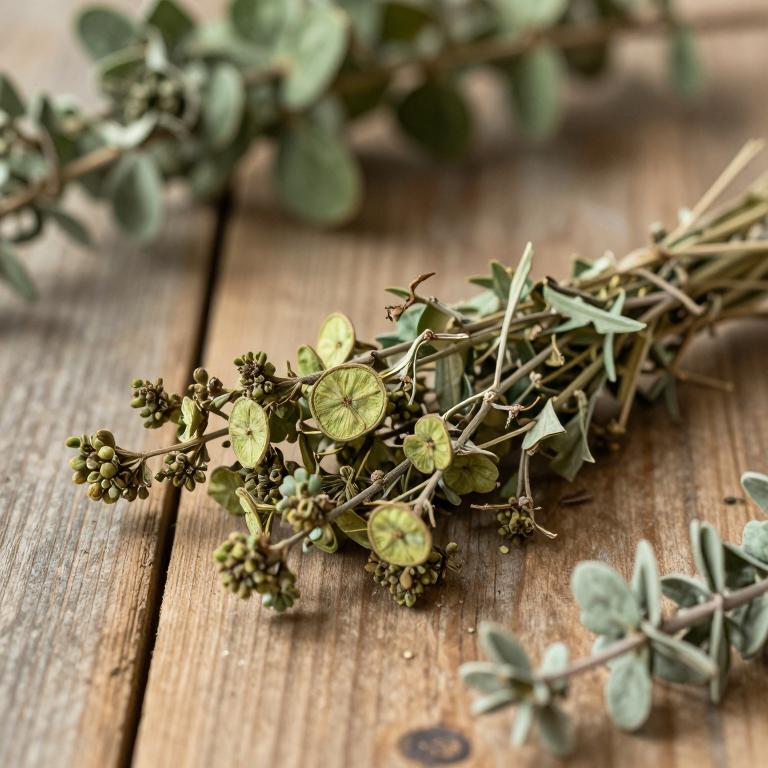
Names and Synonyms
Scientific Names
Accepted name
Euphorbia depauperataSynonyms
- Tithymalus depauperatus
Sources: Wikidata, Catalogue of Life
Taxonomical Classification
This plant belongs to the kingdom Plantae within the phylum Streptophyta and the class Equisetopsida. It is further classified under the subclass Magnoliidae in the order Malpighiales. Finally, it is a member of the family Euphorbiaceae and falls under the genus Euphorbia.
| Rank | Classification |
|---|---|
| Kingdom | Plantae |
| Phylum | Streptophyta |
| Class | Equisetopsida |
| Subclass | Magnoliidae |
| Order | Malpighiales |
| Family | Euphorbiaceae |
| Genus | Euphorbia |
Sources: The World Checklist of Vascular Plants (WCVP)
Distribution
This plant exhibits a diverse geographical distribution spanning multiple regions across the African continent. In West Tropical Africa, its presence is documented within the borders of Guinea and Nigeria. Moving toward the center of the continent, it can also be found in West-Central Tropical Africa, specifically in Cameroon and Burundi. Additionally, its range extends into Northeast Tropical Africa, where it is located in Eritrea. Together, these locations highlight the plant's ability to inhabit various tropical environments.
| Region | Area |
|---|---|
| West Tropical Africa | Guinea |
| West Tropical Africa | Nigeria |
| West-Central Tropical Africa | Burundi |
| West-Central Tropical Africa | Cameroon |
| Northeast Tropical Africa | Eritrea |
| Northeast Tropical Africa | Ethiopia |
| Northeast Tropical Africa | Somalia |
| Northeast Tropical Africa | Sudan-South Sudan |
| East Tropical Africa | Kenya |
| East Tropical Africa | Tanzania |
Sources: The World Checklist of Vascular Plants (WCVP)
Botanical Identification
Ecology
The ecology of Euphorbia depauperaata is characterized by its specific preference for lowland environments, where it occupies distinct ecological niches within these lower-altitude regions. In these lowland habitats, the plant thrives under environmental conditions typically marked by higher ambient temperatures and specific moisture regimes that differ from montane or highland ecosystems. Its presence in these areas suggests an adaptation to the soil compositions and light availability characteristic of lowland terrains, playing a role in the local vegetative structure and contributing to the biodiversity of these low-lying landscapes.
- Habitat :
- Lowland
Life history
The life history of Euphorbia depauperata is characterized by its classification as a perennial species, allowing it to persist through multiple growing seasons. Regarding its structural growth and survival strategy, the plant exhibits a dual life form classification, functioning both as a hemicryptophyte and a chamaemphyte. As a hemicryptophyte, its perennial nature is supported by dormant buds located at the soil surface, which protect the plant during unfavorable environmental conditions. Simultaneously, its chamaemphyte traits indicate that its reproductive and vegetative buds are positioned close to or just above the ground level, enabling it to maintain a low-growing profile that is well-adapted to its specific ecological niche.
- Life form :
- hemicryptophyte
- Life form :
- chamaephyte
- Lifecycle :
- perennial
Morphology
The morphology of Euphorbia depauperata is characterized by its growth form as a non-woody herb, manifesting as both a general herb and a specific forb. This species is a terrestrial plant, existing independently without parasitic or epiphytic tendencies. In terms of stature, it is a relatively low-growing species with an average plant height of 0.5 m, reaching a maximum height of approximately 0.8 m. Structurally, the plant is self-supporting, lacking any climbing or vine-like habits.
- Aquatic :
- terrestrial
- Climber :
- self-supporting
- Epiphyte :
- terrestrial
- Growth form :
- herb
- Parasite :
- independent
- Plant height max:
- 0.8 m
- Plant height mean:
- 0.5 m
- Woodiness :
- non-woody
Physiology
The physiology of Euphorbia depauperata is characterized by specific morphological and metabolic parameters that define its growth and nutrient acquisition strategies. In terms of vegetative development, the plant exhibits controlled foliage expansion, with a measured leaf length of 4.2 cm representing its maximum leaf length capacity. Regarding its nutritional metabolism and interaction with soil microbiota, the plant does not function as a nitrogen fixer, meaning it lacks the symbiotic relationship with nitrogen-fixing bacteria required to convert atmospheric nitrogen into usable forms, relying instead on the uptake of nitrates and ammonium from the substrate.
- Leaf length max:
- 4.2 cm
- Nitrogen fixer :
- no
Sources: Global Inventory of Floras and Traits (GIFT)
Chemicals
Euphorbia depauperata has 4 reported phytochemicals identified across 0 scientific publications and several other databases. The most consistently reported chemicals include Cardiac Glycosides, Flavonoids, Saponins, Tannins.
| Chemical | Supporting sources | Consensus |
|---|---|---|
| Cardiac Glycosides | 1 supporting sources | ★☆☆☆☆ |
| Flavonoids | 1 supporting sources | ★☆☆☆☆ |
| Saponins | 1 supporting sources | ★☆☆☆☆ |
| Tannins | 1 supporting sources | ★☆☆☆☆ |
Cardiac Glycosides
- PloS one
Flavonoids
- PloS one
Saponins
- PloS one
Tannins
- PloS one
Conditions
Euphorbia depauperata has 3 reported investigations on conditions identified across 0 scientific publications and several other databases. The most consistently reported conditions include MRSA, Streptococcus pyogenes, urinary tract infections.
| Condition | Supporting sources | Consensus |
|---|---|---|
| Mrsa | 1 supporting sources | ★☆☆☆☆ |
| Streptococcus pyogenes | 1 supporting sources | ★☆☆☆☆ |
| Urinary tract infections | 1 supporting sources | ★☆☆☆☆ |
Mrsa
- PloS one
Streptococcus pyogenes
- PloS one
Urinary tract infections
- BMC complementary medicine and therapies
Preparations
Euphorbia depauperata has 3 reported preparations identified across 0 scientific publications and several other databases. The most consistently reported preparations include 80% methanol, 80% methanolic extraction, Aqueous extraction.
| Preparation | Supporting sources | Consensus |
|---|---|---|
| 80% methanol | 1 supporting sources | ★☆☆☆☆ |
| 80% methanolic extraction | 1 supporting sources | ★☆☆☆☆ |
| Aqueous extraction | 1 supporting sources | ★☆☆☆☆ |
80% methanol
- BMC complementary medicine and therapies
80% methanolic extraction
- PloS one
Aqueous extraction
- PloS one