Euphorbia cuneata
Euphorbia cuneata · Accepted scientific name
Scientific literature: Very Sparse (17 studies) · ★☆☆☆☆
, scientifically known as Euphorbia cuneata, is a distinctive medicinal shrub native to Southern Africa. Renowned for its succulent leaves and milky latex, this plant is traditionally utilized in various cultures to treat skin ailments, wounds, and inflammatory conditions, offering significant therapeutic potential within the diverse Euphorbia genus.
- Family
- Euphorbiaceae
- Native range
- Africa
- Parts used
- Not available
- Common names
- Not available
- Scientific synonyms
- Tirucalia Cuneata · Lyciopsis Cuneata
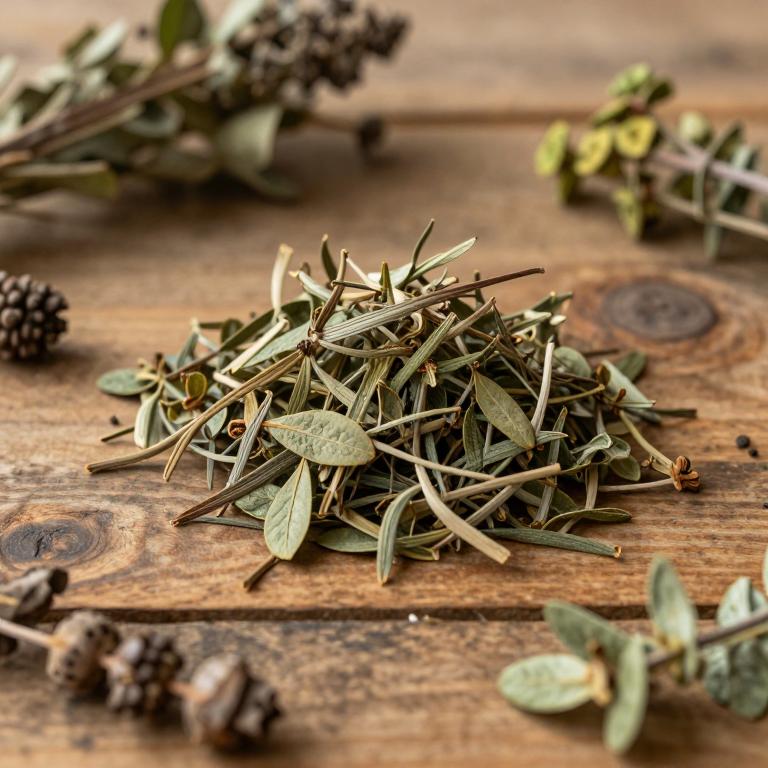
Names and Synonyms
Scientific Names
Accepted name
Euphorbia cuneataSynonyms
- Tirucalia cuneata
- Lyciopsis cuneata
Sources: Wikidata, Catalogue of Life
Taxonomical Classification
This plant belongs to the kingdom Plantae and the phylum Streptophyta, falling under the class Equisetopsida and subclass Magnoliidae. Within the order Malpighiales, it is classified under the family Euphorbiaceae. Finally, its specific taxonomic designation is within the genus Euphorbia.
| Rank | Classification |
|---|---|
| Kingdom | Plantae |
| Phylum | Streptophyta |
| Class | Equisetopsida |
| Subclass | Magnoliidae |
| Order | Malpighiales |
| Family | Euphorbiaceae |
| Genus | Euphorbia |
Sources: The World Checklist of Vascular Plants (WCVP)
Distribution
This plant exhibits a specific distribution pattern across the African continent. In Northern Africa, it can be found growing within the borders of Egypt. Its range also extends significantly into West Tropical Africa. Within this western region, the species is documented in Benin, Guinea, and Nigeria. Additionally, its presence is confirmed in the country of Togo.
| Region | Area |
|---|---|
| Northern Africa | Egypt |
| West Tropical Africa | Benin |
| West Tropical Africa | Guinea |
| West Tropical Africa | Nigeria |
| West Tropical Africa | Togo |
| Northeast Tropical Africa | Chad |
| Northeast Tropical Africa | Djibouti |
| Northeast Tropical Africa | Eritrea |
| Northeast Tropical Africa | Ethiopia |
| Northeast Tropical Africa | Somalia |
Sources: The World Checklist of Vascular Plants (WCVP)
Botanical Identification
Ecology
The ecology of Euphorbia cuneata is defined by its specialized niche within specific coastal and semi-arid vegetation structures. This species is primarily found inhabiting Acacia-Commiphora bushland, where it thrives amidst the complex structural diversity of these woody shrublands. Furthermore, it extends its range to coastal regions, colonizing areas of mixed bushland where it must navigate the unique environmental pressures of maritime influences and varied soil compositions. Its presence in these ecosystems indicates a preference for the sheltered yet resilient environments provided by the intermingling of Acacia and Commiphora species, which offer both protection and specific nutrient profiles necessary for its survival.
- Habitat :
- Acacia-Commpihora bushland, on the coast in mixed bushland
Life history
The life history of Euphorbia cuneata is characterized by its classification as a perennial plant, meaning it persists through multiple growing seasons rather than completing its cycle in a single year. In terms of its structural growth habits and survival strategies, the species exhibits dual life form characteristics, manifesting as both a phanerophyte and a nanophanerophyte. As a phanerophyte, it possesses significant above-ground woody structures that protect its buds during unfavorable conditions, while its nanophanerophytic aspect indicates that its stems remain relatively low to the ground, maintaining a compact architecture that is well-suited to its specific ecological niche.
- Life form :
- nanophanerophyte
- Life form :
- phanerophyte
- Lifecycle :
- perennial
Morphology
The morphology of Euphorbia cuneata is characterized by a woody growth form that manifests as both a tree and a shrub. It typically reaches an average plant height of approximately 2.5 m. As a self-supporting plant, it does not function as a climber, instead maintaining its structure independently. The species is an independent organism, meaning it does not act as a parasite, and it maintains a terrestrial habit rather than being epiphytic.
- Climber :
- self-supporting
- Epiphyte :
- terrestrial
- Growth form :
- tree
- Growth form :
- shrub
- Parasite :
- independent
- Plant height mean:
- 2.5 m
- Woodiness :
- woody
Physiology
The physiology of Euphorbia cuneata is characterized by specialized metabolic pathways adapted to survive in arid or semi-arid environments, often employing succulent tissues for water storage and regulating transpiration through controlled stomatal movements. Its nutrient acquisition processes are strictly dependent on soil availability, as the plant does not engage in symbiotic relationships with diazotrophic bacteria to convert atmospheric gases into usable nutrients; specifically, it is not a nitrogen fixer, as indicated by its inability to perform nitrogen fixation (nitrogen_fix_1: no). Instead, the plant relies on the uptake of nitrates and ammonium from the substrate through its root system to support cellular functions and protein synthesis. Furthermore, its physiological resilience is supported by the production of secondary metabolites, including complex latex, which serves both as a chemical defense mechanism and a physiological response to mechanical injury or herbivory.
- Nitrogen fixer :
- no
Sources: Global Inventory of Floras and Traits (GIFT)
Chemicals
Euphorbia cuneata has 12 reported phytochemicals identified across 0 scientific publications and several other databases. The most consistently reported chemicals include 7-Hydroxyflavone, Gallic acid, Hexanal dimethyl acetal, Methyl 12-hydroxy-9-octadecenoate, Methyl octadeca-9,12-dienoate.
| Chemical | Supporting sources | Consensus |
|---|---|---|
| 7-Hydroxyflavone | 1 supporting sources | ★☆☆☆☆ |
| Gallic acid | 1 supporting sources | ★☆☆☆☆ |
| Hexanal dimethyl acetal | 1 supporting sources | ★☆☆☆☆ |
| Methyl 12-hydroxy-9-octadecenoate | 1 supporting sources | ★☆☆☆☆ |
| Methyl octadeca-9,12-dienoate | 1 supporting sources | ★☆☆☆☆ |
| RUTIN | 1 supporting sources | ★☆☆☆☆ |
| SYRINGIC ACID | 1 supporting sources | ★☆☆☆☆ |
| caffeic acid | 1 supporting sources | ★☆☆☆☆ |
| ferulic acid | 1 supporting sources | ★☆☆☆☆ |
| p-coumaric acid | 1 supporting sources | ★☆☆☆☆ |
7-Hydroxyflavone
- Molecules (Basel, Switzerland)
Gallic acid
- Molecules (Basel, Switzerland)
Hexanal dimethyl acetal
- Molecules (Basel, Switzerland)
Methyl 12-hydroxy-9-octadecenoate
- Molecules (Basel, Switzerland)
Methyl octadeca-9,12-dienoate
- Molecules (Basel, Switzerland)
RUTIN
- Molecules (Basel, Switzerland)
SYRINGIC ACID
- Molecules (Basel, Switzerland)
caffeic acid
- Molecules (Basel, Switzerland)
ferulic acid
- Molecules (Basel, Switzerland)
p-coumaric acid
- Molecules (Basel, Switzerland)
Conditions
Euphorbia cuneata has 3 reported investigations on conditions identified across 0 scientific publications and several other databases. The most consistently reported conditions include inflammation, pain, pulmonary edema.
| Condition | Supporting sources | Consensus |
|---|---|---|
| Inflammation | 2 supporting sources | ★☆☆☆☆ |
| Pain | 2 supporting sources | ★☆☆☆☆ |
| Pulmonary edema | 1 supporting sources | ★☆☆☆☆ |
Inflammation
- Plants (Basel, Switzerland)
- Molecules (Basel, Switzerland)
Pain
- Plants (Basel, Switzerland)
- Molecules (Basel, Switzerland)
Pulmonary edema
- Plants (Basel, Switzerland)
Preparations
Euphorbia cuneata has 1 reported preparations identified across 0 scientific publications and several other databases. The most consistently reported preparations include standardized total methanol extract.
| Preparation | Supporting sources | Consensus |
|---|---|---|
| Standardized total methanol extract | 1 supporting sources | ★☆☆☆☆ |
Standardized total methanol extract
- Plants (Basel, Switzerland)