horned spurge
Euphorbia cornigera · Accepted scientific name
Scientific literature: Very Sparse (1 studies) · ★☆☆☆☆
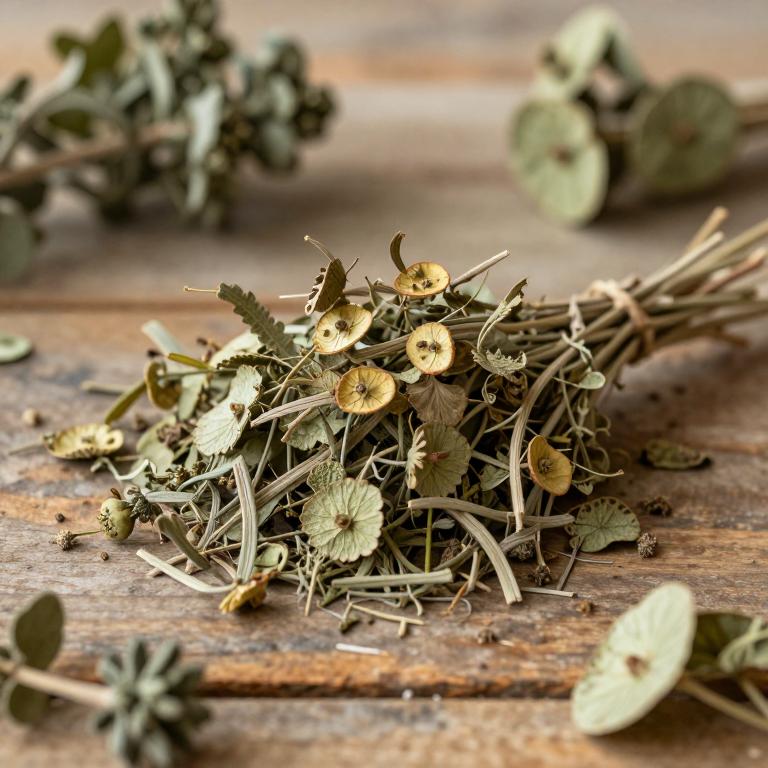
Horned spurge, scientifically known as Euphorbia cornigera, is a striking succulent native to Mexico. Characterized by its fleshy, cylindrical stems and unique, horn-like structures, this plant is prized in xeriscaping. While visually captivating, it contains a toxic milky latex, requiring careful handling to avoid skin and eye irritation.
- Family
- Euphorbiaceae
- Native range
- Asia-Tropical
- Parts used
- Not available
- Common names
- Horned Spurge
- Scientific synonyms
- Euphorbia Pilosa Var. Cornigera
Names and Synonyms
Common Names
- horned spurge
Scientific Names
Accepted name
Euphorbia cornigeraSynonyms
- Euphorbia pilosa var. cornigera
Sources: Wikidata, Catalogue of Life
Taxonomical Classification
This plant belongs to the kingdom Plantae within the phylum Streptophyta and the class Equisetopsida. It is further classified under the subclass Magnoliidae and the order Malpighiales. Finally, it is a member of the family Euphorbiaceae, specifically falling under the genus Euphorbia.
| Rank | Classification |
|---|---|
| Kingdom | Plantae |
| Phylum | Streptophyta |
| Class | Equisetopsida |
| Subclass | Magnoliidae |
| Order | Malpighiales |
| Family | Euphorbiaceae |
| Genus | Euphorbia |
Sources: The World Checklist of Vascular Plants (WCVP)
Distribution
This plant is native to several distinct regions within the Indian Subcontinent. Its geographical range extends across the diverse landscapes of the West Himalaya. Additionally, the species can be found growing in the mountainous terrains of the East Himalaya. It also maintains a presence within the specific environmental niches of Pakistan. Together, these areas define the primary natural distribution of Euphorbia cornigera.
| Region | Area |
|---|---|
| Indian Subcontinent | East Himalaya |
| Indian Subcontinent | Pakistan |
| Indian Subcontinent | West Himalaya |
Sources: The World Checklist of Vascular Plants (WCVP)
Botanical Identification
Life history
The life history of Euphorbia cornigera is characterized by its status as a perennial organism, allowing it to persist in its environment over multiple growing seasons. In terms of its structural growth strategy and survival mechanisms, the plant is classified as a hemicryptophyte, meaning its perennial buds are located at or just below the soil surface, protected by the substrate or leaf litter during unfavorable conditions. This hemicryptophytic life form, consistent across its developmental stages, enables the species to endure seasonal shifts while maintaining the capacity for regrowth, ensuring its long-term presence within its ecological niche.
- Life form :
- hemicryptophyte
- Lifecycle :
- perennial
Morphology
The morphology of Euphorbia cornigera is characterized by its growth form as a non-woody herb, exhibiting a non-woody structural composition. It functions as an independent organism, neither acting as a parasite nor as an epiphyte, as it maintains a primarily terrestrial habit. While it exists within a spectrum of habitats including aquatic and semiaquatic environments, its core ecological classification is terrestrial. Additionally, the plant is characterized as self-supporting, lacking the climbing tendencies of a liana, vine, or obligatory/facultative climber.
- Aquatic :
- terrestrial
- Climber :
- self-supporting
- Epiphyte :
- terrestrial
- Growth form :
- herb
- Parasite :
- independent
- Woodiness :
- non-woody
Reproduction
Reproduction in Euphorbia cornigera is characterized by a highly consistent seed production profile, ensuring a uniform distribution of offspring within its ecological niche. The seeds produced by this species exhibit remarkable morphological stability, with no observed variation in weight across the sampled population. Specifically, the seed mass remains constant at a mean value of 0.0056 g, a figure that is mirrored by both its maximum and minimum recorded values of 0.0056 g. This lack of deviation in seed mass suggests a highly regulated developmental process during the maturation of the fruit, resulting in a standardized seed size that likely plays a critical role in its dispersal and germination success.
- Seed mass mean:
- 0.0056 g
Sources: Global Inventory of Floras and Traits (GIFT)
Activities
Euphorbia cornigera has 1 reported activities identified across 0 scientific publications and several other databases. The most consistently reported activities include Cytotoxic.
| Activity | Supporting sources | Consensus |
|---|---|---|
| Cytotoxic | 1 supporting sources | ★☆☆☆☆ |
Cytotoxic
- Journal of Asian natural products research