Euphorbia chamaesyce
Euphorbia chamaesyce · Accepted scientific name
Scientific literature: Very Sparse (12 studies) · ★☆☆☆☆
, scientifically known as Euphorbia chamaesyce, is a resilient medicinal plant valued for its unique therapeutic properties. Often found in arid environments, this species is traditionally utilized in folk medicine to treat various ailments. Its bioactive compounds offer significant potential for pharmacological research and holistic wellness applications worldwide.
- Family
- Euphorbiaceae
- Native range
- Europe
- Parts used
- Leaf
- Common names
- Not available
- Scientific synonyms
- Chamaesyce Massiliensis · Chamaesyce Libassii · 27 more
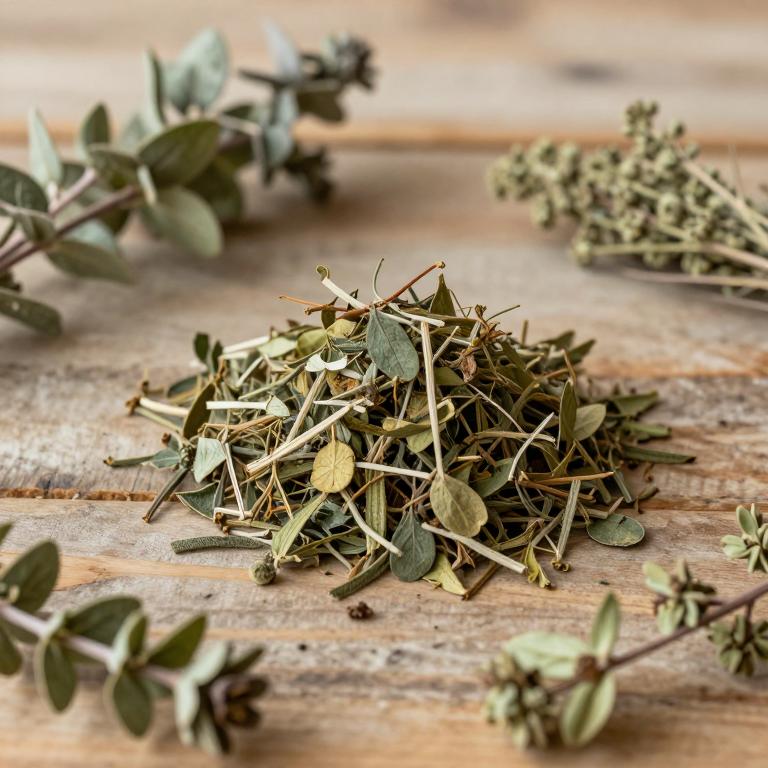
Names and Synonyms
Scientific Names
Accepted name
Euphorbia chamaesyceSynonyms
- Chamaesyce massiliensis
- Chamaesyce libassii
- Chamaesyce vulgaris
- Xamesike palestina
- Xamesike xamobala
- Xamesike vulgaris
- Tithymalus nummularius
- Tithymalus chamaesyce
- Euphorbia libassii
- Anisophyllum chamaesyce
- Euphorbia massiliensis
- Ditrita rotundifolia
- Chamaesyce canescens
- Euphorbia chamaesyce subsp. canescens
- Euphorbia chamaesyce var. massiliensis
- Chamaesyce canescens subsp. glabra
- Euphorbia pinnulosa
- Euphorbia chamaesyce var. gabriuscula
- Chamaesyce canescens subsp. massiliensis
- Euphorbia chamaesyce f. glabra
- Euphorbia chamaesyce var. hirsuta
- Euphorbia chamaesyce f. pilosa
- Euphorbia canescens
- Chamaesyce vulgaris subsp. massiliensis
- Euphorbia vaticana
- Euphorbia chamaesyce var. canescens
- Euphorbia chamaesyce var. glabriuscula
- Euphorbia chamaesyce subsp. massiliensis
- Euphorbia massiliensis var. villosa
Regional and Traditional Names
German:
- Zwerg-Wolfsmilch
French:
- Euphorbe petit figuier
Sources: Wikidata, Catalogue of Life
Taxonomical Classification
This plant belongs to the kingdom Plantae and the phylum Streptophyta, falling under the class Equisetopsida and subclass Magnoliidae. Within the order Malpighiales, it is classified under the family Euphorbiaceae and the genus Euphorbia.
| Rank | Classification |
|---|---|
| Kingdom | Plantae |
| Phylum | Streptophyta |
| Class | Equisetopsida |
| Subclass | Magnoliidae |
| Order | Malpighiales |
| Family | Euphorbiaceae |
| Genus | Euphorbia |
Sources: The World Checklist of Vascular Plants (WCVP)
Distribution
This plant exhibits a specific geographical distribution across several European regions. In Northern Europe, its presence can be noted within Great Britain. Moving into Middle Europe, the species is found growing in Austria. It also inhabits the territories of both Czechia and Slovakia. Furthermore, its range extends through Germany and Hungary.
| Region | Area |
|---|---|
| Northern Europe | Great Britain |
| Middle Europe | Austria |
| Middle Europe | Czechia-Slovakia |
| Middle Europe | Germany |
| Middle Europe | Hungary |
| Middle Europe | Netherlands |
| Middle Europe | Switzerland |
| Southwestern Europe | Baleares |
| Southwestern Europe | Corse |
| Southwestern Europe | France |
Sources: The World Checklist of Vascular Plants (WCVP)
Botanical Identification
Ecology
The ecology of Euphorbia chamaesyce is characterized by its ability to thrive across a diverse range of terrains and altitudinal gradients. It is primarily found inhabiting various environments, including mountains, steppes, stony places, and even disturbed areas such as crop fields. This species demonstrates significant adaptability to different topographical levels, occupying an elevational range that spans from a minimum of 400 m AMSL to a maximum of 1800 m AMSL.
- Elevational range max:
- 1800 m AMSL
- Elevational range min:
- 400 m AMSL
- Habitat :
- crop fields, mountains, steppe, stony places
Life history
The life history of Euphorbia chamaesyce is characterized by an annual lifecycle, meaning it completes its entire biological progression from germination to seed production within a single growing season. Functionally, the species is classified as a therophyte, a life form defined by plants that survive unfavorable environmental conditions through highly resistant seeds rather than persistent vegetative structures. This strategy allows the plant to persist in its habitat by awaiting optimal seasonal conditions to germinate, grow, and reproduce rapidly before the onset of stress.
- Life form :
- therophyte
- Lifecycle :
- annual
Morphology
The morphology of Euphorbia chamaesyce is characterized by its growth form as a non-woody herb, manifesting as both a herb and a forb. This species is primarily terrestrial in its habitat, functioning as an independent organism rather than a parasite or epiphyte. It exhibits a prostrate shoot orientation, maintaining a self-supporting climbing habit without the need for external structures like lianas or vines. In terms of dimensions, the plant is diminutive, with a total plant height ranging from a minimum of 0.05 m to a maximum of 0.2 m. The individual shoot length is similarly compact, measuring between a minimum of 5 cm and a maximum of 15 cm.
- Aquatic :
- terrestrial
- Climber :
- self-supporting
- Epiphyte :
- terrestrial
- Growth form :
- herb
- Parasite :
- independent
- Plant height max:
- 0.2 m
- Plant height min:
- 0.05 m
- Shoot length max:
- 15 cm
- Shoot length min:
- 5 cm
- Shoot orientation :
- prostrate
- Woodiness :
- non-woody
Physiology
The physiology of Euphorbia chamaesyce is characterized by specialized adaptations for moisture retention and efficient carbon fixation in challenging environments. The plant exhibits distinct succulence, a key physiological trait that allows for the storage of water within its tissues to survive periods of drought. Its metabolic efficiency is driven by a C4 photosynthetic pathway, which optimizes CO2 fixation and reduces photorespiration, providing a competitive advantage in high-temperature or light-intensive habitats. The vegetative morphology supports these physiological functions through small, specialized leaves; these elliptic-shaped leaves are diminutive in size, typically ranging from a minimum length of 0.5 cm to a maximum of 0.7 cm, and maintain a narrow width between 0.3 cm and 0.4 cm. This reduced leaf surface area, combined with its succulent nature and C4 metabolism, facilitates a highly efficient water-use strategy.
- Leaf form :
- elliptic
- Leaf length max:
- 0.7 cm
- Leaf length min:
- 0.5 cm
- Leaf width max:
- 0.4 cm
- Leaf width min:
- 0.3 cm
- Photosynthetic pathway :
- C4
- Succulence :
- yes
Reproduction
The reproduction of Euphorbia chamaesyce is characterized by a versatile flowering period that begins in December and can extend through the year, concluding in September, though the timing remains variable. The plant produces flowers that are brown in color. Following pollination, the development of fruit is marked by small dimensions, with lengths ranging from a minimum of 0.14 cm to a maximum of 0.17 cm, and widths ranging between 0.15 cm and 0.18 cm. The resulting seeds are also quite minute, possessing a mean mass of approximately 0.000152 g. These seeds vary in size, with lengths between 1 mm and 1.3 mm and widths ranging from 0.6 mm to 0.9 mm. Regarding the dispersal of its progeny, the species utilizes a zoochorous syndrome, relying on animals to aid in the spread of its seeds.
- Dispersal syndrome :
- zoochorous
- Flower colour :
- brown
- Flowering time :
- Dec
- Flowering time :
- Sep
- Fruit length max:
- 0.17 cm
- Fruit length min:
- 0.14 cm
- Fruit width max:
- 0.18 cm
- Fruit width min:
- 0.15 cm
- Seed length max:
- 1.3 mm
- Seed length min:
- 1 mm
- Seed mass mean:
- 0.000152 g
- Seed width max:
- 0.9 mm
- Seed width min:
- 0.6 mm
Sources: Global Inventory of Floras and Traits (GIFT)
Plant Parts
Euphorbia chamaesyce has 1 reported plant parts identified across 1 scientific publications and several other databases that are studied for medicinal purposes. The most consistently reported plant part include leaf.
| Plant part | Supporting sources | Consensus |
|---|---|---|
| Leaf | 1 supporting sources | ★☆☆☆☆ |
Leaf
- Antimicrobial agents and chemotherapy
Chemicals
Euphorbia chamaesyce has 4 reported phytochemicals identified across 1 scientific publications and several other databases. The most consistently reported chemicals include Flavonoids, Gallic acid, polyphenols, quercetin.
| Chemical | Supporting sources | Consensus |
|---|---|---|
| Flavonoids | 1 supporting sources | ★☆☆☆☆ |
| Gallic acid | 1 supporting sources | ★☆☆☆☆ |
| polyphenols | 1 supporting sources | ★☆☆☆☆ |
| quercetin | 1 supporting sources | ★☆☆☆☆ |
Flavonoids
- Antibiotics (Basel, Switzerland)
Gallic acid
- Antibiotics (Basel, Switzerland)
polyphenols
- Antibiotics (Basel, Switzerland)
quercetin
- Antibiotics (Basel, Switzerland)
Activities
Euphorbia chamaesyce has 2 reported activities identified across 1 scientific publications and several other databases. The most consistently reported activities include Antimicrobial, Antioxidant.
| Activity | Supporting sources | Consensus |
|---|---|---|
| Antimicrobial | 1 supporting sources | ★☆☆☆☆ |
| Antioxidant | 1 supporting sources | ★☆☆☆☆ |
Antimicrobial
- Antibiotics (Basel, Switzerland)
Antioxidant
- Antibiotics (Basel, Switzerland)
Conditions
Euphorbia chamaesyce has 4 reported investigations on conditions identified across 1 scientific publications and several other databases. The most consistently reported conditions include Shigella flexneri, Staphylococcus aureus, cancer, tumor.
| Condition | Supporting sources | Consensus |
|---|---|---|
| Shigella flexneri | 1 supporting sources | ★☆☆☆☆ |
| Staphylococcus aureus | 1 supporting sources | ★☆☆☆☆ |
| Cancer | 1 supporting sources | ★☆☆☆☆ |
| Tumor | 1 supporting sources | ★☆☆☆☆ |
Shigella flexneri
- Antibiotics (Basel, Switzerland)
Staphylococcus aureus
- Antibiotics (Basel, Switzerland)
Cancer
- Planta medica
Tumor
- Planta medica
Preparations
Euphorbia chamaesyce has 10 reported preparations identified across 1 scientific publications and several other databases. The most consistently reported preparations include Crude extract, KSE-23, alcohol extract, alcoholic extract, aqueous leaf extract.
| Preparation | Supporting sources | Consensus |
|---|---|---|
| Crude extract | 1 supporting sources | ★☆☆☆☆ |
| Kse-23 | 1 supporting sources | ★☆☆☆☆ |
| Alcohol extract | 1 supporting sources | ★☆☆☆☆ |
| Alcoholic extract | 1 supporting sources | ★☆☆☆☆ |
| Aqueous leaf extract | 1 supporting sources | ★☆☆☆☆ |
| Ethanol extract of whole plant euphorbia prostrata | 1 supporting sources | ★☆☆☆☆ |
| Ethanolic plant extract (epe) | 1 supporting sources | ★☆☆☆☆ |
| Ethyl acetate extract | 1 supporting sources | ★☆☆☆☆ |
| Ethyl acetate fraction | 1 supporting sources | ★☆☆☆☆ |
| Methanol extracts | 1 supporting sources | ★☆☆☆☆ |
Crude extract
- Journal of complementary & integrative medicine
Kse-23
- Journal of ethnopharmacology
Alcohol extract
- Zhongguo Zhong yao za zhi = Zhongguo zhongyao zazhi = China journal of Chinese materia medica
Alcoholic extract
- Antibiotics (Basel, Switzerland)
Aqueous leaf extract
- Antimicrobial agents and chemotherapy
Ethanol extract of whole plant euphorbia prostrata
- Journal of ethnopharmacology
Ethanolic plant extract (epe)
- Journal of complementary & integrative medicine
Ethyl acetate extract
- Journal of ethnopharmacology
Ethyl acetate fraction
- Journal of ethnopharmacology
Methanol extracts
- BMC research notes