Euphorbia balsamifera
Euphorbia balsamifera · Accepted scientific name
Scientific literature: Very Sparse (0 studies) · ★☆☆☆☆
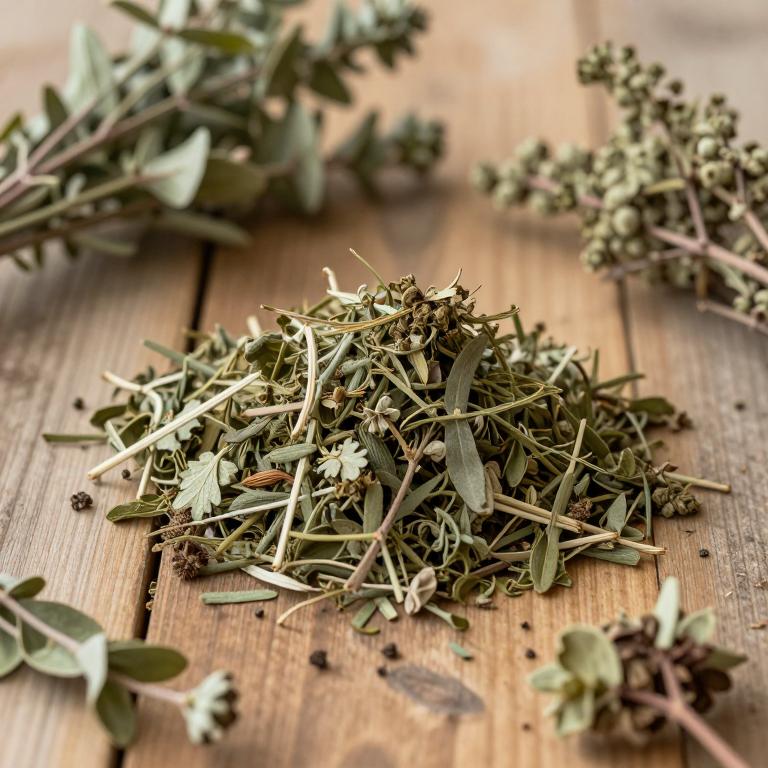
Euphorbia balsamifera is a distinctive shrub native to the arid landscapes of Southern Africa. This resilient plant is highly valued for its ability to produce a milky, medicinal latex when its stems are disturbed. Through specific processing methods, this substance can be transformed into a stable paste used in various traditional applications. Such preparations are often utilized for their therapeutic properties in treating skin ailments and other ailments. Understanding the chemical potential of its secretions remains a key interest for both ethnobotanists and researchers.
- Synonyms
- Euphorbia Balsamifera Var. Rogeri · Euphorbia Balsamifera Subsp. Rogeri · 3 more
- Common names
- Not available
- Family
- Euphorbiaceae
- Distribution
- Not available
- Plant Parts
- Not available
Classification
Common Names
Euphorbia balsamifera is a versatile plant known by a diverse array of regional and descriptive names. It is frequently referred to as Balsam-Wolfsmilch or by the French-influenced term Euphorbe du Cayor. In certain areas, locals may call it Tabaiba dulce, reflecting its specific botanical identity. It is also widely recognized as the balsam spurge due to its distinct characteristics. Finally, the plant is sometimes identified as balsameuforbia, showcasing the many linguistic variations used to describe it.
Sources: Catalogue of Life (COL)
Synonyms
Euphorbia balsamifera is a plant species known for its complex botanical classification and various taxonomic synonyms. Throughout botanical history, it has been identified under several different names, including the subspecies or variety known as Euphorbia balsamifera subsp. rogeri and Euphorbia balsamifera var. rogeri. Other recognized synonyms include Euphorbia capazii and Euphorbia rogeri, which highlight the evolving nature of its scientific description. Furthermore, the plant has also been referred to in literature as Tithymalus balsamifer. Understanding these diverse nomenclature links is essential for researchers tracking the lineage and identity of this specific succulent.
Sources: The World Checklist of Vascular Plants (WCVP)
Taxonomy
Euphorbia balsamifera is a fascinating botanical specimen that belongs to the diverse kingdom Plantae. Within this vast kingdom, it is specifically classified under the class Equisetopsida. Its taxonomic journey continues through the order Malpighiales, showcasing its unique evolutionary lineage. The plant is a proud member of the Euphorbiaceae family, which is known for its varied and interesting characteristics. Finally, it is identified by its specific genus, Euphorbia, placing it among a well-known group of flowering plants.
| Rank | Classification |
|---|---|
| Kingdom | Plantae |
| Phylum | Streptophyta |
| Class | Equisetopsida |
| Subclass | Magnoliidae |
| Order | Malpighiales |
| Family | Euphorbiaceae |
| Genus | Euphorbia |
Sources: The World Checklist of Vascular Plants (WCVP)
Distribution
Geographic Regions
Euphorbia balsamifera is a resilient plant species primarily distributed throughout the diverse landscapes of Africa and the Macaronesia region. Its presence is particularly notable across the Canary Islands, where it has established a distinct foothold. The species also thrives within Northern Africa, spanning several key geographical areas. Specifically, it can be found throughout Morocco, contributing to the local flora of the region. Additionally, its range extends into the arid territories of Western Sahara, showcasing its ability to adapt to varied environments.
Sources: The World Checklist of Vascular Plants (WCVP)
Identification
Morphology
Euphorbia balsamifera is a versatile plant that typically takes the form of a self-supporting shrub. Depending on its specific environment, its stature can vary significantly across different growth stages. While some specimens may remain quite small at only 0.2 m, others reach a modest height of 2 m. Interestingly, certain instances can even extend their reach to a maximum of 3.5 m. This wide range of dimensions highlights the plant's adaptable nature in the wild.
Sources: Global Inventory of Floras and Traits (GIFT)
Biological Activities
Compounds
Conditions
Euphorbia balsamifera serves as an effective antalgic treatment for acute dental pulpitis. By utilizing the plant's latex as a stable paste, it functions as a potent pulpal devitalizing agent. Clinical trials demonstrate that its application in contact with the pulp yields results comparable to traditional arsenical nerve caustics. This plant acts as a viable alternative for devitalizing the dental pulp during endodontic procedures. Consequently, the species shows great promise for treating pulp-related pain and managing pulp vitality.
Preparations
Euphorbia balsamifera is prepared as latex to be used in traditional medicinal practices. This collected latex is further treated to be prepared as a stable paste for clinical application. Once processed into this stable paste, the substance can function as an effective pulpal devitalizing agent. The transformation from raw latex to a stable paste allows for its use in odontological treatments. Consequently, the preparation of Euphorbia balsamifera into these specific forms is essential for its therapeutic efficacy.