dog-fennel
Eupatorium capillifolium · Accepted scientific name
Scientific literature: Very Sparse (3 studies) · ★☆☆☆☆
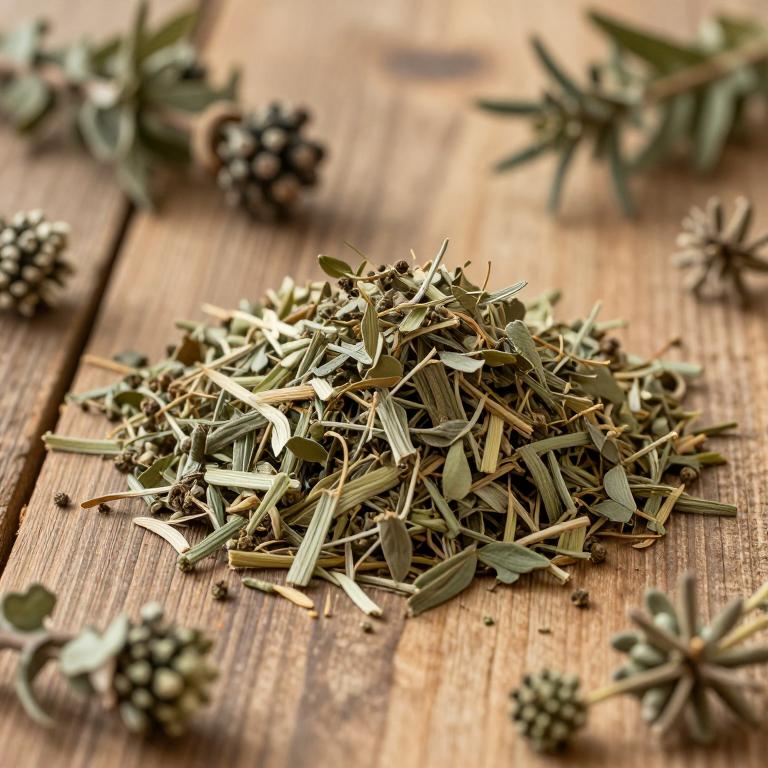
Dog-fennel, scientifically known as Eupatorium capillifolium, is a versatile perennial herb deeply rooted in traditional medicine. Renowned for its aromatic foliage, this plant offers potent antimicrobial and anti-inflammatory properties. Often used to support digestive health and manage various ailments, it remains a vital resource in holistic herbal practices worldwide.
Names and Synonyms
Common Names
- dog-fennel
- bitter-weed
- cypressweed
- dog fennel
Scientific Names
Accepted name
Eupatorium capillifoliumSynonyms
- Artemisia capillifolia
- Chrysocoma capillacea
- Eupatorium foeniculaceum
- Eupatorium foeniculoides
- Traganthes tenuifolia
- Eupatorium foeniculaceum var. glabrum
- Eupatorium foeniculaceum var. lateriflorum
- Eupatorium foeniculaceum var. traganthes
- Mikania artemisioides
Sources: Wikidata, Catalogue of Life
Taxonomical Classification
This plant belongs to the kingdom Plantae and is classified under the phylum Streptophyta and the class Equisetopsida. Within the subclass Magnoliidae, it is categorized under the order Asterales and the family Asteraceae. Finally, its taxonomic identity is defined by its placement in the genus Eupatorium.
| Rank | Classification |
|---|---|
| Kingdom | Plantae |
| Phylum | Streptophyta |
| Class | Equisetopsida |
| Subclass | Magnoliidae |
| Order | Asterales |
| Family | Asteraceae |
| Genus | Eupatorium |
Sources: The World Checklist of Vascular Plants (WCVP)
Distribution
This plant exhibits a broad geographical presence across several key regions of the Indian Subcontinent. It is widely documented to grow throughout the diverse landscapes of India. Furthermore, its distribution extends into the mountainous terrains of Nepal and the East Himalaya. The species is also specifically found within the lush environments of Assam. Finally, its range encompasses the rugged elevations of the West Himalaya.
| Region | Area |
|---|---|
| Indian Subcontinent | Assam |
| Indian Subcontinent | East Himalaya |
| Indian Subcontinent | India |
| Indian Subcontinent | Nepal |
| Indian Subcontinent | West Himalaya |
| Indo-China | Myanmar |
| Indo-China | Thailand |
| Indo-China | Vietnam |
| North-Central Pacific | Hawaii |
| North-Central U.S.A. | Missouri |
Sources: The World Checklist of Vascular Plants (WCVP)
Botanical Identification
Life history
The life history of Eupatorium capillifolium is characterized by its status as a perennial organism, allowing it to persist in its environment over multiple growing seasons. As a perennial, the plant establishes a robust root system that enables it to survive dormant periods and re-emerge annually to complete its reproductive cycle. Throughout its lifespan, it undergoes a seasonal progression of vegetative growth, followed by the development of inflorescences, contributing to its long-term presence within its ecological niche.
- Lifecycle :
- perennial
Morphology
The morphology of Eupatorium capillifolium is characterized by a growth form primarily classified as a non-woody herb or forb. While it possesses a life strategy that can be described across aquatic, semiaquatic, and terrestrial habitats, it is fundamentally a terrestrial species. In terms of its structural habit, the plant is non-woody and functions as a self-supporting organism, lacking the climbing mechanisms found in lianas or vines, as it does not act as an obligatory or facultative climber. Furthermore, it is an independent species that does not exhibit parasitic behavior, and it is strictly terrestrial rather than being an obligate or facultative epiphyte.
- Aquatic :
- terrestrial
- Climber :
- self-supporting
- Epiphyte :
- terrestrial
- Growth form :
- herb
- Growth form :
- forb
- Parasite :
- independent
- Woodiness :
- non-woody
Reproduction
The reproduction of Eupatorium capillifolium involves the production of highly uniform seeds characterized by an extremely consistent mass profile. Scientific analysis of its reproductive output reveals that the seed mass is remarkably stable across samples, with a mean seed mass of 0.00021 g. This level of uniformity is further evidenced by the fact that both the maximum and minimum recorded seed masses are identical to the mean, standing at 0.00021 g. Such precise consistency in seed weight suggests a highly standardized developmental process during seed maturation, ensuring that each individual unit of dispersal carries a specific, minimal mass for efficient propagation.
- Seed mass mean:
- 0.00021 g
Sources: Global Inventory of Floras and Traits (GIFT)
Chemicals
Eupatorium capillifolium has 2 reported phytochemicals identified across 0 scientific publications and several other databases. The most consistently reported chemicals include Flavonoids, Terpenoids.
| Chemical | Supporting sources | Consensus |
|---|---|---|
| Flavonoids | 1 supporting sources | ★☆☆☆☆ |
| Terpenoids | 1 supporting sources | ★☆☆☆☆ |
Flavonoids
- Journal of advanced pharmaceutical technology & research
Terpenoids
- Journal of advanced pharmaceutical technology & research
Conditions
Eupatorium capillifolium has 1 reported investigations on conditions identified across 0 scientific publications and several other databases. The most consistently reported conditions include antimalarial.
| Condition | Supporting sources | Consensus |
|---|---|---|
| Antimalarial | 1 supporting sources | ★☆☆☆☆ |
Antimalarial
- Journal of advanced pharmaceutical technology & research