Eumachia rostrata
Eumachia rostrata · Accepted scientific name
Scientific literature: Very Sparse (5 studies) · ★☆☆☆☆
, scientifically known as Eumachia rostrata, is a remarkable medicinal herb native to China. Traditionally utilized in herbal medicine, it is highly valued for its ability to promote blood circulation and alleviate pain. Often used to treat various cardiovascular ailments, this potent plant offers significant therapeutic potential in modern pharmacology.
- Family
- Rubiaceae
- Native range
- Asia-Tropical
- Parts used
- Leaf
- Common names
- Not available
- Scientific synonyms
- Chassalia Tetrandra · Chassalia Rostrata · 6 more
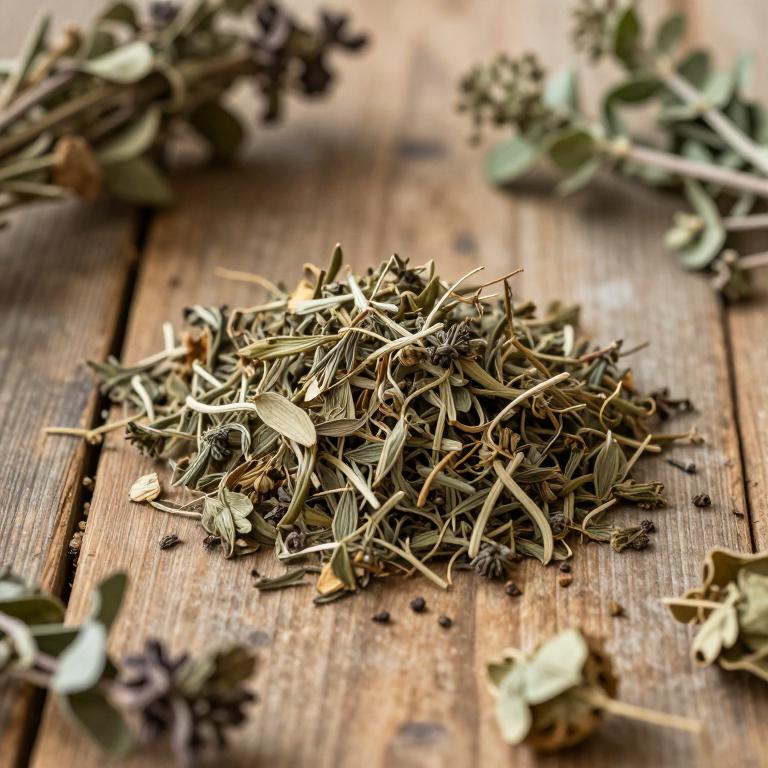
Names and Synonyms
Scientific Names
Accepted name
Eumachia rostrataSynonyms
- Chassalia tetrandra
- Chassalia rostrata
- Uragoga rostrata
- Chassalia rostrata var. latifolia
- Polyozus acuminata
- Polyozus latifolia
- Psychotria tetrandra
- Psychotria rostrata
Sources: Wikidata
Taxonomical Classification
This plant belongs to the kingdom Plantae and is classified under the phylum Streptophyta and class Equisetopsida. Within the subclass Magnoliidae, it falls under the order Gentianaales and is a member of the family Rubiaceae. Specifically, it is identified by the genus Eumachia as Eumachia rostrata.
| Rank | Classification |
|---|---|
| Kingdom | Plantae |
| Phylum | Streptophyta |
| Class | Equisetopsida |
| Subclass | Magnoliidae |
| Order | Gentianales |
| Family | Rubiaceae |
| Genus | Eumachia |
Sources: The World Checklist of Vascular Plants (WCVP)
Distribution
This plant exhibits a broad geographical distribution across several key regions in Southeast Asia. Within the Indo-China region, its presence is specifically noted in Thailand. It is also widely distributed throughout the Malesia zone, which includes several significant islands and peninsulas. Specifically, the species can be found growing in Jawa and across the island of Sumatera. Furthermore, its range extends into the Malay Peninsula, marking its presence in the Malay Peninsula area.
| Region | Area |
|---|---|
| Indo-China | Thailand |
| Malesia | Jawa |
| Malesia | Malaya |
| Malesia | Sumatera |
Sources: The World Checklist of Vascular Plants (WCVP)
Botanical Identification
Life history
The life history of Euimachia rostrata is characterized by its classification as a perennial species, allowing it to persist through multiple growing seasons. In terms of its structural development and survival strategy, the plant exhibits distinct growth forms, categorized as both a phanerophyte and a nanophanerophyte, which dictates how its shoots and buds are positioned relative to the ground surface during varying environmental conditions.
- Life form :
- nanophanerophyte
- Life form :
- phanerophyte
- Lifecycle :
- perennial
Morphology
The morphology of Euimachia rostrata is characterized by a woody growth form, functioning as a shrub that exhibits self-supporting climbing capabilities. As a terrestrial plant, it is not an epiphyte and maintains an independent existence, functioning as a non-parasitic organism. In terms of stature, the plant typically reaches a mean height of 2 m, though it has the capacity to grow to a maximum height of 3 m.
- Climber :
- self-supporting
- Epiphyte :
- terrestrial
- Growth form :
- shrub
- Parasite :
- independent
- Plant height max:
- 3 m
- Plant height mean:
- 2 m
- Woodiness :
- woody
Physiology
The physiology of Eumachia rostrata is characterized by its complex metabolic processes and specialized structural adaptations suited for its specific ecological niche. As a perennial herb, its physiological functions are driven by efficient photosynthetic pathways that facilitate carbon assimilation and biomass production. The plant exhibits a robust nutrient uptake mechanism, though it does not possess the symbiotic capabilities of certain leguminous species; specifically, it is not a nitrogen fixer, meaning it lacks the specialized root nodules required for atmospheric nitrogen fixation and must instead rely on the absorption of nitrates and ammonium from the soil substrate. Its water regulation and transpiration rates are managed through controlled stomatal conductance, ensuring osmotic balance during varying environmental conditions. Furthermore, the plant's secondary metabolism is highly active, involving the biosynthesis of diverse bioactive compounds that serve both defensive and physiological roles within its tissues.
- Nitrogen fixer :
- no
Sources: Global Inventory of Floras and Traits (GIFT)
Plant Parts
Eumachia rostrata has 1 reported plant parts identified across 1 scientific publications and several other databases that are studied for medicinal purposes. The most consistently reported plant part include leaf.
| Plant part | Supporting sources | Consensus |
|---|---|---|
| Leaf | 1 supporting sources | ★☆☆☆☆ |
Leaf
- Organic letters
Chemicals
Eumachia rostrata has 2 reported phytochemicals identified across 1 scientific publications and several other databases. The most consistently reported chemicals include Psychopentamine, Psychotrimine.
| Chemical | Supporting sources | Consensus |
|---|---|---|
| Psychopentamine | 1 supporting sources | ★☆☆☆☆ |
| Psychotrimine | 1 supporting sources | ★☆☆☆☆ |
Psychopentamine
- Organic letters
Psychotrimine
- Organic letters
Activities
Eumachia rostrata has 1 reported activities identified across 1 scientific publications and several other databases. The most consistently reported activities include Antioxidant.
| Activity | Supporting sources | Consensus |
|---|---|---|
| Antioxidant | 1 supporting sources | ★☆☆☆☆ |
Antioxidant
- Journal of ethnopharmacology
Preparations
Eumachia rostrata has 2 reported preparations identified across 1 scientific publications and several other databases. The most consistently reported preparations include Methanol extracts, leaves.
| Preparation | Supporting sources | Consensus |
|---|---|---|
| Methanol extracts | 1 supporting sources | ★☆☆☆☆ |
| Leaves | 1 supporting sources | ★☆☆☆☆ |
Methanol extracts
- Journal of ethnopharmacology
Leaves
- Organic letters