Stenocalyx dysentericus
Eugenia dysenterica · Accepted scientific name
Scientific literature: Very Sparse (21 studies) · ★☆☆☆☆
Stenocalyx dysentericus, scientifically known as Eugenia dysenterica, is a significant medicinal shrub native to tropical regions. Renowned for its therapeutic properties, particularly in treating gastrointestinal ailments like dysentery, this plant holds deep importance in traditional medicine. Its bioactive compounds offer promising potential for modern pharmacological research and holistic healing.
- Family
- Myrtaceae
- Native range
- Southern America
- Parts used
- Leaf · Fruit
- Common names
- Not available
- Scientific synonyms
- Myrtus Dysenterica · Stenocalyx Dysentericus
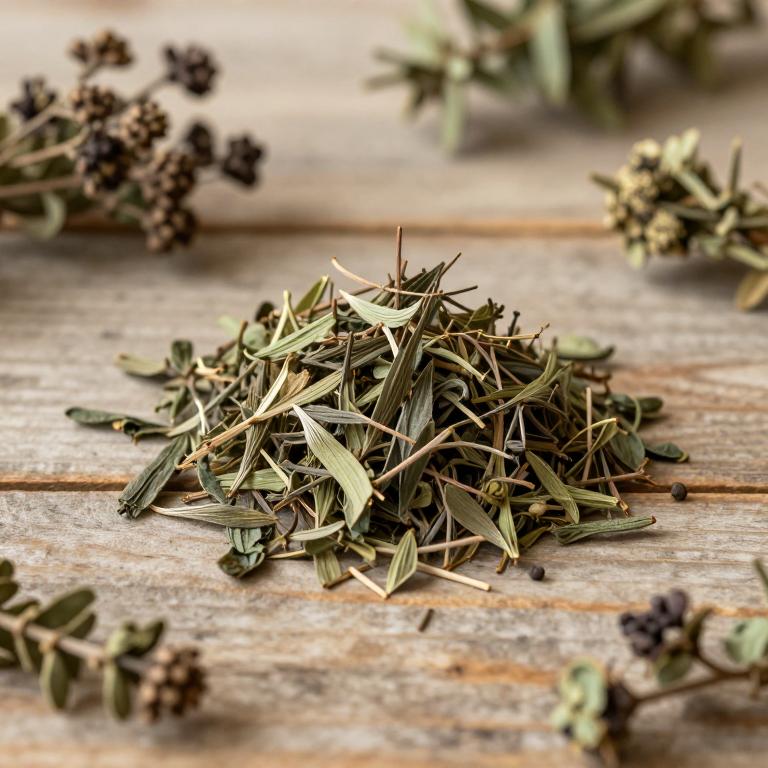
Names and Synonyms
Scientific Names
Accepted name
Eugenia dysentericaSynonyms
- Myrtus dysenterica
- Stenocalyx dysentericus
Regional and Traditional Names
German:
- Cagaita
Sources: Wikidata, Catalogue of Life
Taxonomical Classification
This plant belongs to the kingdom Plantae and is classified under the phylum Streptophyta within the class Equisetopsida. It further falls under the subclass Magnoliidae and the order Myrtales, placing it in the family Myrtaceae. Finally, it is identified by the genus Eugenia, specifically as the species Eugenia dysenterica.
| Rank | Classification |
|---|---|
| Kingdom | Plantae |
| Phylum | Streptophyta |
| Class | Equisetopsida |
| Subclass | Magnoliidae |
| Order | Myrtales |
| Family | Myrtaceae |
| Genus | Eugenia |
Sources: The World Checklist of Vascular Plants (WCVP)
Distribution
This plant is primarily found across various regions of Western South America, with documented occurrences in Bolivia. Its distribution extends significantly into Brazil, where it inhabits a wide range of ecological zones. Within the country, it can be located throughout the North and Northeast regions. Additionally, the species is present in the West-Central areas of Brazil. Finally, the plant is also distributed across the Southeast portion of the Brazilian territory.
| Region | Area |
|---|---|
| Western South America | Bolivia |
| Brazil | Brazil West-Central |
| Brazil | Brazil Northeast |
| Brazil | Brazil Southeast |
| Brazil | Brazil North |
Sources: The World Checklist of Vascular Plants (WCVP)
Botanical Identification
Ecology
The ecology of Eugenia dysenterica is characterized by its adaptation to specific Brazilian biomes, primarily occurring within the Caatinga (stricto sensu) and the Cerrado (lato sensu). This distribution indicates a high capacity for resilience in environments defined by seasonal water scarcity and distinct dry periods. In the Caatinga, the species must navigate semi-arid conditions, often occupying niches where it can endure high solar radiation and irregular rainfall. Conversely, its presence in the Cerrado (lato sensu) suggests an ability to thrive in more mosaic-like landscapes, often transitioning between savanna-like formations and more forested patches. These habitats dictate its physiological strategies for moisture conservation and nutrient cycling, allowing the plant to maintain its biological functions across diverse soil types and climatic fluctuations inherent to these tropical ecosystems.
- Habitat :
- Caatinga (stricto sensu), Cerrado (lato sensu)
Life history
The life history of Eugenia dysenterica is characterized by a perennial lifecycle, allowing the plant to persist through multiple growing seasons. As a phanerophyte, it maintains its stem or branches well above the ground level, a trait that is further specified by its classification as a nanophanerophyte, indicating a relatively low-growing woody structure. In terms of its foliage dynamics, the species exhibits a deciduous nature, shedding its leaves periodically as part of its seasonal developmental cycle.
- Deciduousness :
- deciduous
- Life form :
- nanophanerophyte
- Life form :
- phanerophyte
- Lifecycle :
- perennial
Morphology
The morphology of Eugenia dysenterica is characterized by its growth form as a woody tree that functions as an independent organism, neither acting as a parasite nor as an epiphyte, maintaining a strictly terrestrial existence. This self-supporting plant typically reaches a mean height of 6 meters, though its stature can vary significantly, ranging from a minimum of 4 meters to a maximum of 10 meters. As a non-climbing, self-supporting species, it establishes a stable structural presence within its habitat.
- Aquatic :
- terrestrial
- Climber :
- self-supporting
- Epiphyte :
- terrestrial
- Growth form :
- tree
- Parasite :
- independent
- Plant height max:
- 10 m
- Plant height mean:
- 6 m
- Plant height min:
- 4 m
- Woodiness :
- woody
Physiology
The physiology of Eugenia dysenterica is characterized by specific metabolic and nutritional strategies typical of many woody angiosperms. In terms of carbon assimilation, the plant utilizes the C3 photosynthetic pathway, relying on the enzyme Rubisco to fix atmospheric carbon dioxide during the Calvin cycle. Furthermore, regarding its nutrient acquisition processes, the species is not a nitrogen fixer, meaning it does not possess a symbiotic relationship with nitrogen-fixing bacteria to convert atmospheric nitrogen into bioavailable forms, instead relying on the uptake of nitrates or ammonium from the soil through its root system.
- Nitrogen fixer :
- no
- Photosynthetic pathway :
- C3
Reproduction
The reproduction of Eugenia dysenterica is characterized by the development of fleshy fruits that serve as the primary vessel for seed dispersal. These fruits possess a notable fleshy texture, which plays a crucial role in attracting dispersers to facilitate the plant's life cycle. Within these fruits, the seeds are contained with a highly consistent morphological profile; specifically, the seed volume is uniform across observed samples, maintaining a constant mean, minimum, and maximum volume of 620 mm³. This lack of variance in seed size suggests a stabilized reproductive strategy aimed at providing a predictable amount of nutrient reserves for each offspring.
- Fruit dryness :
- fleshy
- Seed volume max:
- 620 mm³
Sources: Global Inventory of Floras and Traits (GIFT)
Plant Parts
Eugenia dysenterica has 2 reported plant parts identified across 3 scientific publications and several other databases that are studied for medicinal purposes. The most consistently reported plant part include leaf, fruit.
| Plant part | Supporting sources | Consensus |
|---|---|---|
| Leaf | 2 supporting sources | ★☆☆☆☆ |
| Fruit | 1 supporting sources | ★☆☆☆☆ |
Leaf
- Journal of ethnopharmacology
- Fitoterapia
Fruit
- Peptides
Chemicals
Eugenia dysenterica has 12 reported phytochemicals identified across 3 scientific publications and several other databases. The most consistently reported chemicals include Flavonoids, ALPHA-THUJENE, BETA-CARYOPHYLLENE, Coumarins, Flavonoid.
| Chemical | Supporting sources | Consensus |
|---|---|---|
| Flavonoids | 2 supporting sources | ★☆☆☆☆ |
| ALPHA-THUJENE | 1 supporting sources | ★☆☆☆☆ |
| BETA-CARYOPHYLLENE | 1 supporting sources | ★☆☆☆☆ |
| Coumarins | 1 supporting sources | ★☆☆☆☆ |
| Flavonoid | 1 supporting sources | ★☆☆☆☆ |
| LIMONENE | 1 supporting sources | ★☆☆☆☆ |
| Saponins | 1 supporting sources | ★☆☆☆☆ |
| Tannins | 1 supporting sources | ★☆☆☆☆ |
| Terpenes | 1 supporting sources | ★☆☆☆☆ |
| alpha-Humulene | 1 supporting sources | ★☆☆☆☆ |
Flavonoids
- Journal of ethnopharmacology
- BMC complementary and alternative medicine
ALPHA-THUJENE
- Journal of ethnopharmacology
BETA-CARYOPHYLLENE
- Journal of ethnopharmacology
Coumarins
- Journal of ethnopharmacology
Flavonoid
- Fitoterapia
LIMONENE
- Journal of ethnopharmacology
Saponins
- Journal of ethnopharmacology
Tannins
- Journal of ethnopharmacology
Terpenes
- Journal of ethnopharmacology
alpha-Humulene
- Journal of ethnopharmacology
Conditions
Eugenia dysenterica has 4 reported investigations on conditions identified across 3 scientific publications and several other databases. The most consistently reported conditions include C. parapsilosis, cryptococcal meningitis, irritable bowel syndrome, rotavirus.
| Condition | Supporting sources | Consensus |
|---|---|---|
| C. parapsilosis | 1 supporting sources | ★☆☆☆☆ |
| Cryptococcal meningitis | 1 supporting sources | ★☆☆☆☆ |
| Irritable bowel syndrome | 1 supporting sources | ★☆☆☆☆ |
| Rotavirus | 1 supporting sources | ★☆☆☆☆ |
C. parapsilosis
- BMC complementary and alternative medicine
Cryptococcal meningitis
- Journal of ethnopharmacology
Irritable bowel syndrome
- Peptides
Rotavirus
- Journal of ethnopharmacology
Preparations
Eugenia dysenterica has 4 reported preparations identified across 3 scientific publications and several other databases. The most consistently reported preparations include aqueous extracts, crude extracts, ethanolic crude extracts, ethanolic leaf extract.
| Preparation | Supporting sources | Consensus |
|---|---|---|
| Aqueous extracts | 1 supporting sources | ★☆☆☆☆ |
| Crude extracts | 1 supporting sources | ★☆☆☆☆ |
| Ethanolic crude extracts | 1 supporting sources | ★☆☆☆☆ |
| Ethanolic leaf extract | 1 supporting sources | ★☆☆☆☆ |
Aqueous extracts
- Planta medica
Crude extracts
- BMC complementary and alternative medicine
Ethanolic crude extracts
- Journal of ethnopharmacology
Ethanolic leaf extract
- Fitoterapia