Eugenia brejoensis
Eugenia brejoensis · Accepted scientific name
Scientific literature: Very Sparse (3 studies) · ★☆☆☆☆
, scientifically known as Eugenia brejoenensis, is a resilient evergreen shrub native to the Atlantic Forest of Brazil. Belonging to the Myrtaceae family, this plant is valued for its dense foliage and small, aromatic fruits. It plays a vital role in local ecosystems, supporting biodiversity and traditional medicinal practices.
- Family
- Myrtaceae
- Native range
- Southern America
- Parts used
- Leaf
- Common names
- Not available
- Scientific synonyms
- Not available
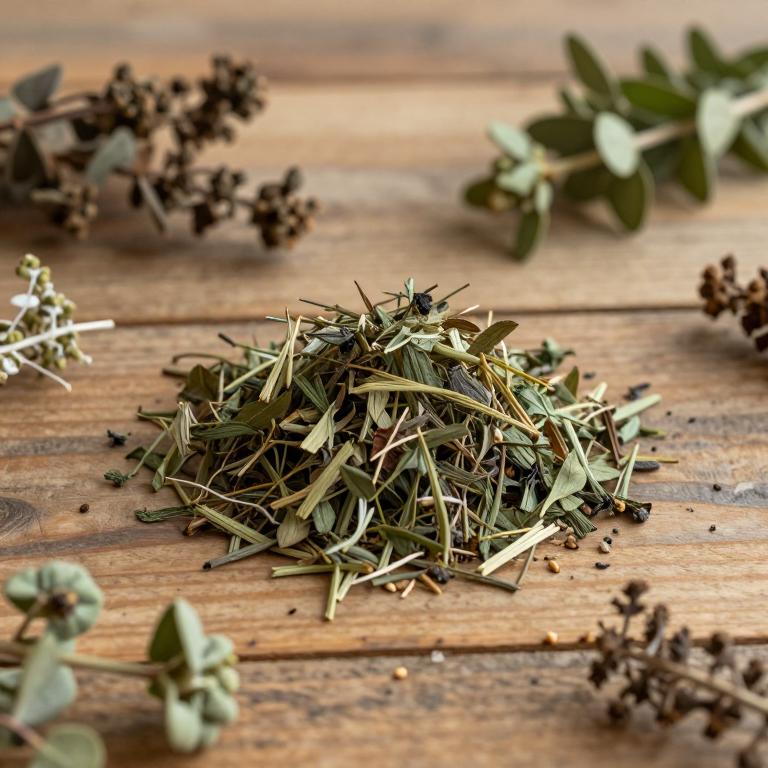
Names and Synonyms
Scientific Names
Accepted name
Eugenia brejoensisSources: Wikidata, Catalogue of Life
Taxonomical Classification
This plant belongs to the kingdom Plantae within the phylum Streptophyta and the class Equisetopsida. It is further classified under the subclass Magnoliidae, the order Myrtales, and the family Myrtaceae. Ultimately, it is identified by its specific genus, Eugenia.
| Rank | Classification |
|---|---|
| Kingdom | Plantae |
| Phylum | Streptophyta |
| Class | Equisetopsida |
| Subclass | Magnoliidae |
| Order | Myrtales |
| Family | Myrtaceae |
| Genus | Eugenia |
Sources: The World Checklist of Vascular Plants (WCVP)
Distribution
This plant is characterized by a specific and localized geographical distribution within South America. It is primarily found in the country of Brazil, where it inhabits certain ecosystems. More specifically, its occurrence is concentrated in the Northeast region of the nation. This particular area provides the environmental conditions necessary for the species to thrive. Consequently, the range of Eugenia brejoenis is restricted to these specific Brazilian territories.
| Region | Area |
|---|---|
| Brazil | Brazil Northeast |
Sources: The World Checklist of Vascular Plants (WCVP)
Botanical Identification
Ecology
The ecology of Eugenia brejoensis is characterized by its presence in diverse and specialized forest environments, demonstrating a notable adaptability to different moisture levels and soil compositions. It is primarily found within the Floresta Estacional Semidecidual, where it must navigate seasonal fluctuations in water availability, as well as in the more humid and consistently wet conditions of the Floresta Ombrófila (Rainforest). Furthermore, the species inhabits Restinga ecosystems, which are coastal sandy habitats often marked by high salinity and nutrient-poor soils. This distribution across varying forest types and coastal landscapes indicates a broad ecological niche that spans from seasonally dry deciduous forests to tropical rainforests and specialized maritime scrublands.
- Habitat :
- Floresta Estacional Semidecidual, Floresta Ombrófila (= Floresta Pluvial), Restinga
Life history
The life history of Eugenia brejoensis is characterized by its classification as a phanerophyte, a growth form where the perennating buds are located on aerial shoots well above the ground. Within this category, it exhibits specific nuances in its structural development, functioning as both a phanerophyte and a nanophanerophyte depending on its developmental stage and environmental conditions. This life strategy allows the plant to maintain its reproductive and vegetative potential through woody stems that elevate its crown, ensuring survival through seasonal changes and providing a stable framework for its long-term life cycle in its native habitat.
- Life form :
- phanerophyte
Morphology
The morphology of Eugenia brejoensis is characterized by its growth form as a woody tree, reaching a maximum plant height of 4 meters. It functions as a self-supporting organism rather than a climber or epiphyte, maintaining a strictly terrestrial existence rather than being aquatic or semiaquatic. As an independent species, it does not exhibit parasitic behavior, relying on its own physiological processes for sustenance. Its structural integrity is defined by its woody nature, supporting its upright, tree-like stature within its terrestrial habitat.
- Aquatic :
- terrestrial
- Climber :
- self-supporting
- Epiphyte :
- terrestrial
- Growth form :
- tree
- Parasite :
- independent
- Plant height max:
- 4 m
- Woodiness :
- woody
Sources: Global Inventory of Floras and Traits (GIFT)
Plant Parts
Eugenia brejoensis has 1 reported plant parts identified across 1 scientific publications and several other databases that are studied for medicinal purposes. The most consistently reported plant part include leaf.
| Plant part | Supporting sources | Consensus |
|---|---|---|
| Leaf | 1 supporting sources | ★☆☆☆☆ |
Leaf
- Biomedicine & pharmacotherapy = Biomedecine & pharmacotherapie
Chemicals
Eugenia brejoensis has 1 reported phytochemicals identified across 1 scientific publications and several other databases. The most consistently reported chemicals include trans-Caryophyllene.
| Chemical | Supporting sources | Consensus |
|---|---|---|
| trans-Caryophyllene | 1 supporting sources | ★☆☆☆☆ |
trans-Caryophyllene
- Biomedicine & pharmacotherapy = Biomedecine & pharmacotherapie
Conditions
Eugenia brejoensis has 1 reported investigations on conditions identified across 1 scientific publications and several other databases. The most consistently reported conditions include Chagas disease.
| Condition | Supporting sources | Consensus |
|---|---|---|
| Chagas disease | 1 supporting sources | ★☆☆☆☆ |
Chagas disease
- Biomedicine & pharmacotherapy = Biomedecine & pharmacotherapie
Preparations
Eugenia brejoensis has 1 reported preparations identified across 1 scientific publications and several other databases. The most consistently reported preparations include EBEO.
| Preparation | Supporting sources | Consensus |
|---|---|---|
| Ebeo | 1 supporting sources | ★☆☆☆☆ |
Ebeo
- Biomedicine & pharmacotherapy = Biomedecine & pharmacotherapie