Brazil-cherry
Eugenia brasiliensis · Accepted scientific name
Scientific literature: Very Extensive (240 studies) · ★★★★★
Brazil-cherry, scientifically known as Eugenia brasiliensis, is a versatile evergreen shrub native to South America. Renowned for its antioxidant-rich, edible fruits, it offers significant medicinal potential. This plant is traditionally valued for its anti-inflammatory, antimicrobial, and digestive benefits, making it a subject of interest in modern ethnopharmacology.
- Family
- Myrtaceae
- Native range
- Africa
- Parts used
- Leaf
- Common names
- Brazil-Cherry · Grumichama
- Scientific synonyms
- Stenocalyx Brasiliensis · Stenocalyx Brasiliensis Var. Leucocarpa · 10 more
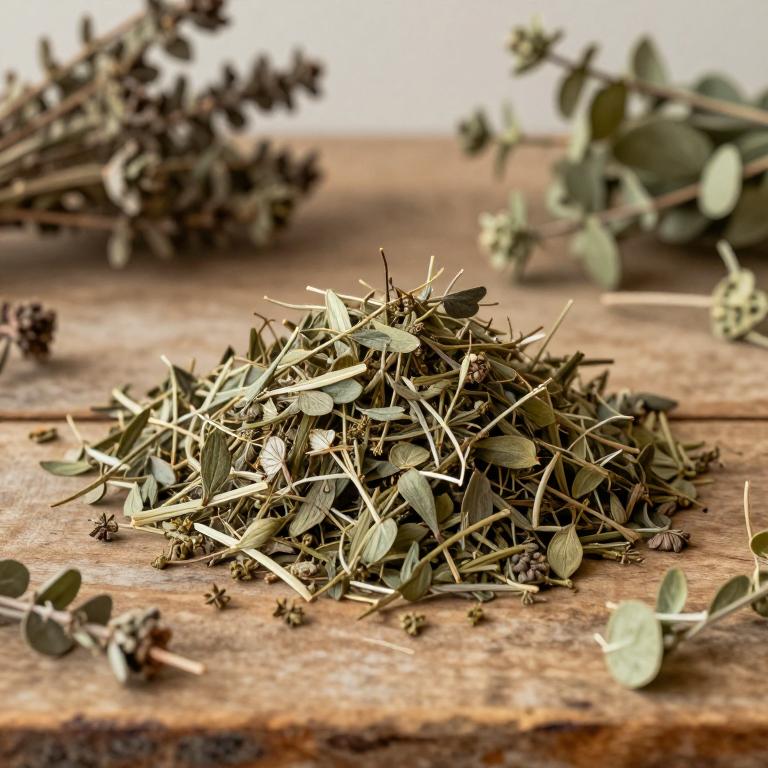
Names and Synonyms
Common Names
- Brazil-cherry
- grumichama
Scientific Names
Accepted name
Eugenia brasiliensisSynonyms
- Stenocalyx brasiliensis
- Stenocalyx brasiliensis var. leucocarpa
- Eugenia brasiliensis var. erythrocarpa
- Eugenia brasiliensis var. leucocarpa
- Eugenia bracteolaris
- Myrtus grumixama
- Eugenia filipes
- Eugenia ubensis
- Stenocalyx ubensis
- Stenocalyx brasiliensis var. erythrocarpa
- Stenocalyx brasiliensis var. iocarpa
- Stenocalyx brasiliensis var. silvestris
Regional and Traditional Names
Spanish:
- Eugenia ubensis
- Stenocalyx brasiliensis var. iocarpa
- Eugenia dombeyi
- Stenocalyx brasiliensis
- Eugenia bracteolaris
- Stenocalyx brasiliensis var. silvestris
- Stenocalyx brasiliensis var. erythrocarpa
- Stenocalyx brasiliensis var iocarpa
- Stenocalyx brasiliensis var. leucocarpa
- Eugenia filipes
- Cereza de Brasil
- Myrtus grumixama
- Myrtus dombeyi
- Stenocalyx brasiliensis var silvestris
- Grumichama
- Stenocalyx brasiliensis var leucocarpa
German:
- Grumichama
- brasilianische Kirschmyrte
French:
- Cerisier du Brésil
- Cerise Du Brésil
- Cerisier du Bresil
- cerisier du Brésil
- jambosier du Brésil
Sources: Wikidata, Catalogue of Life
Taxonomical Classification
This plant belongs to the kingdom Plantae and the phylum Streptophyta, falling under the class Equisetopsida and subclass Magnoliidae. It is further classified within the order Myrtales and the family Myrtaceae. Finally, it is identified by the genus Eugenia, specifically as the species Eugenia brasiliensis.
| Rank | Classification |
|---|---|
| Kingdom | Plantae |
| Phylum | Streptophyta |
| Class | Equisetopsida |
| Subclass | Magnoliidae |
| Order | Myrtales |
| Family | Myrtaceae |
| Genus | Eugenia |
Sources: The World Checklist of Vascular Plants (WCVP)
Distribution
This plant exhibits a widespread geographical distribution spanning several distinct tropical regions across the globe. In West-Central Tropical Africa, it can be found specifically around the Gulf of Guinea Islands. Its presence extends to the Western Indian Ocean, where it inhabits the Comoros archipelago. The species also reaches the North-Central Pacific in Hawaii and the Caribbean within Trinidad and Tobago. Finally, a significant portion of its range is located in Brazil, particularly throughout the Northeast region.
| Region | Area |
|---|---|
| West-Central Tropical Africa | Gulf of Guinea Is. |
| Western Indian Ocean | Comoros |
| North-Central Pacific | Hawaii |
| Caribbean | Trinidad-Tobago |
| Brazil | Brazil Northeast |
| Brazil | Brazil Southeast |
| Brazil | Brazil South |
Sources: The World Checklist of Vascular Plants (WCVP)
Botanical Identification
Ecology
The ecology of Eugenia brasiliensis is characterized by its presence in diverse forest ecosystems, including Floresta Estacional Semidecidual, Floresta Ombrófila (also known as Floresta Pluvial), Floresta Ombrófila Mista, and Restinga habitats. This species exhibits a broad altitudinal distribution, thriving at elevations ranging from a minimum of 100 m AMSL to a maximum of 900 m AMSL.
- Elevational range max:
- 900 m AMSL
- Elevational range min:
- 100 m AMSL
- Habitat :
- Floresta Estacional Semidecidual, Floresta Ombrófila (= Floresta Pluvial), Floresta Ombrófila Mista, Restinga
Life history
The life history of Eugenia brasiliensis is characterized by its status as a perennial species, allowing it to persist in its environment over many growing seasons. As a phanerophyte, its reproductive shoots are elevated well above the ground, a structural adaptation that defines its growth habit. The plant maintains an evergreen deciduousness, ensuring that it retains its foliage throughout the year rather than shedding it seasonally. This combination of a long-lived lifecycle, a phanerophyte life form, and evergreen characteristics contributes to its stable presence within its natural ecological niche.
- Deciduousness :
- evergreen
- Life form :
- phanerophyte
- Lifecycle :
- perennial
Morphology
The morphology of Eugenia brasiliensis is characterized by its woody nature and versatile growth forms, appearing as both a tree and a shrub. It is a self-supporting plant that does not function as a climber or a parasite, maintaining an independent life cycle. The species is strictly terrestrial, lacking aquatic or epiphytic tendencies. In terms of stature, the plant exhibits significant variation in height, with recorded measurements ranging from a minimum of 7 m to a maximum of 10.5 m, though it can reach a mean height of approximately 14 m.
- Aquatic :
- terrestrial
- Climber :
- self-supporting
- Epiphyte :
- terrestrial
- Growth form :
- tree
- Growth form :
- shrub
- Parasite :
- independent
- Plant height max:
- 10.5 m
- Plant height mean:
- 14 m
- Plant height min:
- 7 m
- Woodiness :
- woody
Physiology
The physiology of Eugenia brasiliensis is characterized by a standard metabolic profile typical of many woody dicotyledonous species. It utilizes the C3 photosynthetic pathway, a process in which carbon dioxide is fixed directly through the Calvin cycle without the specialized CO2-concentrating mechanisms found in C4 or CAM plants. Consequently, its carbon assimilation is highly dependent on stomatal conductance and environmental moisture levels. Furthermore, this species is not a nitrogen fixer, meaning it lacks the symbiotic relationship with nitrogen-fixing bacteria required to convert atmospheric nitrogen into usable forms; instead, it relies on the uptake of inorganic nitrogen, such as nitrates and ammonium, from the surrounding soil substrate to support its growth and protein synthesis.
- Nitrogen fixer :
- no
- Photosynthetic pathway :
- C3
Reproduction
The reproduction of Eugenia brasiliensis is characterized by the production of seeds that exhibit a significant degree of morphological variation in terms of weight. The seed mass within a population is notably diverse, with a recorded minimum mass of only 0.000063 g, representing the smallest individual seeds. In contrast, the maximum seed mass reaches up to 0.003861 g, indicating a wide spectrum of reproductive investment per unit. When observing the central tendency of these reproductive structures, the mean seed mass is calculated at 0.001962 g, providing a quantitative baseline for the typical size of the seeds produced during the plant's reproductive cycle.
- Seed mass max:
- 0.003861 g
- Seed mass mean:
- 0.001962 g
- Seed mass min:
- 6.3e-05 g
Sources: Global Inventory of Floras and Traits (GIFT)
Plant Parts
Eugenia brasiliensis has 1 reported plant parts identified across 1 scientific publications and several other databases that are studied for medicinal purposes. The most consistently reported plant part include leaf.
| Plant part | Supporting sources | Consensus |
|---|---|---|
| Leaf | 1 supporting sources | ★☆☆☆☆ |
Leaf
- Journal of ethnopharmacology
Chemicals
Eugenia brasiliensis has 14 reported phytochemicals identified across 1 scientific publications and several other databases. The most consistently reported chemicals include Ash, CALCIUM, EO, Epicatechin, FAT.
| Chemical | Supporting sources | Consensus |
|---|---|---|
| Ash | 1 supporting sources | ★☆☆☆☆ |
| CALCIUM | 1 supporting sources | ★☆☆☆☆ |
| EO | 1 supporting sources | ★☆☆☆☆ |
| Epicatechin | 1 supporting sources | ★☆☆☆☆ |
| FAT | 1 supporting sources | ★☆☆☆☆ |
| Gallic acid | 1 supporting sources | ★☆☆☆☆ |
| IRON | 1 supporting sources | ★☆☆☆☆ |
| PHOSPHORUS | 1 supporting sources | ★☆☆☆☆ |
| ascorbic acid | 1 supporting sources | ★☆☆☆☆ |
| beta-carotene | 1 supporting sources | ★☆☆☆☆ |
Ash
- Dr. Duke
CALCIUM
- Dr. Duke
EO
- Dr. Duke
Epicatechin
- Microbial pathogenesis
FAT
- Dr. Duke
Gallic acid
- Microbial pathogenesis
IRON
- Dr. Duke
PHOSPHORUS
- Dr. Duke
ascorbic acid
- Dr. Duke
beta-carotene
- Dr. Duke
Activities
Eugenia brasiliensis has 209 reported activities identified across 1 scientific publications and several other databases. The most consistently reported activities include Antinociceptive, Antioxidant, Diuretic, Acidulant, Aldose-Reductase-Inhibitor.
| Activity | Supporting sources | Consensus |
|---|---|---|
| Antinociceptive | 2 supporting sources | ★☆☆☆☆ |
| Antioxidant | 2 supporting sources | ★☆☆☆☆ |
| Diuretic | 2 supporting sources | ★☆☆☆☆ |
| Acidulant | 1 supporting sources | ★☆☆☆☆ |
| Aldose-Reductase-Inhibitor | 1 supporting sources | ★☆☆☆☆ |
| Allergenic | 1 supporting sources | ★☆☆☆☆ |
| Analgesic | 1 supporting sources | ★☆☆☆☆ |
| Androgenic? | 1 supporting sources | ★☆☆☆☆ |
| Angiotensin-Receptor-Blocker | 1 supporting sources | ★☆☆☆☆ |
| AntiAGE | 1 supporting sources | ★☆☆☆☆ |
Antinociceptive
- Molecular neurobiology
- Journal of ethnopharmacology
Antioxidant
- Dr. Duke
- Journal of ethnopharmacology
Diuretic
- Dr. Duke
- Journal of ethnopharmacology
Acidulant
- Dr. Duke
Aldose-Reductase-Inhibitor
- Dr. Duke
Allergenic
- Dr. Duke
Analgesic
- Dr. Duke
Androgenic?
- Dr. Duke
Angiotensin-Receptor-Blocker
- Dr. Duke
AntiAGE
- Dr. Duke
Conditions
Eugenia brasiliensis has 6 reported investigations on conditions identified across 1 scientific publications and several other databases. The most consistently reported conditions include chronic pain, histamine, mechanical allodynia, pain, temperature.
| Condition | Supporting sources | Consensus |
|---|---|---|
| Chronic pain | 1 supporting sources | ★☆☆☆☆ |
| Histamine | 1 supporting sources | ★☆☆☆☆ |
| Mechanical allodynia | 1 supporting sources | ★☆☆☆☆ |
| Pain | 1 supporting sources | ★☆☆☆☆ |
| Temperature | 1 supporting sources | ★☆☆☆☆ |
| Visceral pain | 1 supporting sources | ★☆☆☆☆ |
Chronic pain
- Molecular neurobiology
Histamine
- Journal of ethnopharmacology
Mechanical allodynia
- Journal of ethnopharmacology
Pain
- Journal of ethnopharmacology
Temperature
- Journal of ethnopharmacology
Visceral pain
- Journal of ethnopharmacology
Preparations
Eugenia brasiliensis has 1 reported preparations identified across 1 scientific publications and several other databases. The most consistently reported preparations include hydroalcoholic extract of Eugenia brasiliensis (HEEb).
| Preparation | Supporting sources | Consensus |
|---|---|---|
| Hydroalcoholic extract of eugenia brasiliensis (heeb) | 1 supporting sources | ★☆☆☆☆ |
Hydroalcoholic extract of eugenia brasiliensis (heeb)
- Journal of ethnopharmacology