Mountain Guarri
Euclea natalensis · Accepted scientific name
Scientific literature: Sparse (54 studies) · ★★☆☆☆
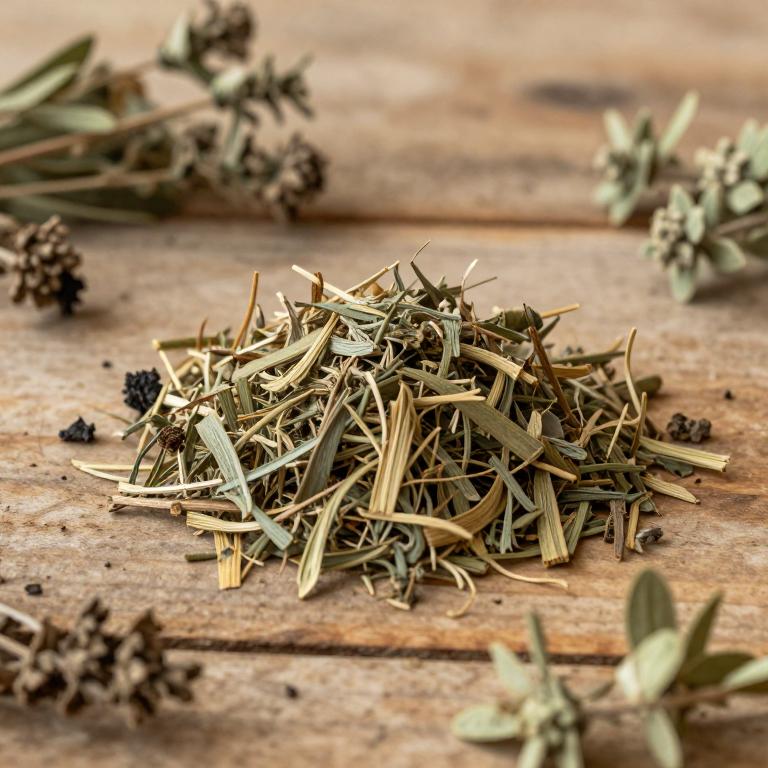
Mountain Guarri, scientifically known as Euclea natalensis, is a versatile evergreen shrub native to Southern Africa. Renowned for its medicinal properties, various parts of the plant are traditionally used to treat ailments ranging from skin infections to digestive issues. Its hardy nature and ecological significance make it a vital species.
- Family
- Ebenaceae
- Native range
- Africa
- Parts used
- Root
- Common names
- Mountain Guarri · Natal Guarri
- Scientific synonyms
- Not available
Names and Synonyms
Common Names
- Mountain Guarri
- Natal Guarri
Scientific Names
Accepted name
Euclea natalensisSources: Wikidata, Catalogue of Life
Taxonomical Classification
This plant belongs to the kingdom Plantae within the phylum Streptophyta and is classified under the class Equisetopsida. Following its placement in the subclass Magnoliidae and order Ericales, it is categorized under the family Ebenaceae. It is further identified by its genus, Euclea, and its specific species name, Euclea natalensis.
| Rank | Classification |
|---|---|
| Kingdom | Plantae |
| Phylum | Streptophyta |
| Class | Equisetopsida |
| Subclass | Magnoliidae |
| Order | Ericales |
| Family | Ebenaceae |
| Genus | Euclea |
Sources: The World Checklist of Vascular Plants (WCVP)
Distribution
This plant is widely distributed across various regions of the African continent. In West-Central Tropical Africa, it can be found growing within the Democratic Republic of the Congo. Its range extends to Northeast Tropical Africa, where it is present in Somalia. Additionally, the species is located throughout East Tropical Africa, specifically in Kenya and Tanzania. Finally, its geographical reach includes South Tropical Africa, particularly within Angola.
| Region | Area |
|---|---|
| West-Central Tropical Africa | DR Congo |
| Northeast Tropical Africa | Somalia |
| East Tropical Africa | Kenya |
| East Tropical Africa | Tanzania |
| South Tropical Africa | Angola |
| South Tropical Africa | Malawi |
| South Tropical Africa | Mozambique |
| South Tropical Africa | Zambia |
| South Tropical Africa | Zimbabwe |
| Southern Africa | Botswana |
Sources: The World Checklist of Vascular Plants (WCVP)
Botanical Identification
Ecology
The ecology of Euclea natalensis is characterized by its ability to thrive across a diverse range of environmental settings, predominantly occupying habitats such as forests, thickets, and riverine areas. This species demonstrates significant altitudinal adaptability, maintaining a broad distribution that begins at sea level (0 m AMSL) and extends up to a maximum elevation of 900 m AMSL. Its presence in riverine systems and dense thickets suggests a preference for moisture-retaining environments or transitional zones where varying light intensities and soil compositions are available.
- Elevational range max:
- 900 m AMSL
- Elevational range min:
- 0 m AMSL
- Habitat :
- forest, thickets, riverine
Life history
The life history of Euclea natalensis is characterized by a perennial lifecycle, allowing the plant to persist across multiple growing seasons. As a phanerophyte, it maintains its stem system above the ground, typically developing into a robust woody structure. Within its ecological niche, it exhibits the morphological characteristics of a nanophanerophyte, reflecting its growth habit and structural complexity. Furthermore, the plant maintains an evergreen deciduousness, ensuring that its foliage remains functional and present throughout the year rather than undergoing seasonal shedding.
- Deciduousness :
- evergreen
- Life form :
- nanophanerophyte
- Life form :
- phanerophyte
- Lifecycle :
- perennial
Morphology
The morphology of Euclea natalensis is characterized by its growth form as a woody tree, which functions as a self-supporting structure rather than a climber or epiphyte. This species is a terrestrial plant, existing independently without parasitic tendencies. In terms of its stature, the plant exhibits significant size, with a height that typically ranges from a minimum of 2 meters to a maximum of 7 meters, maintaining an average plant height of approximately 7 meters.
- Aquatic :
- terrestrial
- Climber :
- self-supporting
- Epiphyte :
- terrestrial
- Growth form :
- tree
- Parasite :
- independent
- Plant height mean:
- 7 m
- Plant height min:
- 2 m
- Woodiness :
- woody
Physiology
The physiology of Euclea natalensis is characterized by its robust metabolic processes adapted to the diverse ecosystems of Southern and Eastern Africa, where it functions primarily as a perennial woody species. As a non-nitrogen-fixing plant, its nitrogen acquisition relies entirely on the uptake of nitrates and ammonium ions from the soil through an extensive root system rather than through symbiotic relationships with diazotrophic bacteria; therefore, its nitrogen fixer status is no. The plant exhibits efficient photosynthetic pathways to support its structural growth and the production of secondary metabolites, which are critical for its chemical defense mechanisms. Its physiological resilience is further evidenced by its ability to manage water potential and nutrient translocation within its lignified tissues, ensuring survival across varying seasonal moisture levels.
- Nitrogen fixer :
- no
Reproduction
The reproduction of Euclea natalensis is characterized by a specialized reproductive strategy involving the production of drupe-type fruits. These fruits are indehiscent, meaning they do not split open at maturity to release their contents, which is consistent with their role in a zoochorous dispersal syndrome, where seeds are distributed via animals. The seeds contained within the fruit exhibit specific mass variations, with a recorded mean seed mass of approximately 0.103266666666667 g, ranging from a minimum of 0.07805 g to a maximum of 0.13996 g. Furthermore, the species relies on cross-pollination for its reproductive success, as self-fertilization is documented as absent in this plant.
- Dehiscence :
- indehiscent
- Dispersal syndrome :
- zoochorous
- Fruit type :
- drupe
- Seed mass max:
- 0.13996 g
- Seed mass mean:
- 0.103266666666667 g
- Seed mass min:
- 0.07805 g
- Self fertilization :
- absent
Sources: Global Inventory of Floras and Traits (GIFT)
Plant Parts
Euclea natalensis has 1 reported plant parts identified across 3 scientific publications and several other databases that are studied for medicinal purposes. The most consistently reported plant part include root.
| Plant part | Supporting sources | Consensus |
|---|---|---|
| Root | 3 supporting sources | ★★☆☆☆ |
Root
- Journal of ethnopharmacology
- Journal de biologie buccale
- Archives of oral biology
Chemicals
Euclea natalensis has 11 reported phytochemicals identified across 3 scientific publications and several other databases. The most consistently reported chemicals include Naphthoquinones, Coumarins, Diospyrin, Fatty acids, Galpinone.
| Chemical | Supporting sources | Consensus |
|---|---|---|
| Naphthoquinones | 2 supporting sources | ★☆☆☆☆ |
| Coumarins | 1 supporting sources | ★☆☆☆☆ |
| Diospyrin | 1 supporting sources | ★☆☆☆☆ |
| Fatty acids | 1 supporting sources | ★☆☆☆☆ |
| Galpinone | 1 supporting sources | ★☆☆☆☆ |
| Lignans | 1 supporting sources | ★☆☆☆☆ |
| betulinic acid | 1 supporting sources | ★☆☆☆☆ |
| cis-Megastigma-5,8-diene-4-one | 1 supporting sources | ★☆☆☆☆ |
| guanosine | 1 supporting sources | ★☆☆☆☆ |
| sorbitol | 1 supporting sources | ★☆☆☆☆ |
Naphthoquinones
- Journal de biologie buccale
- Archives of oral biology
Coumarins
- Archives of oral biology
Diospyrin
- Microorganisms
Fatty acids
- Archives of oral biology
Galpinone
- Microorganisms
Lignans
- Archives of oral biology
betulinic acid
- Dr. Duke
cis-Megastigma-5,8-diene-4-one
- Heliyon
guanosine
- Heliyon
sorbitol
- Heliyon
Activities
Euclea natalensis has 22 reported activities identified across 3 scientific publications and several other databases. The most consistently reported activities include Antibacterial, Antiplasmodial, Antiviral, Cytotoxic, Anthelmintic.
| Activity | Supporting sources | Consensus |
|---|---|---|
| Antibacterial | 4 supporting sources | ★★☆☆☆ |
| Antiplasmodial | 2 supporting sources | ★☆☆☆☆ |
| Antiviral | 2 supporting sources | ★☆☆☆☆ |
| Cytotoxic | 2 supporting sources | ★☆☆☆☆ |
| Anthelmintic | 1 supporting sources | ★☆☆☆☆ |
| AntiHIV | 1 supporting sources | ★☆☆☆☆ |
| Anticancer | 1 supporting sources | ★☆☆☆☆ |
| Anticarcinomic | 1 supporting sources | ★☆☆☆☆ |
| Antidiabetic | 1 supporting sources | ★☆☆☆☆ |
| Antiedemic | 1 supporting sources | ★☆☆☆☆ |
Antibacterial
- Dr. Duke
- Molecules (Basel, Switzerland)
- Archives of oral biology
- Heliyon
Antiplasmodial
- Dr. Duke
- Molecules (Basel, Switzerland)
Antiviral
- Dr. Duke
- Molecules (Basel, Switzerland)
Cytotoxic
- Dr. Duke
- Archives of oral biology
Anthelmintic
- Dr. Duke
AntiHIV
- Dr. Duke
Anticancer
- Dr. Duke
Anticarcinomic
- Dr. Duke
Antidiabetic
- Molecules (Basel, Switzerland)
Antiedemic
- Dr. Duke
Conditions
Euclea natalensis has 11 reported investigations on conditions identified across 3 scientific publications and several other databases. The most consistently reported conditions include Diabetes mellitus, HIV, Mycobacterium tuberculosis, abdominal pains, malaria.
| Condition | Supporting sources | Consensus |
|---|---|---|
| Diabetes mellitus | 1 supporting sources | ★☆☆☆☆ |
| Hiv | 1 supporting sources | ★☆☆☆☆ |
| Mycobacterium tuberculosis | 1 supporting sources | ★☆☆☆☆ |
| Abdominal pains | 1 supporting sources | ★☆☆☆☆ |
| Malaria | 1 supporting sources | ★☆☆☆☆ |
| Oral health | 1 supporting sources | ★☆☆☆☆ |
| Periodontal disease | 1 supporting sources | ★☆☆☆☆ |
| Snake bites | 1 supporting sources | ★☆☆☆☆ |
| Toothache | 1 supporting sources | ★☆☆☆☆ |
| Venereal diseases | 1 supporting sources | ★☆☆☆☆ |
Diabetes mellitus
- Natural product communications
Hiv
- Microorganisms
Mycobacterium tuberculosis
- Journal of ethnopharmacology
Abdominal pains
- Molecules (Basel, Switzerland)
Malaria
- Molecules (Basel, Switzerland)
Oral health
- Journal de biologie buccale
Periodontal disease
- Archives of oral biology
Snake bites
- Molecules (Basel, Switzerland)
Toothache
- Molecules (Basel, Switzerland)
Venereal diseases
- Molecules (Basel, Switzerland)
Preparations
Euclea natalensis has 7 reported preparations identified across 3 scientific publications and several other databases. The most consistently reported preparations include Ethanol extracts, Extracts, acetone and water plant extracts, acetone extracts, chewed root.
| Preparation | Supporting sources | Consensus |
|---|---|---|
| Ethanol extracts | 1 supporting sources | ★☆☆☆☆ |
| Extracts | 1 supporting sources | ★☆☆☆☆ |
| Acetone and water plant extracts | 1 supporting sources | ★☆☆☆☆ |
| Acetone extracts | 1 supporting sources | ★☆☆☆☆ |
| Chewed root | 1 supporting sources | ★☆☆☆☆ |
| Ethyl acetate | 1 supporting sources | ★☆☆☆☆ |
| Herbal medicine | 1 supporting sources | ★☆☆☆☆ |
Ethanol extracts
- Journal of ethnopharmacology
Extracts
- Journal of ethnopharmacology
Acetone and water plant extracts
- Journal of ethnopharmacology
Acetone extracts
- Journal of ethnopharmacology
Chewed root
- Journal de biologie buccale
Ethyl acetate
- Heliyon
Herbal medicine
- Molecules (Basel, Switzerland)