Euchresta formosana
Euchresta formosana · Accepted scientific name
Scientific literature: Very Sparse (9 studies) · ★☆☆☆☆
scientifically known as Euchresta formosana, is a significant medicinal plant native to East Asia. Valued in traditional practices, its leaves and stems are often utilized for their therapeutic properties. This species is frequently studied for its potential bioactive compounds, offering promising insights into natural treatments for various ailments.
- Family
- Fabaceae
- Native range
- Asia-Temperate
- Parts used
- Root
- Common names
- Not available
- Scientific synonyms
- Euchresta Horsfieldii Var. Formosana · Euchresta Formosana Var. Riukiuensis
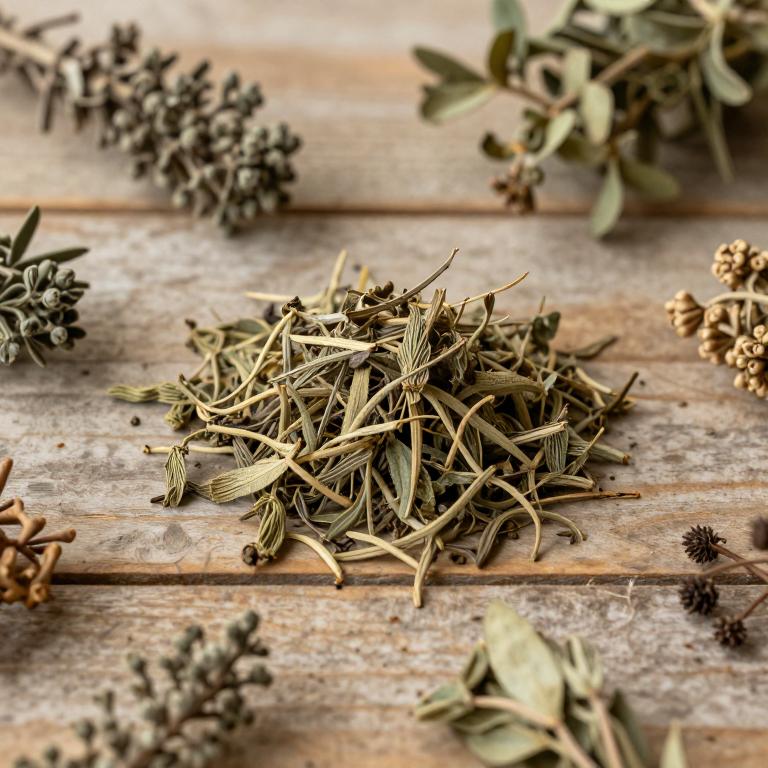
Names and Synonyms
Scientific Names
Accepted name
Euchresta formosanaSynonyms
- Euchresta horsfieldii var. formosana
- Euchresta formosana var. riukiuensis
Sources: Wikidata
Taxonomical Classification
This plant belongs to the kingdom Plantae and the phylum Streptophyta, falling under the class Equisetopsida and subclass Magnoliidae. Within the order Fabales, it is classified under the family Fabaceae and is specifically identified by the genus Euchresta.
| Rank | Classification |
|---|---|
| Kingdom | Plantae |
| Phylum | Streptophyta |
| Class | Equisetopsida |
| Subclass | Magnoliidae |
| Order | Fabales |
| Family | Fabaceae |
| Genus | Euchresta |
Sources: The World Checklist of Vascular Plants (WCVP)
Distribution
This plant exhibits a specific geographical distribution across several regions in East and Southeast Asia. It can be found growing within the Nansei-shotto islands located in Eastern Asia. Additionally, the species is native to the island of Taiwan. Its range further extends into the Malesia region, specifically within the Philippines. These distinct locations define the natural habitat where this medicinal species thrives.
| Region | Area |
|---|---|
| Eastern Asia | Nansei-shoto |
| Eastern Asia | Taiwan |
| Malesia | Philippines |
Sources: The World Checklist of Vascular Plants (WCVP)
Botanical Identification
Morphology
The morphology of Euchresta formosana is characterized by its growth form as a tree, exhibiting a robust and perennial structural habit. This plant possesses a woody constitution, featuring lignified stems and branches that provide the necessary rigidity and support for its arboreal stature.
- Growth form :
- tree
- Woodiness :
- woody
Sources: Global Inventory of Floras and Traits (GIFT)
Plant Parts
Euchresta formosana has 1 reported plant parts identified across 1 scientific publications and several other databases that are studied for medicinal purposes. The most consistently reported plant part include root.
| Plant part | Supporting sources | Consensus |
|---|---|---|
| Root | 1 supporting sources | ★☆☆☆☆ |
Root
- Molecules (Basel, Switzerland)
Chemicals
Euchresta formosana has 1 reported phytochemicals identified across 1 scientific publications and several other databases. The most consistently reported chemicals include Trifolirhizin.
| Chemical | Supporting sources | Consensus |
|---|---|---|
| Trifolirhizin | 1 supporting sources | ★☆☆☆☆ |
Trifolirhizin
- Molecules (Basel, Switzerland)
Activities
Euchresta formosana has 5 reported activities identified across 1 scientific publications and several other databases. The most consistently reported activities include Antibacterial, Anticancer, Antioxidant, Hepatoprotective, Osteogenic.
| Activity | Supporting sources | Consensus |
|---|---|---|
| Antibacterial | 1 supporting sources | ★☆☆☆☆ |
| Anticancer | 1 supporting sources | ★☆☆☆☆ |
| Antioxidant | 1 supporting sources | ★☆☆☆☆ |
| Hepatoprotective | 1 supporting sources | ★☆☆☆☆ |
| Osteogenic | 1 supporting sources | ★☆☆☆☆ |
Antibacterial
- Molecules (Basel, Switzerland)
Anticancer
- Molecules (Basel, Switzerland)
Antioxidant
- Molecules (Basel, Switzerland)
Hepatoprotective
- Molecules (Basel, Switzerland)
Osteogenic
- Molecules (Basel, Switzerland)
Conditions
Euchresta formosana has 2 reported investigations on conditions identified across 1 scientific publications and several other databases. The most consistently reported conditions include antioxidant, wound-healing.
| Condition | Supporting sources | Consensus |
|---|---|---|
| Antioxidant | 1 supporting sources | ★☆☆☆☆ |
| Wound-healing | 1 supporting sources | ★☆☆☆☆ |
Antioxidant
- Molecules (Basel, Switzerland)
Wound-healing
- Molecules (Basel, Switzerland)