Eucalyptus hybrid
Eucalyptus · Accepted scientific name
Scientific literature: Moderate (120 studies) · ★★★☆☆
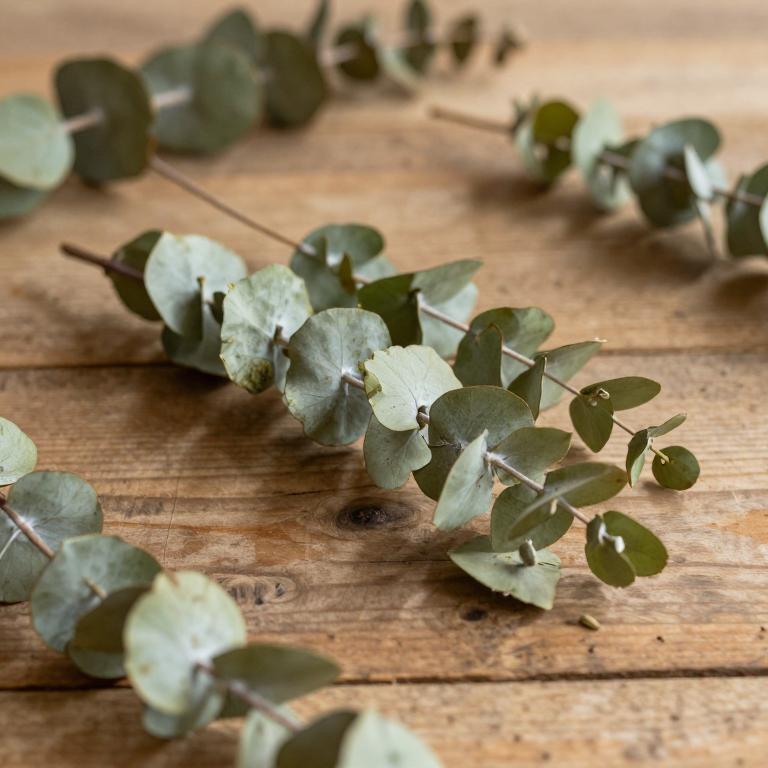
Eucalyptus hybrid, scientifically known as Eucalyptus, is a versatile medicinal powerhouse renowned for its potent aromatic properties. Rich in cineole, its leaves are widely used to treat respiratory ailments, reduce inflammation, and act as a natural antiseptic. This resilient plant remains a cornerstone in holistic healing and modern pharmacology.
Names and Synonyms
Common Names
- Gums
- gum
- gum trees
Scientific Names
Accepted name
EucalyptusSynonyms
- Symphyomyrtus
- Aromadendrum
- Eudesmia
- Eucalypton
Regional and Traditional Names
Spanish:
- Eucalipto
- Eudesmia
- Eucalypton
- Eucaliptos
- Eucaliptus
- Aromadendrum
- Symphyomyrtus
- Ecualipto
German:
- Eukalypten
- Blaugummibaum
- Eucalyptus hybrid
- Blaugummibäume
- Eukalypten
French:
- Eucalyptus hybrid
Sources: Wikidata, Catalogue of Life
Taxonomical Classification
This plant belongs to the kingdom Plantae within the phylum Streptophyta and the class Equisetopsida. It is further classified under the subclass Magnoliidae, the order Myrtales, and the family Myrtaceae. Finally, it is categorized under the genus Eucalyptus.
| Rank | Classification |
|---|---|
| Kingdom | Plantae |
| Phylum | Streptophyta |
| Class | Equisetopsida |
| Subclass | Magnoliidae |
| Order | Myrtales |
| Family | Myrtaceae |
| Genus | Eucalyptus |
Sources: The World Checklist of Vascular Plants (WCVP)
Distribution
This plant exhibits a specific distribution across various regions of Europe. In Northern Europe, its presence can be found in both Great Britain and Ireland. Moving toward the Mediterranean, it is established in several areas of Southwestern Europe. Specifically, it inhabits the Baleares and Corse islands. Finally, the species is also documented throughout France.
| Region | Area |
|---|---|
| Northern Europe | Great Britain |
| Northern Europe | Ireland |
| Southwestern Europe | Baleares |
| Southwestern Europe | Corse |
| Southwestern Europe | France |
| Southwestern Europe | Portugal |
| Southwestern Europe | Sardegna |
| Southwestern Europe | Spain |
| Southeastern Europe | Albania |
| Southeastern Europe | Greece |
Sources: The World Checklist of Vascular Plants (WCVP)
Plant Parts
Eucalyptus has 5 reported plant parts identified across 20 scientific publications and several other databases that are studied for medicinal purposes. The most consistently reported plant part include leaf, stem, flower, fruit, root.
| Plant part | Supporting sources | Consensus |
|---|---|---|
| Leaf | 15 supporting sources | ★★★★★ |
| Stem | 2 supporting sources | ★☆☆☆☆ |
| Flower | 1 supporting sources | ★☆☆☆☆ |
| Fruit | 1 supporting sources | ★☆☆☆☆ |
| Root | 1 supporting sources | ★☆☆☆☆ |
Leaf
- Analytical biochemistry
- Comparative biochemistry and physiology. Part C, Pharmacology, toxicology & endocrinology
- Veterinary research communications
- Planta medica
- Die Nahrung
View 10 additional sources
- Archives of Razi Institute
- Journal of health & pollution
- Journal of pharmacopuncture
- Pakistan journal of pharmaceutical sciences
- Zhongguo ji sheng chong xue yu ji sheng chong bing za zhi = Chinese journal of parasitology & parasitic diseases
- Journal of the science of food and agriculture
- British journal of pharmacology
- Current pharmaceutical biotechnology
- Journal of comparative physiology. B, Biochemical, systemic, and environmental physiology
- Molecules (Basel, Switzerland)
Stem
- Planta medica
- Zhongguo ji sheng chong xue yu ji sheng chong bing za zhi = Chinese journal of parasitology & parasitic diseases
Flower
- Planta medica
Fruit
- Molecules (Basel, Switzerland)
Root
- Zhongguo ji sheng chong xue yu ji sheng chong bing za zhi = Chinese journal of parasitology & parasitic diseases
Chemicals
Eucalyptus has 26 reported phytochemicals identified across 20 scientific publications and several other databases. The most consistently reported chemicals include EUCALYPTUS OIL, 1,8-Cineole, ALPHA-PINENE, P-CYMENE, Pinocembrin.
| Chemical | Supporting sources | Consensus |
|---|---|---|
| EUCALYPTUS OIL | 5 supporting sources | ★★★☆☆ |
| 1,8-Cineole | 3 supporting sources | ★★☆☆☆ |
| ALPHA-PINENE | 2 supporting sources | ★☆☆☆☆ |
| P-CYMENE | 2 supporting sources | ★☆☆☆☆ |
| Pinocembrin | 2 supporting sources | ★☆☆☆☆ |
| 2,4-D | 1 supporting sources | ★☆☆☆☆ |
| Al | 1 supporting sources | ★☆☆☆☆ |
| BETA-PINENE | 1 supporting sources | ★☆☆☆☆ |
| Eucalyptol | 1 supporting sources | ★☆☆☆☆ |
| Eucalyptole | 1 supporting sources | ★☆☆☆☆ |
EUCALYPTUS OIL
- Journal of medical case reports
- Przeglad lekarski
- Advanced pharmaceutical bulletin
- Die Pharmazie
- Pakistan journal of pharmaceutical sciences
1,8-Cineole
- Comparative biochemistry and physiology. Part C, Pharmacology, toxicology & endocrinology
- Xenobiotica; the fate of foreign compounds in biological systems
- Journal of the science of food and agriculture
ALPHA-PINENE
- Comparative biochemistry and physiology. Part C, Pharmacology, toxicology & endocrinology
- Xenobiotica; the fate of foreign compounds in biological systems
P-CYMENE
- Comparative biochemistry and physiology. Part C, Pharmacology, toxicology & endocrinology
- Xenobiotica; the fate of foreign compounds in biological systems
Pinocembrin
- Journal of agricultural and food chemistry
- International journal of molecular sciences
2,4-D
- Molecular plant-microbe interactions : MPMI
Al
- Microscopy research and technique
BETA-PINENE
- Xenobiotica; the fate of foreign compounds in biological systems
Eucalyptol
- Bone
Eucalyptole
- Zhongguo Zhong yao za zhi = Zhongguo zhongyao zazhi = China journal of Chinese materia medica
Activities
Eucalyptus has 9 reported activities identified across 20 scientific publications and several other databases. The most consistently reported activities include Antimicrobial, Antioxidant, Antiseptic, Antibacterial, Antifungal.
| Activity | Supporting sources | Consensus |
|---|---|---|
| Antimicrobial | 3 supporting sources | ★★☆☆☆ |
| Antioxidant | 2 supporting sources | ★☆☆☆☆ |
| Antiseptic | 2 supporting sources | ★☆☆☆☆ |
| Antibacterial | 1 supporting sources | ★☆☆☆☆ |
| Antifungal | 1 supporting sources | ★☆☆☆☆ |
| Antiinflammatory | 1 supporting sources | ★☆☆☆☆ |
| Cytotoxic | 1 supporting sources | ★☆☆☆☆ |
| Immunostimulant | 1 supporting sources | ★☆☆☆☆ |
| Toxic | 1 supporting sources | ★☆☆☆☆ |
Antimicrobial
- Plants (Basel, Switzerland)
- Journal of the science of food and agriculture
- Molecules (Basel, Switzerland)
Antioxidant
- Journal of the science of food and agriculture
- Molecules (Basel, Switzerland)
Antiseptic
- Journal of the science of food and agriculture
- Molecules (Basel, Switzerland)
Antibacterial
- Chemistry & biodiversity
Antifungal
- Chemistry & biodiversity
Antiinflammatory
- Vestnik otorinolaringologii
Cytotoxic
- Chemistry & biodiversity
Immunostimulant
- Reviews on recent clinical trials
Toxic
- The Australasian journal of dermatology
Conditions
Eucalyptus has 25 reported investigations on conditions identified across 20 scientific publications and several other databases. The most consistently reported conditions include Pseudomonas aeruginosa, Staphylococcus aureus, Bacillus subtilis, Candida albicans, ENT diseases.
| Condition | Supporting sources | Consensus |
|---|---|---|
| Pseudomonas aeruginosa | 2 supporting sources | ★☆☆☆☆ |
| Staphylococcus aureus | 2 supporting sources | ★☆☆☆☆ |
| Bacillus subtilis | 1 supporting sources | ★☆☆☆☆ |
| Candida albicans | 1 supporting sources | ★☆☆☆☆ |
| Ent diseases | 1 supporting sources | ★☆☆☆☆ |
| Hsv-1 | 1 supporting sources | ★☆☆☆☆ |
| Hsv-2 | 1 supporting sources | ★☆☆☆☆ |
| Varroa destructor | 1 supporting sources | ★☆☆☆☆ |
| Cold | 1 supporting sources | ★☆☆☆☆ |
| Common cold | 1 supporting sources | ★☆☆☆☆ |
Pseudomonas aeruginosa
- Plants (Basel, Switzerland)
- Pakistan journal of pharmaceutical sciences
Staphylococcus aureus
- Plants (Basel, Switzerland)
- Pakistan journal of pharmaceutical sciences
Bacillus subtilis
- Plants (Basel, Switzerland)
Candida albicans
- Plants (Basel, Switzerland)
Ent diseases
- Vestnik otorinolaringologii
Hsv-1
- Die Pharmazie
Hsv-2
- Die Pharmazie
Varroa destructor
- Experimental & applied acarology
Cold
- Reviews on recent clinical trials
Common cold
- Molecules (Basel, Switzerland)
Preparations
Eucalyptus has 29 reported preparations identified across 20 scientific publications and several other databases. The most consistently reported preparations include essential oils, Eucalyptus oil, essential oil, eucalyptus oil, extract.
| Preparation | Supporting sources | Consensus |
|---|---|---|
| Essential oils | 4 supporting sources | ★★☆☆☆ |
| Eucalyptus oil | 2 supporting sources | ★☆☆☆☆ |
| Essential oil | 2 supporting sources | ★☆☆☆☆ |
| Eucalyptus oil | 2 supporting sources | ★☆☆☆☆ |
| Extract | 2 supporting sources | ★☆☆☆☆ |
| Oils | 2 supporting sources | ★☆☆☆☆ |
| Eo | 1 supporting sources | ★☆☆☆☆ |
| Essential oils | 1 supporting sources | ★☆☆☆☆ |
| Eucalyptus leaves | 1 supporting sources | ★☆☆☆☆ |
| Plant essential oil nanoemulsions | 1 supporting sources | ★☆☆☆☆ |
Essential oils
- Brazilian journal of biology = Revista brasleira de biologia
- Gels (Basel, Switzerland)
- Mycoses
- Journal of the science of food and agriculture
Eucalyptus oil
- Yao xue xue bao = Acta pharmaceutica Sinica
- Biosensors
Essential oil
- Analytical and bioanalytical chemistry
- Ceska a Slovenska farmacie : casopis Ceske farmaceuticke spolecnosti a Slovenske farmaceuticke spolecnosti
Eucalyptus oil
- Zhongguo Zhong yao za zhi = Zhongguo zhongyao zazhi = China journal of Chinese materia medica
- The Journal of pharmacy and pharmacology
Extract
- Chemico-biological interactions
- Journal of pharmacopuncture
Oils
- Frontiers in bioscience (Landmark edition)
- Journal of agricultural and food chemistry
Eo
- Molecules (Basel, Switzerland)
Essential oils
- Planta medica
Eucalyptus leaves
- Journal of comparative physiology. B, Biochemical, systemic, and environmental physiology
Plant essential oil nanoemulsions
- Scientific reports