Narrow-leaved Grey Box
Eucalyptus woollsiana · Accepted scientific name
Scientific literature: Very Sparse (1 studies) · ★☆☆☆☆
Narrow-leaved Grey Box, scientifically known as Eucalyptus woollsiana, is a distinctive Australian tree valued for its medicinal potential. Renowned for its aromatic foliage, it contains essential oils with potent antimicrobial and decongestant properties. Traditionally used to treat respiratory ailments, this resilient species offers significant therapeutic benefits in natural medicine.
- Family
- Myrtaceae
- Native range
- Australasia
- Parts used
- Not available
- Common names
- Narrow-Leaved Grey Box
- Scientific synonyms
- Eucalyptus Pilligaensis · Eucalyptus Odorata Var. Woollsiana
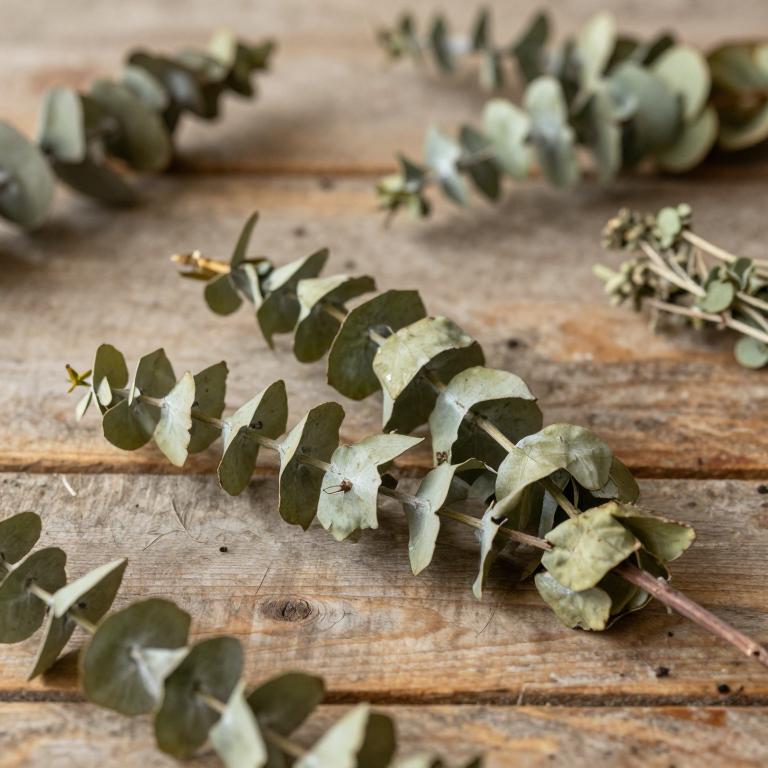
Names and Synonyms
Common Names
- Narrow-leaved Grey Box
Scientific Names
Accepted name
Eucalyptus woollsianaSynonyms
- Eucalyptus pilligaensis
- Eucalyptus odorata var. woollsiana
Sources: Wikidata, Catalogue of Life
Taxonomical Classification
This plant belongs to the kingdom Plantae and the phylum Streptophyta, falling under the class Equisetopsida and subclass Magnoliidae. Within the order Myrtales, it is classified under the family Myrtaceae and the genus Eucalyptus.
| Rank | Classification |
|---|---|
| Kingdom | Plantae |
| Phylum | Streptophyta |
| Class | Equisetopsida |
| Subclass | Magnoliidae |
| Order | Myrtales |
| Family | Myrtaceae |
| Genus | Eucalyptus |
Sources: The World Checklist of Vascular Plants (WCVP)
Distribution
This plant is native to the Australian continent, where it thrives in specific regional environments. Its geographical range is primarily concentrated within the eastern parts of the country. Specifically, it can be found growing throughout the state of New South Wales. Additionally, the species extends its distribution further north into Queensland. These two states represent the core areas where this medicinal eucalyptus is naturally situated.
| Region | Area |
|---|---|
| Australia | New South Wales |
| Australia | Queensland |
Sources: The World Checklist of Vascular Plants (WCVP)
Botanical Identification
Life history
The life history of Eucalyptus woollsiana is characterized by its classification as a phanerophyte, specifically manifesting as both a phanerophyte and a nanophanerophyte depending on its developmental stage and environmental conditions. As a woody perennial, its life cycle begins with seed germination, leading to a robust vegetative growth phase where the buds are held well above the ground, a defining trait of its phanerophyte life form. This growth strategy allows the plant to dominate its ecological niche, utilizing its structural height to access light and withstand various environmental stressors. Throughout its lifespan, the plant maintains its elevated meristems, ensuring its survival through seasonal changes and contributing to its long-term stability within its habitat.
- Life form :
- phanerophyte
Morphology
The morphology of Eucalyptus woollsiana is characterized by its growth form as a woody tree, which is a self-supporting species rather than a climber or epiphyte. As an independent organism, it does not exhibit parasitic behavior and maintains a terrestrial habit, distinguishing it from aquatic or semiaquatic species. This tree can reach a maximum plant height of 25 m, supported by a robust, woody structure typical of its genus.
- Aquatic :
- terrestrial
- Climber :
- self-supporting
- Epiphyte :
- terrestrial
- Growth form :
- tree
- Parasite :
- independent
- Plant height max:
- 25 m
- Woodiness :
- woody
Physiology
The physiology of Eucalyptus woollsiana is characterized by its specialized metabolic processes designed to support rapid growth in varied environmental conditions. As a member of the Myrtaceae family, this species utilizes a C3 photosynthetic pathway, meaning it fixes carbon dioxide directly through the Calvin cycle within the mesophyll cells without the specialized anatomy found in C4 or CAM plants. This C3 mechanism allows the plant to maximize carbon assimilation under moderate light and temperature conditions, though it necessitates efficient stomatal regulation to balance gas exchange with transpiration rates. To mitigate water loss during periods of high evaporative demand, the plant exhibits sophisticated physiological adaptations in its leaf structure and stomatal conductance, ensuring that the photosynthetic efficiency of its C3 pathway is maintained even in the fluctuating moisture levels of its natural habitat.
- Photosynthetic pathway :
- C3
Reproduction
The reproduction of Eucalyptus woollsiana is characterized by the production of specialized seeds that exhibit specific quantitative variations in weight. The seed mass of this species is relatively small, with a recorded mean mass of 0.0009475 g. Within the population, there is a measurable range of seed size, as indicated by a minimum seed mass of 0.00067 g and a maximum seed mass reaching up to 0.00132 g. This distribution of seed mass is a critical component of its reproductive biology and potential for seedling establishment.
- Seed mass max:
- 0.00132 g
- Seed mass mean:
- 0.0009475 g
- Seed mass min:
- 0.00067 g
Sources: Global Inventory of Floras and Traits (GIFT)
Chemicals
Eucalyptus woollsiana has 1 reported phytochemicals identified across 0 scientific publications and several other databases. The most consistently reported chemicals include luteolin.
| Chemical | Supporting sources | Consensus |
|---|---|---|
| luteolin | 1 supporting sources | ★☆☆☆☆ |
luteolin
- Journal of agricultural and food chemistry