Eucalyptus wandoo
Eucalyptus wandoo · Accepted scientific name
Scientific literature: Sparse (62 studies) · ★★☆☆☆
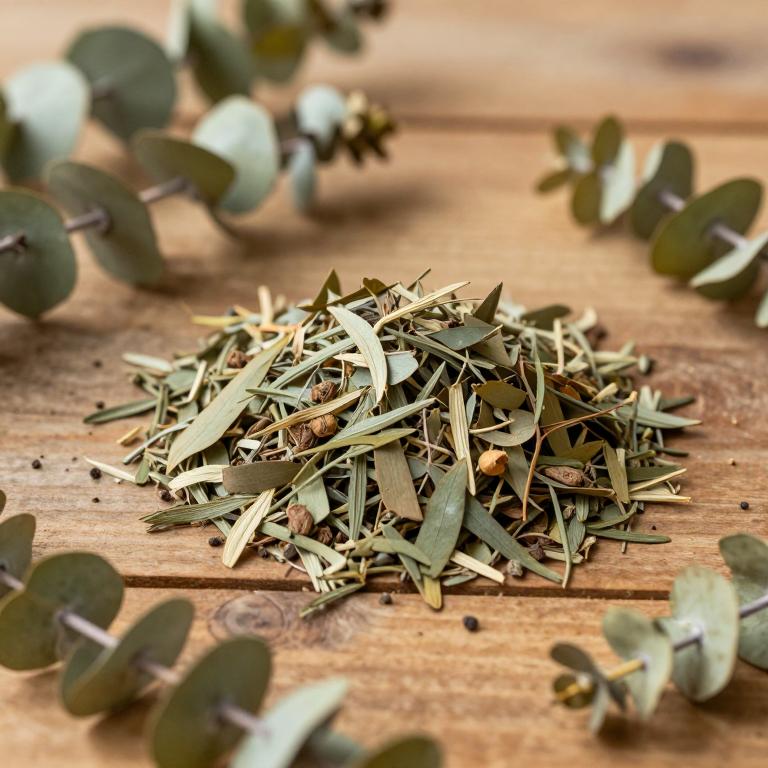
, scientifically known as Eucalyptus wandoo, is a distinctive eucalyptus species native to Western Australia. Renowned for its fragrant, aromatic leaves, this medicinal plant has long been utilized in traditional healing practices. Its essential oils offer potent antimicrobial and decongestant properties, making it a valuable resource in botanical medicine.
- Family
- Not available
- Native range
- Australasia
- Parts used
- Not available
- Common names
- Not available
- Scientific synonyms
- Not available
Names and Synonyms
Scientific Names
Accepted name
Eucalyptus wandooDistribution
This plant, known as Eucalyptus wandoo, is found exclusively within a specific region of the world. Its entire natural range is confined to the country of Australia. More specifically, it is distributed throughout the state of Western Australia. Within this territory, it typically inhabits certain ecological niches suitable for its growth. Consequently, its geographical presence is highly localized to this particular part of the Australian continent.
| Region | Area |
|---|---|
| Australia | Western Australia |
Sources: The World Checklist of Vascular Plants (WCVP)
Botanical Identification
Life history
The life history of Eucalyptus wandoo is characterized by its classification as a phanerophyte, a life form defined by its ability to maintain its photosynthetic organs well above the ground level, even during unfavorable seasonal conditions. Specifically, it manifests across multiple growth stages and structural complexities, functioning as both a phanerophyte and a nanophanerophyte depending on its developmental maturity and environmental stressors. As a perennial woody species, its life cycle involves long-term survival through robust structural development, where the buds and shoots are protected by elevated branches, allowing it to persist in its native woodland ecosystems. This phanerophytic strategy ensures that the plant can navigate the physiological demands of its habitat, utilizing its elevated canopy to maximize light interception while maintaining a stable biological presence over many decades.
- Life form :
- phanerophyte
Morphology
The morphology of Eucalyptus wandoo is characterized by its robust growth form, functioning as a self-supporting, woody tree that grows independently without parasitic or epiphytic dependencies. As a terrestrial species, it does not inhabit aquatic or semiaquatic environments, instead establishing a stable presence in its native soil. The plant exhibits significant vertical development, with a height that typically ranges from a minimum of 3 meters to a maximum of 25 meters. Its structural integrity is defined by its woody composition, allowing it to maintain its stature as a dominant tree within its ecosystem.
- Aquatic :
- terrestrial
- Climber :
- self-supporting
- Epiphyte :
- terrestrial
- Growth form :
- tree
- Parasite :
- independent
- Plant height max:
- 25 m
- Plant height min:
- 3 m
- Woodiness :
- woody
Physiology
The physiology of Eucalyptus wandoo is characterized by a specialized metabolic framework designed to facilitate survival in seasonally dry Mediterranean climates. Central to its energy production is its photosynthetic pathway, which functions strictly through the C3 mechanism. In this process, the plant utilizes the enzyme Rubisco to fix atmospheric carbon dioxide into three-carbon compounds during the Calvin cycle. While the C3 pathway is generally more sensitive to photorespiration under high temperatures compared to C4 or CAM systems, Eucalyptus wandoo compensates through physiological adaptations such as regulated stomatal conductance and optimized leaf anatomy to manage water-use efficiency. This metabolic strategy, combined with robust hydraulic architecture, allows the species to maintain carbon assimilation rates while navigating the fluctuations in water availability typical of its native environments.
- Photosynthetic pathway :
- C3
Reproduction
Reproduction in Eucalyptus wandoo is characterized by the production of small, specialized seeds that facilitate dispersal and colonization within its natural habitat. The reproductive output of this species involves significant variation in seed size, which is a critical factor for seedling establishment. Specifically, the seed mass exhibits a wide range, with a recorded minimum value of 0.00036 g and a maximum value of 0.0033 g. On average, the seed mass for this species is 0.001335 g, reflecting a strategic investment in lightweight seeds that can be effectively distributed to optimize the success of the next generation.
- Seed mass max:
- 0.0033 g
- Seed mass mean:
- 0.001335 g
- Seed mass min:
- 0.00036 g
Sources: Global Inventory of Floras and Traits (GIFT)
Chemicals
Eucalyptus wandoo has 1 reported phytochemicals identified across 0 scientific publications and several other databases. The most consistently reported chemicals include resveratrol.
| Chemical | Supporting sources | Consensus |
|---|---|---|
| resveratrol | 1 supporting sources | ★☆☆☆☆ |
resveratrol
- Dr. Duke
Activities
Eucalyptus wandoo has 61 reported activities identified across 0 scientific publications and several other databases. The most consistently reported activities include 5-HETE-Inhibitor, 5-HT-Inhibitor, 5-Lipoxygenase-Inhibitor, Akt-Inhibitor, Antiaggregant.
| Activity | Supporting sources | Consensus |
|---|---|---|
| 5-HETE-Inhibitor | 1 supporting sources | ★☆☆☆☆ |
| 5-HT-Inhibitor | 1 supporting sources | ★☆☆☆☆ |
| 5-Lipoxygenase-Inhibitor | 1 supporting sources | ★☆☆☆☆ |
| Akt-Inhibitor | 1 supporting sources | ★☆☆☆☆ |
| Antiaggregant | 1 supporting sources | ★☆☆☆☆ |
| Antiangiogenic | 1 supporting sources | ★☆☆☆☆ |
| Antibacterial | 1 supporting sources | ★☆☆☆☆ |
| Anticancer | 1 supporting sources | ★☆☆☆☆ |
| Anticarcinogenic | 1 supporting sources | ★☆☆☆☆ |
| Antiedemic | 1 supporting sources | ★☆☆☆☆ |
5-HETE-Inhibitor
- Dr. Duke
5-HT-Inhibitor
- Dr. Duke
5-Lipoxygenase-Inhibitor
- Dr. Duke
Akt-Inhibitor
- Dr. Duke
Antiaggregant
- Dr. Duke
Antiangiogenic
- Dr. Duke
Antibacterial
- Dr. Duke
Anticancer
- Dr. Duke
Anticarcinogenic
- Dr. Duke
Antiedemic
- Dr. Duke