Eucalyptus viridis
Eucalyptus viridis · Accepted scientific name
Scientific literature: Very Extensive (250 studies) · ★★★★★
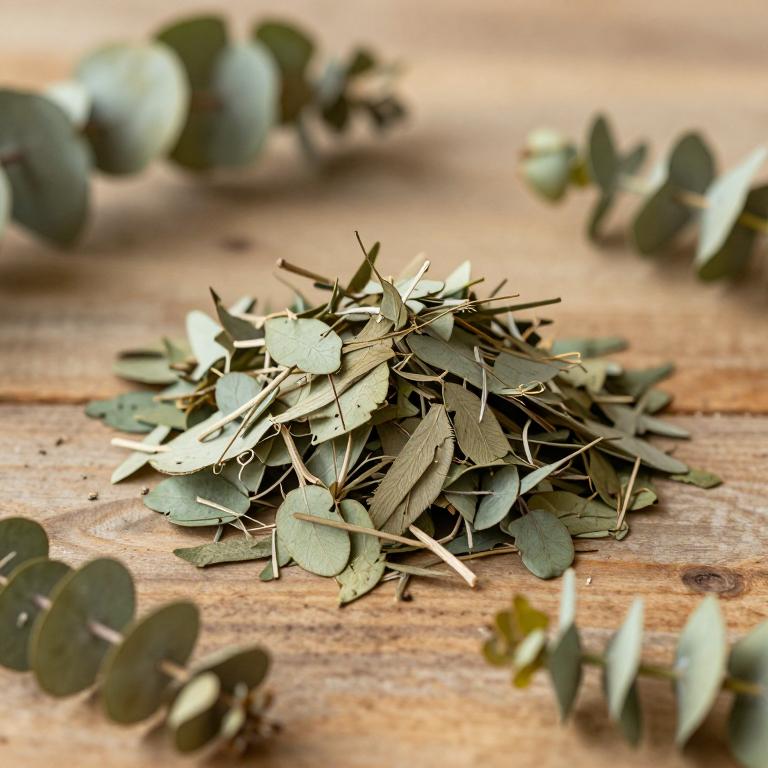
Scientifically known as Eucalyptus viridis, is a remarkable medicinal plant prized for its potent therapeutic properties. Renowned for its aromatic leaves, it serves as a natural remedy for respiratory ailments and skin irritations. This versatile species plays a crucial role in traditional healing, offering powerful antiseptic and decongestant benefits.
- Family
- Not available
- Native range
- Australasia
- Parts used
- Not available
- Common names
- Not available
- Scientific synonyms
- Not available
Names and Synonyms
Scientific Names
Accepted name
Eucalyptus viridisDistribution
This plant, known as Eucalyptus viridis, is native to the diverse landscapes of Australia. Its geographical distribution spans several key regions across the continent. Specifically, it can be found growing within the state of New South Wales. Additionally, the species is established throughout various parts of Queensland. Finally, its presence extends into the southeastern territories of Victoria.
| Region | Area |
|---|---|
| Australia | New South Wales |
| Australia | Queensland |
| Australia | Victoria |
Sources: The World Checklist of Vascular Plants (WCVP)
Botanical Identification
Life history
The life history of Eucalyptus viridis is characterized by its classification as a phanerophyte, specifically manifesting as both a phanerophyte and a nanophanerophyte depending on its developmental stage and environmental conditions. As a phanerophyte, its buds are borne on aerial shoots well above the ground, allowing it to establish a significant vertical presence within its ecosystem. This growth strategy enables the plant to access sunlight and nutrients effectively through a robust woody structure. Throughout its life cycle, the plant transitions through various physiological phases, maintaining its perennial nature by protecting its reproductive and vegetative buds on elevated branches, a trait that distinguishes its life form from more low-growing varieties such as chamaephytes or hemicryptophytes.
- Life form :
- phanerophyte
Morphology
The morphology of Eucalyptus viridis is characterized by its growth form as a self-supporting tree, exhibiting a robust woody structure. This species is primarily terrestrial in its habitat, lacking aquatic or semiaquatic tendencies, and functions as an independent organism rather than a parasite or an epiphyte. It does not possess climbing habits such as lianas or vines, instead maintaining a stable, upright stature. In terms of dimensions, the plant reaches a maximum height of approximately 10 m.
- Aquatic :
- terrestrial
- Climber :
- self-supporting
- Epiphyte :
- terrestrial
- Growth form :
- tree
- Parasite :
- independent
- Plant height max:
- 10 m
- Woodiness :
- woody
Physiology
The physiology of Eucalyptus viridis is characterized by a C3 photosynthetic pathway, a common metabolic strategy among many woody perennials that allows for efficient carbon fixation under varying environmental conditions. The morphological aspects of its foliage play a critical role in its physiological efficiency, with leaf dimensions exhibiting significant variability. The leaves typically possess a length ranging from a minimum of 5 cm to a maximum of 11 cm, while their width varies between 0.9 cm and 1.8 cm. This specific leaf architecture, combining its surface area and carbon assimilation method, governs the plant's transpiration rates and overall energy production capabilities.
- Leaf length max:
- 11 cm
- Leaf length min:
- 5 cm
- Leaf width max:
- 1.8 cm
- Leaf width min:
- 0.9 cm
- Photosynthetic pathway :
- C3
Reproduction
The reproduction of Eucalyptus viridis is characterized by the production of specialized seeds that exhibit significant variability in weight. The seed mass within this species follows a specific distribution, with a calculated mean seed mass of 0.00080125 g. This reproductive metric shows a notable range of fluctuation, as evidenced by a minimum seed mass of 0.00023 g and a maximum seed mass reaching up to 0.00168 g. Such variations in seed size play a critical role in the establishment and dispersal success of the species during its reproductive cycles.
- Seed mass max:
- 0.00168 g
- Seed mass mean:
- 0.00080125 g
- Seed mass min:
- 0.00023 g
Sources: Global Inventory of Floras and Traits (GIFT)
Chemicals
Eucalyptus viridis has 74 reported phytochemicals identified across 0 scientific publications and several other databases. The most consistently reported chemicals include 1,8-Cineole, A-MUUROLENE, ALPHA-PHELLANDRENE, ALPHA-PINENE, ALPHA-SELINENE.
| Chemical | Supporting sources | Consensus |
|---|---|---|
| 1,8-Cineole | 1 supporting sources | ★☆☆☆☆ |
| A-MUUROLENE | 1 supporting sources | ★☆☆☆☆ |
| ALPHA-PHELLANDRENE | 1 supporting sources | ★☆☆☆☆ |
| ALPHA-PINENE | 1 supporting sources | ★☆☆☆☆ |
| ALPHA-SELINENE | 1 supporting sources | ★☆☆☆☆ |
| Allo-Aromadendrene | 1 supporting sources | ★☆☆☆☆ |
| Aromadendrene | 1 supporting sources | ★☆☆☆☆ |
| BETA-CARYOPHYLLENE | 1 supporting sources | ★☆☆☆☆ |
| BETA-ELEMENE | 1 supporting sources | ★☆☆☆☆ |
| BETA-PHELLANDRENE | 1 supporting sources | ★☆☆☆☆ |
1,8-Cineole
- Dr. Duke
A-MUUROLENE
- Dr. Duke
ALPHA-PHELLANDRENE
- Dr. Duke
ALPHA-PINENE
- Dr. Duke
ALPHA-SELINENE
- Dr. Duke
Allo-Aromadendrene
- Dr. Duke
Aromadendrene
- Dr. Duke
BETA-CARYOPHYLLENE
- Dr. Duke
BETA-ELEMENE
- Dr. Duke
BETA-PHELLANDRENE
- Dr. Duke
Activities
Eucalyptus viridis has 176 reported activities identified across 0 scientific publications and several other databases. The most consistently reported activities include (-)-Chronotropic, (-)-Inotropic, ACE-Inhibitor, AChE-Inhibitor, Acaricide.
| Activity | Supporting sources | Consensus |
|---|---|---|
| (-)-Chronotropic | 1 supporting sources | ★☆☆☆☆ |
| (-)-Inotropic | 1 supporting sources | ★☆☆☆☆ |
| ACE-Inhibitor | 1 supporting sources | ★☆☆☆☆ |
| AChE-Inhibitor | 1 supporting sources | ★☆☆☆☆ |
| Acaricide | 1 supporting sources | ★☆☆☆☆ |
| Aldose-Reductase-Inhibitor | 1 supporting sources | ★☆☆☆☆ |
| Allelochemic | 1 supporting sources | ★☆☆☆☆ |
| Allelopathic | 1 supporting sources | ★☆☆☆☆ |
| Allergenic | 1 supporting sources | ★☆☆☆☆ |
| Analgesic | 1 supporting sources | ★☆☆☆☆ |
(-)-Chronotropic
- Dr. Duke
(-)-Inotropic
- Dr. Duke
ACE-Inhibitor
- Dr. Duke
AChE-Inhibitor
- Dr. Duke
Acaricide
- Dr. Duke
Aldose-Reductase-Inhibitor
- Dr. Duke
Allelochemic
- Dr. Duke
Allelopathic
- Dr. Duke
Allergenic
- Dr. Duke
Analgesic
- Dr. Duke