coolgardie-gum
Eucalyptus torquata · Accepted scientific name
Scientific literature: Very Sparse (4 studies) · ★☆☆☆☆
Coolgardie-gum, scientifically known as Eucalyptus torquata, is a resilient mallee shrub native to the arid regions of Western Australia. Renowned for its medicinal potential, its leaves contain essential oils often utilized in traditional remedies to alleviate respiratory ailments, soothe skin irritations, and provide antiseptic benefits in diverse applications.
- Family
- Myrtaceae
- Native range
- Africa
- Parts used
- Not available
- Common names
- Coolgardie-Gum · Coral-Gum · 6 more
- Scientific synonyms
- Not available
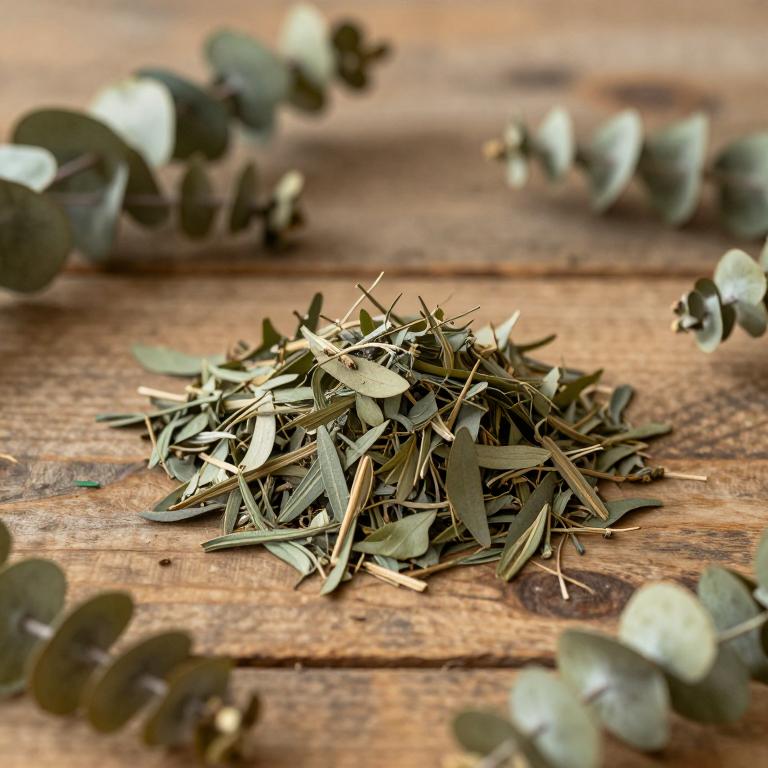
Names and Synonyms
Common Names
- coolgardie-gum
- coral-gum
- Christmastree
- Coolgardie gum
- Coolgardie-rose
- Goldfields red-flower gum
- coral-flower gum
- pink-flower gum
Scientific Names
Accepted name
Eucalyptus torquataSources: Wikidata, Catalogue of Life
Taxonomical Classification
This plant belongs to the kingdom Plantae and the phylum Streptophyta, falling under the class Equisetopsida and subclass Magnoliidae. Within the order Myrtales, it is classified under the family Myrtaceae and is identified by the genus Eucalyptus.
| Rank | Classification |
|---|---|
| Kingdom | Plantae |
| Phylum | Streptophyta |
| Class | Equisetopsida |
| Subclass | Magnoliidae |
| Order | Myrtales |
| Family | Myrtaceae |
| Genus | Eucalyptus |
Sources: The World Checklist of Vascular Plants (WCVP)
Distribution
This plant exhibits a highly disjunct geographical distribution across two vastly different continents. In the northern hemisphere, its presence is recorded within the specific regions of Morocco in Northern Africa. Conversely, it also finds a significant habitat in the southern hemisphere within Western Australia. These two isolated locations represent the primary areas where the species can be found naturally. Such a wide separation suggests a unique evolutionary history or specific environmental requirements that are met in both territories.
| Region | Area |
|---|---|
| Northern Africa | Morocco |
| Australia | Western Australia |
Sources: The World Checklist of Vascular Plants (WCVP)
Botanical Identification
Life history
The life history of Eucalyptus torquata is characterized by a perennial lifecycle, allowing the individual to persist through multiple growing seasons and establish a long-term presence in its ecosystem. As a phanerophyte, its regenerative buds are located high above the ground on woody branches, a structural adaptation that facilitates its development into a robust tree form. This phanerophyte life form, consistent across its primary growth stages, ensures that the plant maintains its structural integrity and photosynthetic capacity over many years, supporting its continuous development within its natural habitat.
- Life form :
- phanerophyte
- Lifecycle :
- perennial
Morphology
The morphology of Eucalyptus torquata is characterized by its robust growth form as a woody tree. It is a self-supporting species that functions as an independent organism, neither acting as a parasite nor an epiphyte, as it maintains a terrestrial life habit. In terms of stature, the plant typically reaches a height ranging from a minimum of 4 meters to a maximum of 11 meters. While it exists within various environmental contexts, its primary ecological classification is terrestrial rather than aquatic or semiaquatic.
- Aquatic :
- terrestrial
- Climber :
- self-supporting
- Epiphyte :
- terrestrial
- Growth form :
- tree
- Parasite :
- independent
- Plant height max:
- 11 m
- Plant height min:
- 4 m
- Woodiness :
- woody
Physiology
The physiology of Eucalyptus torquat is characterized by a specialized metabolic framework designed to optimize resource acquisition in arid or semi-arid environments. Central to its energy production is its photosynthetic pathway, which follows the C3 mechanism; this involves the direct fixation of atmospheric carbon dioxide by the enzyme RuBisCO during the Calvin cycle. To compensate for the inherent water loss associated with C3 photosynthesis in dry climates, the plant employs sophisticated physiological adaptations, such as regulated stomatal conductance and specialized leaf anatomy to maintain turgor pressure and photosynthetic efficiency. This metabolic strategy, combined with efficient water-use mechanisms, allows the plant to balance carbon assimilation with transpiration rates, ensuring survival and growth under fluctuating environmental stresses.
- Photosynthetic pathway :
- C3
Reproduction
The reproduction of Eucalyptus torquata is characterized by the production of seeds that exhibit a notable range of physical dimensions. The seed mass of this species is highly variable, with a recorded minimum mass of 0.0010299 g and a maximum mass reaching up to 0.01111 g. On average, the seed mass is approximately 0.006079975 g, reflecting a distribution that facilitates its dispersal and establishment within its natural habitat.
- Seed mass max:
- 0.01111 g
- Seed mass mean:
- 0.006079975 g
- Seed mass min:
- 0.0010299 g
Sources: Global Inventory of Floras and Traits (GIFT)
Chemicals
Eucalyptus torquata has 3 reported phytochemicals identified across 0 scientific publications and several other databases. The most consistently reported chemicals include Fatty acids, Flavonoids, Terpenes.
| Chemical | Supporting sources | Consensus |
|---|---|---|
| Fatty acids | 1 supporting sources | ★☆☆☆☆ |
| Flavonoids | 1 supporting sources | ★☆☆☆☆ |
| Terpenes | 1 supporting sources | ★☆☆☆☆ |
Fatty acids
- Scientific reports
Flavonoids
- Scientific reports
Terpenes
- Scientific reports
Conditions
Eucalyptus torquata has 1 reported investigations on conditions identified across 0 scientific publications and several other databases. The most consistently reported conditions include gouty arthritis.
| Condition | Supporting sources | Consensus |
|---|---|---|
| Gouty arthritis | 1 supporting sources | ★☆☆☆☆ |
Gouty arthritis
- Scientific reports