Eucalyptus tetraptera
Eucalyptus tetraptera · Accepted scientific name
Scientific literature: Very Extensive (215 studies) · ★★★★★
Scientifically known as Eucalyptus tetraptera, is a distinctive medicinal plant native to specific Australian regions. Valued for its potent essential oils, it possesses significant antimicrobial and anti-inflammatory properties. This species is traditionally utilized in herbal remedies to support respiratory health, offering a natural approach to treating various ailments.
- Family
- Not available
- Native range
- Australasia
- Parts used
- Not available
- Common names
- Not available
- Scientific synonyms
- Not available
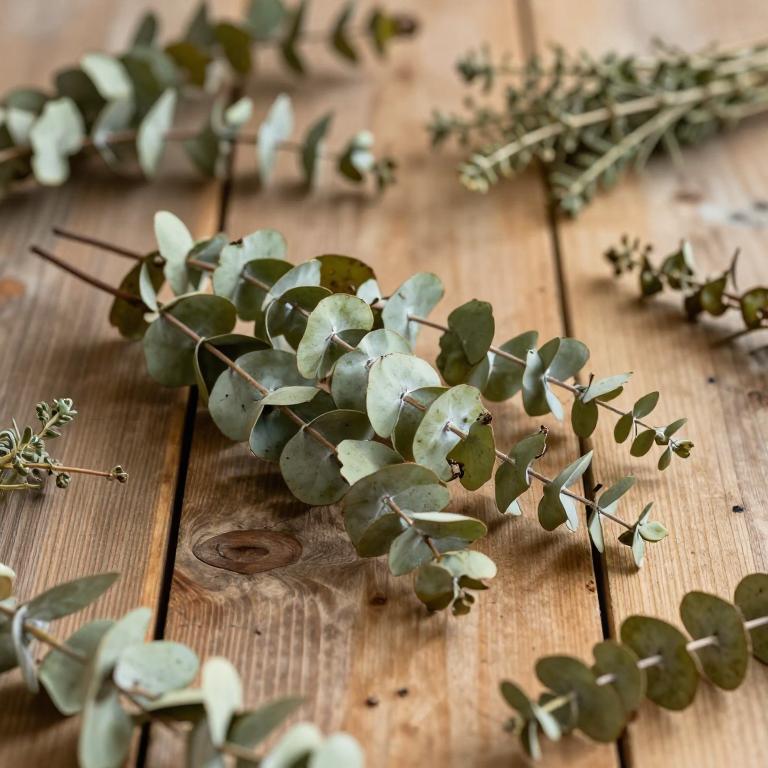
Names and Synonyms
Scientific Names
Accepted name
Eucalyptus tetrapteraDistribution
This plant, known as Eucalyptus tetraptera, possesses a very specific and limited geographical range. It is native to the continent of Australia, where it can be found growing in its natural habitat. More specifically, its distribution is restricted to the region of Western Australia. This narrow occurrence suggests that the species is highly adapted to the particular environmental conditions of that area. Consequently, understanding its localized presence is essential for its conservation and study.
| Region | Area |
|---|---|
| Australia | Western Australia |
Sources: The World Checklist of Vascular Plants (WCVP)
Botanical Identification
Life history
The life history of Eucalyptus tetraptera is characterized by its classification as a phanerophyte, reflecting its growth habit as a woody tree with buds located well above the ground level. While it primarily functions as a phanerophyte to establish its canopy and structural dominance within its ecosystem, its life cycle may involve stages or specific environmental adaptations that align with a nanophanerophyte status, particularly in stunted or harsh microclimates where the woody structure remains relatively low. As a perennial woody species, it progresses from seed germination through a developmental phase of sapling establishment to a mature reproductive state, where it invests significant energy into its height and canopy development to optimize light interception and successful pollination.
- Life form :
- nanophanerophyte
- Life form :
- phanerophyte
Morphology
The morphology of Eucalyptus tetraptera is characterized by its growth form as a woody tree that functions as a self-supporting, independent organism. It is a terrestrial species, lacking aquatic or epiphytic tendencies, and is not a parasite. In terms of stature, the plant exhibits a height ranging from a minimum of 1 meter to a maximum of 3 meters.
- Aquatic :
- terrestrial
- Climber :
- self-supporting
- Epiphyte :
- terrestrial
- Growth form :
- tree
- Parasite :
- independent
- Plant height max:
- 3 m
- Plant height min:
- 1 m
- Woodiness :
- woody
Physiology
The physiology of Eucalyptus tetraptera is characterized by its adaptation to specific environmental stressors, primarily through its metabolic and water-management strategies. A defining physiological feature of this species is its photosynthetic pathway, which follows the C3 mechanism. Under this pathway, carbon dioxide is fixed directly by the enzyme RuBisCO during the Calvin cycle, a process that necessitates careful regulation of stomatal conductance to balance carbon uptake with transpirational water loss. To support this metabolic framework, the plant exhibits specialized leaf anatomy and efficient hydraulic conductance, allowing it to maintain photosynthetic rates even in the varying light intensities and soil moisture conditions typical of its habitat. Furthermore, its physiological resilience is bolstered by efficient nutrient cycling and the ability to manage osmotic potential, ensuring cellular stability and sustained growth throughout its life cycle.
- Photosynthetic pathway :
- C3
Reproduction
The reproduction of Eucalyptus tetraptera is characterized by the production of seeds that exhibit specific variations in weight, which are critical to its dispersal and establishment. The seed mass within this species displays a measurable range, with a recorded minimum mass of 0.00268 g and a maximum mass reaching 0.00503 g. On average, the seed mass is 0.00397 g, reflecting a relatively consistent sizing profile across the reproductive output of the plant.
- Seed mass max:
- 0.00503 g
- Seed mass mean:
- 0.00397 g
- Seed mass min:
- 0.00268 g
Sources: Global Inventory of Floras and Traits (GIFT)
Chemicals
Eucalyptus tetraptera has 56 reported phytochemicals identified across 0 scientific publications and several other databases. The most consistently reported chemicals include 1,8-Cineole, ALPHA-PHELLANDRENE, ALPHA-PINENE, ALPHA-SELINENE, Allo-Aromadendrene.
| Chemical | Supporting sources | Consensus |
|---|---|---|
| 1,8-Cineole | 1 supporting sources | ★☆☆☆☆ |
| ALPHA-PHELLANDRENE | 1 supporting sources | ★☆☆☆☆ |
| ALPHA-PINENE | 1 supporting sources | ★☆☆☆☆ |
| ALPHA-SELINENE | 1 supporting sources | ★☆☆☆☆ |
| Allo-Aromadendrene | 1 supporting sources | ★☆☆☆☆ |
| Aromadendrene | 1 supporting sources | ★☆☆☆☆ |
| BETA-CARYOPHYLLENE | 1 supporting sources | ★☆☆☆☆ |
| BETA-ELEMENE | 1 supporting sources | ★☆☆☆☆ |
| BETA-PHELLANDRENE | 1 supporting sources | ★☆☆☆☆ |
| BETA-PINENE | 1 supporting sources | ★☆☆☆☆ |
1,8-Cineole
- Dr. Duke
ALPHA-PHELLANDRENE
- Dr. Duke
ALPHA-PINENE
- Dr. Duke
ALPHA-SELINENE
- Dr. Duke
Allo-Aromadendrene
- Dr. Duke
Aromadendrene
- Dr. Duke
BETA-CARYOPHYLLENE
- Dr. Duke
BETA-ELEMENE
- Dr. Duke
BETA-PHELLANDRENE
- Dr. Duke
BETA-PINENE
- Dr. Duke
Activities
Eucalyptus tetraptera has 159 reported activities identified across 0 scientific publications and several other databases. The most consistently reported activities include (-)-Chronotropic, (-)-Inotropic, ACE-Inhibitor, AChE-Inhibitor, Acaricide.
| Activity | Supporting sources | Consensus |
|---|---|---|
| (-)-Chronotropic | 1 supporting sources | ★☆☆☆☆ |
| (-)-Inotropic | 1 supporting sources | ★☆☆☆☆ |
| ACE-Inhibitor | 1 supporting sources | ★☆☆☆☆ |
| AChE-Inhibitor | 1 supporting sources | ★☆☆☆☆ |
| Acaricide | 1 supporting sources | ★☆☆☆☆ |
| Aldose-Reductase-Inhibitor | 1 supporting sources | ★☆☆☆☆ |
| Allelochemic | 1 supporting sources | ★☆☆☆☆ |
| Allelopathic | 1 supporting sources | ★☆☆☆☆ |
| Allergenic | 1 supporting sources | ★☆☆☆☆ |
| Analgesic | 1 supporting sources | ★☆☆☆☆ |
(-)-Chronotropic
- Dr. Duke
(-)-Inotropic
- Dr. Duke
ACE-Inhibitor
- Dr. Duke
AChE-Inhibitor
- Dr. Duke
Acaricide
- Dr. Duke
Aldose-Reductase-Inhibitor
- Dr. Duke
Allelochemic
- Dr. Duke
Allelopathic
- Dr. Duke
Allergenic
- Dr. Duke
Analgesic
- Dr. Duke