Sydney blue gum
Eucalyptus saligna · Accepted scientific name
Scientific literature: Very Extensive (220 studies) · ★★★★★
Sydney blue gum, scientifically known as Eucalyptus saligna, is a fast-growing evergreen tree native to Australia. Renowned for its medicinal properties, its aromatic leaves are frequently used in essential oils to treat respiratory ailments, reduce inflammation, and provide antiseptic benefits, making it a staple in traditional herbal remedies.
- Family
- Myrtaceae
- Native range
- Africa
- Parts used
- Leaf
- Common names
- Blue-Gum · Grey-Box · 7 more
- Scientific synonyms
- Eucalyptus Saligna Var. Protrusa
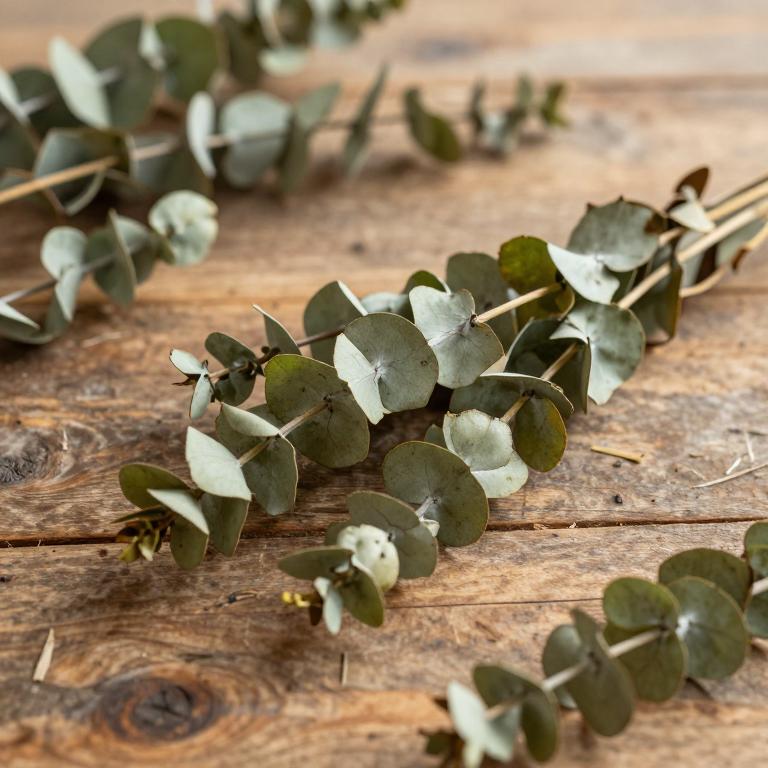
Names and Synonyms
Common Names
- blue-gum
- grey-box
- grey-gum
- silks-gum
- silky-gum
- sydney-blue-gum
- Blue Gum
- Sydney Blue Gum
- (Sydney) Blue Gum
Scientific Names
Accepted name
Eucalyptus salignaSynonyms
- Eucalyptus saligna var. protrusa
Sources: Wikidata, Catalogue of Life
Taxonomical Classification
This plant belongs to the kingdom Plantae and the phylum Streptophyta within the class Equisetopsida. It is further classified under the subclass Magnoliidae and the order Myrtales, falling into the family Myrtaceae. Finally, it is identified by the genus Eucalyptus.
| Rank | Classification |
|---|---|
| Kingdom | Plantae |
| Phylum | Streptophyta |
| Class | Equisetopsida |
| Subclass | Magnoliidae |
| Order | Myrtales |
| Family | Myrtaceae |
| Genus | Eucalyptus |
Sources: The World Checklist of Vascular Plants (WCVP)
Distribution
This plant exhibits a diverse geographical distribution spanning several distinct regions across the African continent and its nearby islands. In Northern Africa, its presence is noted within the borders of Morocco. The species also extends to Macaronesia, specifically inhabiting the Canary Islands. Moving toward the northeast, it is found throughout the tropical regions of Eritrea and Ethiopia. Finally, its range continues southward into East Tropical Africa, where it is documented in Kenya.
| Region | Area |
|---|---|
| Northern Africa | Morocco |
| Macaronesia | Canary Is. |
| Northeast Tropical Africa | Eritrea |
| Northeast Tropical Africa | Ethiopia |
| East Tropical Africa | Kenya |
| East Tropical Africa | Tanzania |
| East Tropical Africa | Uganda |
| China | China Southeast |
| Eastern Asia | Taiwan |
| Indian Subcontinent | Bangladesh |
Sources: The World Checklist of Vascular Plants (WCVP)
Botanical Identification
Ecology
The ecology of Eucalyptus saligna is characterized by a highly specific environmental niche, primarily occupying lowland habitats. It thrives within a precise elevational range that is concentrated at 1250 m AMSL, serving as both its minimum and maximum altitudinal limit. This concentration at a mean elevation of 1250 m AMSL suggests a specialized adaptation to these specific lowland conditions, defining its distribution patterns within its natural landscape.
- Elevational range max:
- 1250 m AMSL
- Habitat :
- Lowland
Genetics
The genetics of Eucalyptus saligna are characterized by a specific chromosomal configuration that underpins its reproductive biology and evolutionary lineage within the Myrtaceae family. A fundamental cytogenetic feature of this species is its chromosome number, which is documented as 2n = 22. This diploid number plays a critical role in the plant's meiotic processes, ensuring genetic stability and the successful transmission of hereditary traits through successive generations. The genetic architecture of E. saligna is complex, involving significant genomic diversity that influences various phenotypic expressions, including growth rates, essential oil composition, and resistance to environmental stressors. This chromosomal stability, defined by its 22 chromosomes, serves as a baseline for understanding the complex inheritance patterns and the potential for genetic variation utilized in silviculture and medicinal oil production.
- Chromosome number :
- 22
Life history
The life history of Eucalyptus saligna is characterized by its status as a perennial species, allowing it to establish long-term dominance within its ecosystem. As a phanerophyte, its reproductive buds and growing points are elevated well above the ground on woody stems, a life form that facilitates its growth into a large, robust tree. This species maintains an evergreen deciduousness, ensuring that its foliage remains functional throughout the year to support continuous physiological processes and carbon sequestration.
- Deciduousness :
- evergreen
- Life form :
- phanerophyte
- Lifecycle :
- perennial
Morphology
The morphology of Eucalyptus saligna is characterized by its stature as a large, woody tree. It is a self-supporting, independent organism that lacks parasitic or climbing habits, maintaining a strictly terrestrial existence. This species exhibits significant vertical development, with plant heights typically ranging from a minimum of 30 m to a maximum of 55 m, with an average height reaching approximately 48 m. As a woody tree, it does not function as an epiphyte, nor does it possess any aquatic or semiaquatic adaptations, instead rooting firmly in terrestrial environments to support its substantial structural framework.
- Aquatic :
- terrestrial
- Climber :
- self-supporting
- Epiphyte :
- terrestrial
- Growth form :
- tree
- Parasite :
- independent
- Plant height max:
- 55 m
- Plant height mean:
- 48 m
- Plant height min:
- 30 m
- Woodiness :
- woody
Physiology
The physiology of Eucalyptus saligna is characterized by a C3 photosynthetic pathway, a metabolic strategy common to many woody species that optimizes carbon fixation under temperate to subtropical conditions. The plant's vegetative structure is defined by its leaf morphology, where leaf length typically averages 15 cm, ranging from a minimum of 9 cm to a maximum of 21 cm. Complementing this, the leaf width demonstrates significant variability, with a mean width of 2.25 cm, spanning from a minimum of 1.5 cm to a maximum of 3 cm. Regarding nutrient cycling and symbiotic relationships, this species does not function as a nitrogen fixer, meaning it relies on soil nitrogen availability rather than biological nitrogen fixation to support its physiological processes and growth.
- Leaf length max:
- 21 cm
- Leaf length mean:
- 15 cm
- Leaf length min:
- 9 cm
- Leaf width max:
- 3 cm
- Leaf width mean:
- 2.25 cm
- Leaf width min:
- 1.5 cm
- Nitrogen fixer :
- no
- Photosynthetic pathway :
- C3
Reproduction
The reproduction of Eucalyptus saligna is characterized by a biotic pollination syndrome, specifically relying on insects to facilitate the transfer of pollen. Following successful fertilization, the plant develops small fruits with varying dimensions; the fruit length typically ranges from a minimum of 0.5 cm to a maximum of 0.675 cm (with a mean length of 0.675 cm), while the fruit width fluctuates between a minimum of 0.5 cm and a maximum of 0.6 cm (averaging 0.575 cm). The seeds produced are remarkably lightweight, featuring a mean seed mass of approximately 0.0014838335 g, with individual seeds ranging from a minimum of 0.0001 g to a maximum of 0.00218 g. These seeds are distributed through a combination of dispersal syndromes, primarily utilizing anemochory (wind dispersal) alongside an unspecialized dispersal strategy, ensuring the colonization of new environments.
- Dispersal syndrome :
- anemochorous
- Dispersal syndrome :
- unspecialized
- Fruit length max:
- 0.6 cm
- Fruit length mean:
- 0.675 cm
- Fruit length min:
- 0.5 cm
- Fruit width max:
- 0.6 cm
- Fruit width mean:
- 0.575 cm
- Fruit width min:
- 0.5 cm
- Pollination syndrome :
- insect
- Pollination syndrome :
- biotic
- Seed mass max:
- 0.00218 g
- Seed mass mean:
- 0.0014838335 g
- Seed mass min:
- 1e-04 g
Sources: Global Inventory of Floras and Traits (GIFT)
Plant Parts
Eucalyptus saligna has 1 reported plant parts identified across 1 scientific publications and several other databases that are studied for medicinal purposes. The most consistently reported plant part include leaf.
| Plant part | Supporting sources | Consensus |
|---|---|---|
| Leaf | 1 supporting sources | ★☆☆☆☆ |
Leaf
- Journal of ethnopharmacology
Chemicals
Eucalyptus saligna has 31 reported phytochemicals identified across 1 scientific publications and several other databases. The most consistently reported chemicals include 1,8-Cineole, ALPHA-PHELLANDRENE, ALPHA-PINENE, ALPHA-TERPINYL ACETATE, Allo-Aromadendrene.
| Chemical | Supporting sources | Consensus |
|---|---|---|
| 1,8-Cineole | 1 supporting sources | ★☆☆☆☆ |
| ALPHA-PHELLANDRENE | 1 supporting sources | ★☆☆☆☆ |
| ALPHA-PINENE | 1 supporting sources | ★☆☆☆☆ |
| ALPHA-TERPINYL ACETATE | 1 supporting sources | ★☆☆☆☆ |
| Allo-Aromadendrene | 1 supporting sources | ★☆☆☆☆ |
| Alpha terpinene | 1 supporting sources | ★☆☆☆☆ |
| Aromadendrene | 1 supporting sources | ★☆☆☆☆ |
| BETA-ELEMENE | 1 supporting sources | ★☆☆☆☆ |
| BETA-PINENE | 1 supporting sources | ★☆☆☆☆ |
| Borneol | 1 supporting sources | ★☆☆☆☆ |
1,8-Cineole
- Dr. Duke
ALPHA-PHELLANDRENE
- Dr. Duke
ALPHA-PINENE
- Dr. Duke
ALPHA-TERPINYL ACETATE
- Dr. Duke
Allo-Aromadendrene
- Dr. Duke
Alpha terpinene
- Dr. Duke
Aromadendrene
- Dr. Duke
BETA-ELEMENE
- Dr. Duke
BETA-PINENE
- Dr. Duke
Borneol
- Dr. Duke
Activities
Eucalyptus saligna has 183 reported activities identified across 1 scientific publications and several other databases. The most consistently reported activities include Antibacterial, (-)-Chronotropic, (-)-Inotropic, ACE-Inhibitor, AChE-Inhibitor.
| Activity | Supporting sources | Consensus |
|---|---|---|
| Antibacterial | 2 supporting sources | ★☆☆☆☆ |
| (-)-Chronotropic | 1 supporting sources | ★☆☆☆☆ |
| (-)-Inotropic | 1 supporting sources | ★☆☆☆☆ |
| ACE-Inhibitor | 1 supporting sources | ★☆☆☆☆ |
| AChE-Inhibitor | 1 supporting sources | ★☆☆☆☆ |
| Acaricide | 1 supporting sources | ★☆☆☆☆ |
| Aldose-Reductase-Inhibitor | 1 supporting sources | ★☆☆☆☆ |
| Allelochemic | 1 supporting sources | ★☆☆☆☆ |
| Allelopathic | 1 supporting sources | ★☆☆☆☆ |
| Allergenic | 1 supporting sources | ★☆☆☆☆ |
Antibacterial
- Dr. Duke
- Journal of ethnopharmacology
(-)-Chronotropic
- Dr. Duke
(-)-Inotropic
- Dr. Duke
ACE-Inhibitor
- Dr. Duke
AChE-Inhibitor
- Dr. Duke
Acaricide
- Dr. Duke
Aldose-Reductase-Inhibitor
- Dr. Duke
Allelochemic
- Dr. Duke
Allelopathic
- Dr. Duke
Allergenic
- Dr. Duke
Conditions
Eucalyptus saligna has 4 reported investigations on conditions identified across 1 scientific publications and several other databases. The most consistently reported conditions include arthritis, asthma, fever, rheumatism.
| Condition | Supporting sources | Consensus |
|---|---|---|
| Arthritis | 1 supporting sources | ★☆☆☆☆ |
| Asthma | 1 supporting sources | ★☆☆☆☆ |
| Fever | 1 supporting sources | ★☆☆☆☆ |
| Rheumatism | 1 supporting sources | ★☆☆☆☆ |
Arthritis
- Evidence-based complementary and alternative medicine : eCAM
Asthma
- Evidence-based complementary and alternative medicine : eCAM
Fever
- Evidence-based complementary and alternative medicine : eCAM
Rheumatism
- Evidence-based complementary and alternative medicine : eCAM
Preparations
Eucalyptus saligna has 1 reported preparations identified across 1 scientific publications and several other databases. The most consistently reported preparations include Essential oils from the leaves.
| Preparation | Supporting sources | Consensus |
|---|---|---|
| Essential oils from the leaves | 1 supporting sources | ★☆☆☆☆ |
Essential oils from the leaves
- Journal of ethnopharmacology