Snappy Gum
Eucalyptus rossii · Accepted scientific name
Scientific literature: Very Sparse (5 studies) · ★☆☆☆☆
Snappy Gum, scientifically known as Eucalyptus rossii, is a distinctive Australian shrub celebrated for its medicinal potential. Native to arid regions, its leaves contain potent essential oils with antimicrobial and decongestant properties. Traditionally used to treat respiratory ailments, this resilient plant offers valuable insights into natural healing and wellness.
- Family
- Myrtaceae
- Native range
- Australasia
- Parts used
- Leaf
- Common names
- Western Scribbly Gum · Inland Scribbly Gum · 1 more
- Scientific synonyms
- Eucalyptus Racemosa Subsp. Rossii
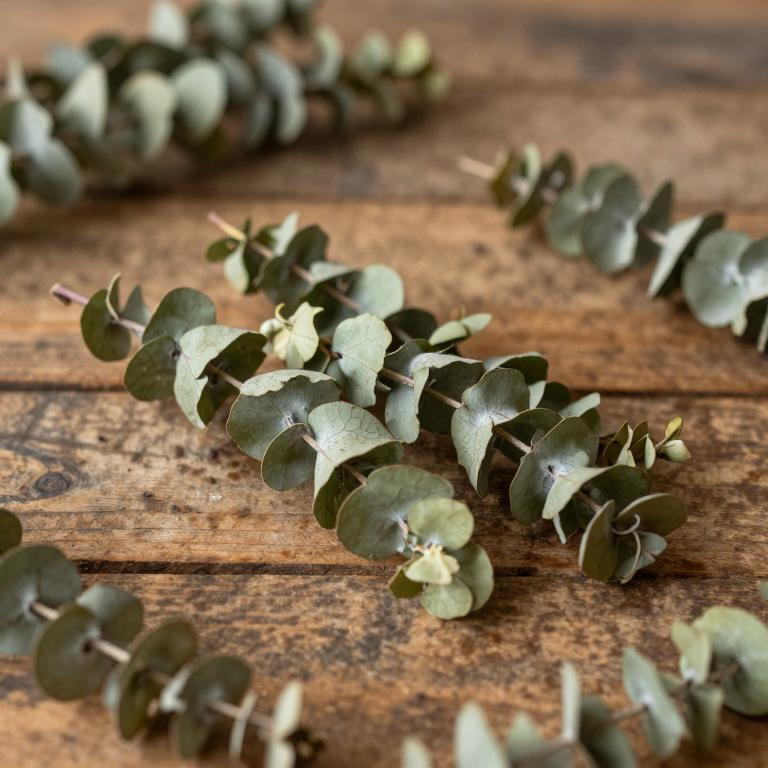
Names and Synonyms
Common Names
- Western Scribbly Gum
- inland scribbly gum
- scribbly gum
Scientific Names
Accepted name
Eucalyptus rossiiSynonyms
- Eucalyptus racemosa subsp. rossii
Sources: Wikidata, Catalogue of Life
Taxonomical Classification
This plant belongs to the kingdom Plantae and is classified under the phylum Streptophyta and class Equisetopsida. Within the subclass Magnoliidae, it is organized under the order Myrtales and the family Myrtaceae. Finally, it is identified by the genus Eucalyptus.
| Rank | Classification |
|---|---|
| Kingdom | Plantae |
| Phylum | Streptophyta |
| Class | Equisetopsida |
| Subclass | Magnoliidae |
| Order | Myrtales |
| Family | Myrtaceae |
| Genus | Eucalyptus |
Sources: The World Checklist of Vascular Plants (WCVP)
Distribution
This plant, commonly known as the Ross's gum, possesses a very specific and limited natural range. It is native to the continent of Australia, where it has established itself in certain environments. Within this country, its distribution is primarily concentrated in the state of New South Wales. This localized presence suggests that the species relies on the unique climatic conditions found in that particular region. Consequently, the geographical footprint of Eucalyptus rossii remains restricted to these specific Australian landscapes.
| Region | Area |
|---|---|
| Australia | New South Wales |
Sources: The World Checklist of Vascular Plants (WCVP)
Botanical Identification
Morphology
The morphology of Eucalyptus rossii is characterized by its growth form as a tree, which develops into a robust and structurally significant specimen. As a woody plant, it possesses a lignified stem structure that supports its height and provides the necessary rigidity for its canopy. This woody architecture is typical of its life cycle, allowing for the development of a substantial trunk and branching patterns essential to its arboreal habit.
- Growth form :
- tree
- Woodiness :
- woody
Physiology
The physiology of Eucalyptus rossii is fundamentally characterized by its utilization of the C3 photosynthetic pathway, a mechanism where carbon dioxide is fixed directly into a three-carbon compound during the first stage of the Calvin cycle. This metabolic process involves the enzyme RuBisCO facilitating the carboxylation of ribulose-1,5-bisphosphate, which is highly efficient in the temperate to subtropical environments where this species typically thrives. Alongside this carbon fixation strategy, the plant exhibits specialized physiological adaptations to manage water use efficiency and transpiration, often employing sclerophyllous leaf structures that limit water loss during periods of high evaporative demand. The physiological vigor of Eucalyptus rossii is further supported by an extensive root system designed for efficient nutrient uptake and hydraulic conductance, ensuring that the metabolic requirements for C3 photosynthesis are met even under varying soil moisture conditions.
- Photosynthetic pathway :
- C3
Reproduction
Reproduction in Eucalyptus rossii is characterized by the production of seeds that exhibit significant variation in weight, a factor crucial to its dispersal and germination success. The seed mass within this species demonstrates a wide range, with a minimum recorded value of 0.00026 g and a maximum reaching up to 0.0062 g. On average, the seed mass is approximately 0.00421 g. This variability in mass suggests different strategies for resource allocation within the reproductive cycle, influencing how the offspring establish themselves in their specific ecological niches.
- Seed mass max:
- 0.0062 g
- Seed mass mean:
- 0.00421 g
- Seed mass min:
- 0.00026 g
Sources: Global Inventory of Floras and Traits (GIFT)
Plant Parts
Eucalyptus rossii has 1 reported plant parts identified across 1 scientific publications and several other databases that are studied for medicinal purposes. The most consistently reported plant part include leaf.
| Plant part | Supporting sources | Consensus |
|---|---|---|
| Leaf | 1 supporting sources | ★☆☆☆☆ |
Leaf
- Molecules (Basel, Switzerland)
Chemicals
Eucalyptus rossii has 4 reported phytochemicals identified across 1 scientific publications and several other databases. The most consistently reported chemicals include (+)-catechin, (-)-Epicatechin, Gallic acid, Tannins.
| Chemical | Supporting sources | Consensus |
|---|---|---|
| (+)-catechin | 1 supporting sources | ★☆☆☆☆ |
| (-)-Epicatechin | 1 supporting sources | ★☆☆☆☆ |
| Gallic acid | 1 supporting sources | ★☆☆☆☆ |
| Tannins | 1 supporting sources | ★☆☆☆☆ |
(+)-catechin
- Molecules (Basel, Switzerland)
(-)-Epicatechin
- Molecules (Basel, Switzerland)
Gallic acid
- Molecules (Basel, Switzerland)
Tannins
- Molecules (Basel, Switzerland)