Eucalyptus punctata
Eucalyptus punctata · Accepted scientific name
Scientific literature: Very Extensive (216 studies) · ★★★★★
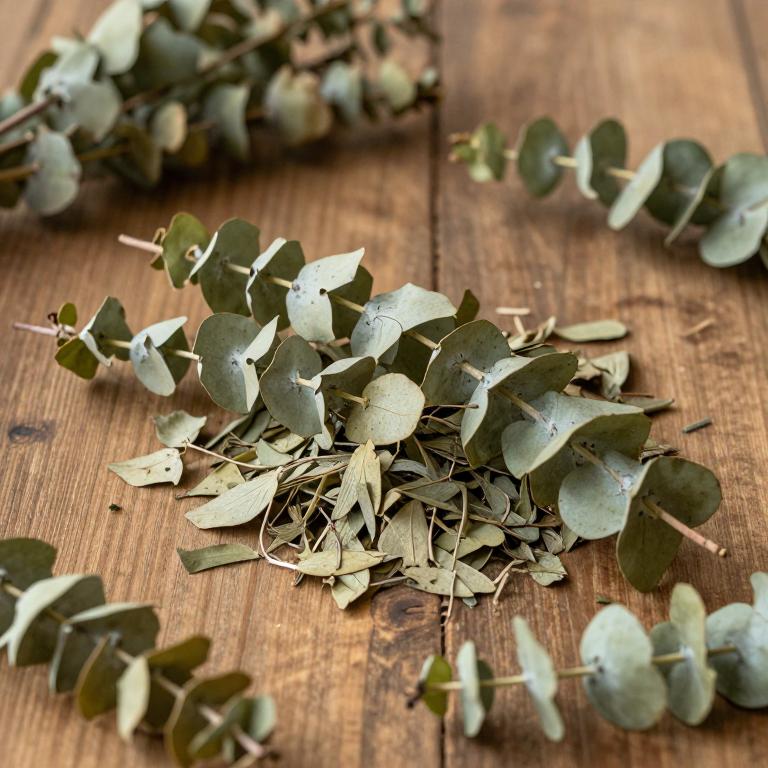
, scientifically known as Eucalyptus punctata, is a distinctive medicinal plant native to Australia. Renowned for its aromatic leaves, it possesses potent antimicrobial and anti-inflammatory properties. Often utilized in traditional remedies to alleviate respiratory congestion and skin irritations, this species offers significant therapeutic potential through its essential oil components.
- Family
- Not available
- Native range
- Africa
- Parts used
- Not available
- Common names
- Not available
- Scientific synonyms
- Not available
Names and Synonyms
Scientific Names
Accepted name
Eucalyptus punctataDistribution
This plant exhibits a wide-ranging geographical distribution across several distinct regions of the world. In East Tropical Africa, its presence is firmly established within the borders of Kenya. It can also be found throughout neighboring territories, specifically in Tanzania and Uganda. Moving toward Asia, the species is located within the South-Central regions of China. Furthermore, its habitat extends into the Southeast parts of China as well.
| Region | Area |
|---|---|
| East Tropical Africa | Kenya |
| East Tropical Africa | Tanzania |
| East Tropical Africa | Uganda |
| China | China South-Central |
| China | China Southeast |
| Australia | New South Wales |
| Australia | Queensland |
| South-Central Pacific | Easter Is. |
Sources: The World Checklist of Vascular Plants (WCVP)
Botanical Identification
Life history
The life history of Eucalyptus punctata is characterized by its status as a perennial organism, allowing it to persist through multiple growing seasons and maintain a long-term presence within its ecosystem. As a phanerophyte, the plant maintains its buds well above the ground level, typically manifesting as a woody tree with a significant height that protects its reproductive and vegetative structures from various environmental stressors. This phanerophyte life form ensures that the plant can establish a robust structural framework, facilitating its continued growth and survival over many years.
- Life form :
- phanerophyte
- Lifecycle :
- perennial
Morphology
The morphology of Eucalyptus punctata is characterized by its robust growth form as a woody tree, which is capable of reaching significant dimensions in the wild. It functions as a self-supporting, independent organism, neither acting as a climber nor requiring a host as a parasite or epiphyte, and it maintains a strictly terrestrial existence. The plant exhibits a substantial stature, with a mean height of approximately 20 m, though it has the capacity to reach a maximum height of up to 35 m.
- Aquatic :
- terrestrial
- Climber :
- self-supporting
- Epiphyte :
- terrestrial
- Growth form :
- tree
- Parasite :
- independent
- Plant height max:
- 35 m
- Plant height mean:
- 20 m
- Woodiness :
- woody
Physiology
The physiology of Eucalyptus punctata is characterized by a metabolic framework that utilizes the C3 photosynthetic pathway, a strategy common among many woody perennial species that facilitates carbon fixation through the enzyme Rubisco. This pathway involves the direct fixation of atmospheric carbon dioxide into a three-carbon compound within the mesophyll cells, which is optimized for environments where water availability allows for moderate stomatal conductance. The plant's physiological efficiency is heavily influenced by its ability to manage gas exchange and transpiration rates, balancing the intake of CO2 for carbohydrate synthesis against the risk of desiccation. Furthermore, the metabolic processes within its foliage are integrated with specialized secondary metabolite production, where the carbon fixed via the C3 cycle is diverted into the biosynthesis of essential oils and phenolic compounds, contributing to the plant's overall chemical profile and environmental resilience.
- Photosynthetic pathway :
- C3
Reproduction
The reproduction of Eucalyptus punctata is characterized by specific morphological dimensions of its inflorescence and reproductive structures. The inflorescence is relatively compact, measuring between a minimum of 0.015 m and a maximum of 0.02 m in length. Following pollination, the plant develops fruits that exhibit notable variability in size; the fruit length ranges from a minimum of 0.7 cm to a maximum of 1 cm, with an average length of 0.85 cm. Correspondingly, the fruit width fluctuates between 0.6 cm and 0.8 cm, maintaining an average width of 0.7 cm. The resulting seeds produced within these fruits show a significant range in mass, with the smallest seeds weighing approximately 0.00032 g and the largest reaching up to 0.02025 g, resulting in a mean seed mass of 0.0067925 g.
- Fruit length max:
- 1 cm
- Fruit length mean:
- 0.85 cm
- Fruit length min:
- 0.7 cm
- Fruit width max:
- 0.8 cm
- Fruit width mean:
- 0.7 cm
- Fruit width min:
- 0.6 cm
- Inflorescence length max:
- 0.02 m
- Inflorescence length min:
- 0.015 m
- Seed mass max:
- 0.02025 g
- Seed mass mean:
- 0.0067925 g
- Seed mass min:
- 0.00032 g
Sources: Global Inventory of Floras and Traits (GIFT)
Chemicals
Eucalyptus punctata has 33 reported phytochemicals identified across 0 scientific publications and several other databases. The most consistently reported chemicals include 1,8-Cineole, ALPHA-PHELLANDRENE, ALPHA-PINENE, ALPHA-TERPINYL ACETATE, ALPHA-THUJENE.
| Chemical | Supporting sources | Consensus |
|---|---|---|
| 1,8-Cineole | 1 supporting sources | ★☆☆☆☆ |
| ALPHA-PHELLANDRENE | 1 supporting sources | ★☆☆☆☆ |
| ALPHA-PINENE | 1 supporting sources | ★☆☆☆☆ |
| ALPHA-TERPINYL ACETATE | 1 supporting sources | ★☆☆☆☆ |
| ALPHA-THUJENE | 1 supporting sources | ★☆☆☆☆ |
| Allo-Aromadendrene | 1 supporting sources | ★☆☆☆☆ |
| Alpha terpinene | 1 supporting sources | ★☆☆☆☆ |
| Aromadendrene | 1 supporting sources | ★☆☆☆☆ |
| BETA-CARYOPHYLLENE | 1 supporting sources | ★☆☆☆☆ |
| BETA-ELEMENE | 1 supporting sources | ★☆☆☆☆ |
1,8-Cineole
- Dr. Duke
ALPHA-PHELLANDRENE
- Dr. Duke
ALPHA-PINENE
- Dr. Duke
ALPHA-TERPINYL ACETATE
- Dr. Duke
ALPHA-THUJENE
- Dr. Duke
Allo-Aromadendrene
- Dr. Duke
Alpha terpinene
- Dr. Duke
Aromadendrene
- Dr. Duke
BETA-CARYOPHYLLENE
- Dr. Duke
BETA-ELEMENE
- Dr. Duke
Activities
Eucalyptus punctata has 183 reported activities identified across 0 scientific publications and several other databases. The most consistently reported activities include (-)-Chronotropic, (-)-Inotropic, ACE-Inhibitor, AChE-Inhibitor, Acaricide.
| Activity | Supporting sources | Consensus |
|---|---|---|
| (-)-Chronotropic | 1 supporting sources | ★☆☆☆☆ |
| (-)-Inotropic | 1 supporting sources | ★☆☆☆☆ |
| ACE-Inhibitor | 1 supporting sources | ★☆☆☆☆ |
| AChE-Inhibitor | 1 supporting sources | ★☆☆☆☆ |
| Acaricide | 1 supporting sources | ★☆☆☆☆ |
| Aldose-Reductase-Inhibitor | 1 supporting sources | ★☆☆☆☆ |
| Allelochemic | 1 supporting sources | ★☆☆☆☆ |
| Allelopathic | 1 supporting sources | ★☆☆☆☆ |
| Allergenic | 1 supporting sources | ★☆☆☆☆ |
| Analgesic | 1 supporting sources | ★☆☆☆☆ |
(-)-Chronotropic
- Dr. Duke
(-)-Inotropic
- Dr. Duke
ACE-Inhibitor
- Dr. Duke
AChE-Inhibitor
- Dr. Duke
Acaricide
- Dr. Duke
Aldose-Reductase-Inhibitor
- Dr. Duke
Allelochemic
- Dr. Duke
Allelopathic
- Dr. Duke
Allergenic
- Dr. Duke
Analgesic
- Dr. Duke