Eucalyptus populnea
Eucalyptus populnea · Accepted scientific name
Scientific literature: Very Extensive (269 studies) · ★★★★★
scientifically known as Eucalyptus populnea, is a versatile medicinal plant native to Australia. Commonly referred to as Poplar Box, it possesses significant therapeutic properties. Its leaves and bark are traditionally utilized for their antimicrobial and anti-inflammatory benefits, offering valuable natural remedies for treating various skin ailments and respiratory issues.
- Family
- Not available
- Native range
- Australasia
- Parts used
- Not available
- Common names
- Not available
- Scientific synonyms
- Not available
Names and Synonyms
Scientific Names
Accepted name
Eucalyptus populneaDistribution
This plant, known as the Poplar Box, possesses a specific geographical distribution within the Australian continent. It is primarily found growing in the eastern regions of the country. Specifically, its habitat includes various parts of New South Wales. Additionally, the species extends its range further north into Queensland. These two states represent the core areas where this medicinal Eucalyptus can be located.
| Region | Area |
|---|---|
| Australia | New South Wales |
| Australia | Queensland |
Sources: The World Checklist of Vascular Plants (WCVP)
Botanical Identification
Life history
The life history of Eucalyptus populnea is characterized by its classification as a phanerophyte, specifically manifesting as both a phanerophyte and a nanophanerophyte depending on the developmental stage and environmental conditions. As a phanerophyte, its buds are elevated well above the ground on woody stems, a structural adaptation that allows it to persist through varying seasonal changes. During its growth cycle, the plant transitions from an initial establishment phase to a robust woody form, where its life form may be described as a nanophanerophyte when occupying smaller niches or stunted environments, or as a standard phanerophyte as it reaches its mature height. This life strategy ensures that the reproductive and vegetative organs are protected from surface-level disturbances, facilitating its survival in its natural habitat.
- Life form :
- phanerophyte
Morphology
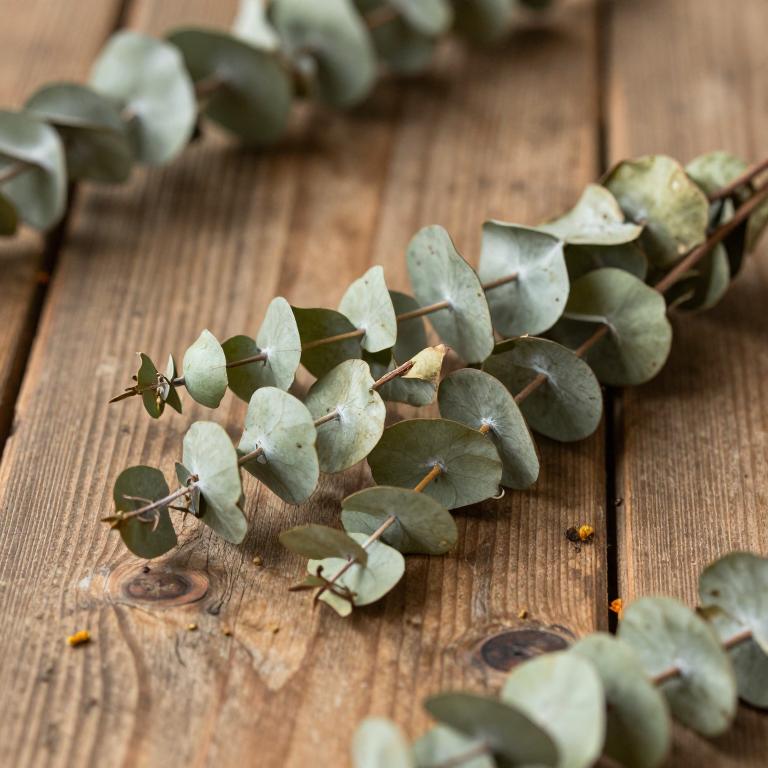
The morphology of Eucalyptus populnea is characterized by its stature as a woody tree, reaching a maximum plant height of approximately 20 m. As a terrestrial species, it grows in non-aquatic environments and functions as a self-supporting organism rather than a climber. It is an independent plant, lacking parasitic or epiphytic tendencies, and maintains a robust, woody growth form consistent with its classification as a large tree.
- Aquatic :
- terrestrial
- Climber :
- self-supporting
- Epiphyte :
- terrestrial
- Growth form :
- tree
- Parasite :
- independent
- Plant height max:
- 20 m
- Woodiness :
- woody
Physiology
The physiology of Eucalyptus populnea is characterized by a C3 photosynthetic pathway, which dictates its metabolic processes and carbon fixation efficiency under varying environmental conditions. The morphological expression of its foliage reflects specific physiological adaptations, with leaf dimensions ranging from a minimum length of 5 cm to a maximum length of 11 cm. Furthermore, the leaf width exhibits significant variability, spanning from a minimum of 2 cm to a maximum of 7 cm, which influences the surface area available for gas exchange and light interception during photosynthesis.
- Leaf length max:
- 11 cm
- Leaf length min:
- 5 cm
- Leaf width max:
- 7 cm
- Leaf width min:
- 2 cm
- Photosynthetic pathway :
- C3
Reproduction
Reproduction in Eucalyptus populnea is characterized by the production of specialized seeds that exhibit significant variability in weight. The seed mass within this species is notably small, with a recorded mean mass of 0.000285 g. This biological trait shows a distinct range of distribution, fluctuating from a minimum seed mass of 0.00013 g to a maximum seed mass of 0.00065 g. This variation in seed size plays a critical role in the plant's dispersal and establishment strategies within its natural habitat.
- Seed mass max:
- 0.00065 g
- Seed mass mean:
- 0.000285 g
- Seed mass min:
- 0.00013 g
Sources: Global Inventory of Floras and Traits (GIFT)
Chemicals
Eucalyptus populnea has 74 reported phytochemicals identified across 0 scientific publications and several other databases. The most consistently reported chemicals include (+)-Quercitol, 1,8-Cineole, A-MUUROLENE, ALPHA-PHELLANDRENE, ALPHA-PINENE.
| Chemical | Supporting sources | Consensus |
|---|---|---|
| (+)-Quercitol | 1 supporting sources | ★☆☆☆☆ |
| 1,8-Cineole | 1 supporting sources | ★☆☆☆☆ |
| A-MUUROLENE | 1 supporting sources | ★☆☆☆☆ |
| ALPHA-PHELLANDRENE | 1 supporting sources | ★☆☆☆☆ |
| ALPHA-PINENE | 1 supporting sources | ★☆☆☆☆ |
| ALPHA-SELINENE | 1 supporting sources | ★☆☆☆☆ |
| Allo-Aromadendrene | 1 supporting sources | ★☆☆☆☆ |
| Aromadendrene | 1 supporting sources | ★☆☆☆☆ |
| BETA-CARYOPHYLLENE | 1 supporting sources | ★☆☆☆☆ |
| BETA-ELEMENE | 1 supporting sources | ★☆☆☆☆ |
(+)-Quercitol
- Dr. Duke
1,8-Cineole
- Dr. Duke
A-MUUROLENE
- Dr. Duke
ALPHA-PHELLANDRENE
- Dr. Duke
ALPHA-PINENE
- Dr. Duke
ALPHA-SELINENE
- Dr. Duke
Allo-Aromadendrene
- Dr. Duke
Aromadendrene
- Dr. Duke
BETA-CARYOPHYLLENE
- Dr. Duke
BETA-ELEMENE
- Dr. Duke
Activities
Eucalyptus populnea has 195 reported activities identified across 0 scientific publications and several other databases. The most consistently reported activities include (-)-Chronotropic, (-)-Inotropic, ACE-Inhibitor, AChE-Inhibitor, Acaricide.
| Activity | Supporting sources | Consensus |
|---|---|---|
| (-)-Chronotropic | 1 supporting sources | ★☆☆☆☆ |
| (-)-Inotropic | 1 supporting sources | ★☆☆☆☆ |
| ACE-Inhibitor | 1 supporting sources | ★☆☆☆☆ |
| AChE-Inhibitor | 1 supporting sources | ★☆☆☆☆ |
| Acaricide | 1 supporting sources | ★☆☆☆☆ |
| Aldose-Reductase-Inhibitor | 1 supporting sources | ★☆☆☆☆ |
| Allelochemic | 1 supporting sources | ★☆☆☆☆ |
| Allelopathic | 1 supporting sources | ★☆☆☆☆ |
| Allergenic | 1 supporting sources | ★☆☆☆☆ |
| Analgesic | 1 supporting sources | ★☆☆☆☆ |
(-)-Chronotropic
- Dr. Duke
(-)-Inotropic
- Dr. Duke
ACE-Inhibitor
- Dr. Duke
AChE-Inhibitor
- Dr. Duke
Acaricide
- Dr. Duke
Aldose-Reductase-Inhibitor
- Dr. Duke
Allelochemic
- Dr. Duke
Allelopathic
- Dr. Duke
Allergenic
- Dr. Duke
Analgesic
- Dr. Duke