Eucalyptus polyanthemos
Eucalyptus polyanthemos · Accepted scientific name
Scientific literature: Very Extensive (224 studies) · ★★★★★
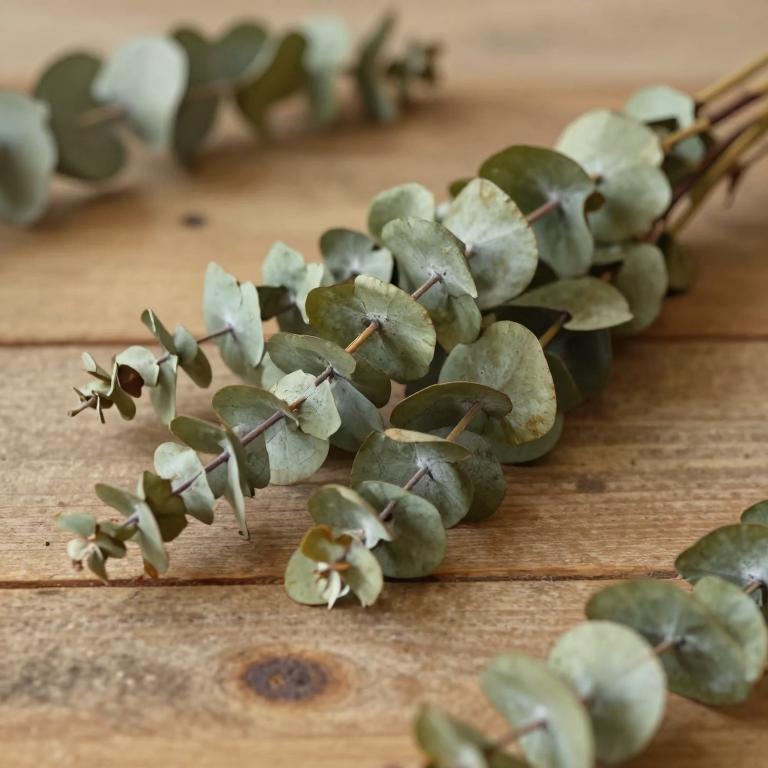
Scientifically known as Eucalyptus polyanthemos, is a resilient evergreen shrub native to Australia. Renowned for its aromatic foliage, this medicinal plant offers significant therapeutic potential. Its essential oils are traditionally utilized for their antiseptic and decongestant properties, providing natural relief for respiratory ailments and supporting overall holistic wellness.
- Family
- Not available
- Native range
- Africa
- Parts used
- Not available
- Common names
- Not available
- Scientific synonyms
- Not available
Names and Synonyms
Scientific Names
Accepted name
Eucalyptus polyanthemosDistribution
This plant exhibits a wide and diverse geographical distribution spanning several continents. In East Tropical Africa, it can be found growing within the borders of Kenya and Tanzania. Its range extends into Asia, specifically occupying the South-Central and Southeast regions of China. Additionally, the species is established in Australia, particularly within the state of New South Wales. These varied locations highlight the adaptable nature of its natural and introduced habitats.
| Region | Area |
|---|---|
| East Tropical Africa | Kenya |
| East Tropical Africa | Tanzania |
| China | China South-Central |
| China | China Southeast |
| Australia | New South Wales |
| Australia | Victoria |
| Southwestern U.S.A. | California |
Sources: The World Checklist of Vascular Plants (WCVP)
Botanical Identification
Life history
The life history of Eucalyptus polyanthemos is characterized by its classification as a perennial species, allowing it to persist through multiple growing seasons and establish a long-term presence in its ecosystem. As a phanerophyte, its regenerative buds are located high above the ground on woody stems, a structural adaptation that defines its life form and facilitates survival in various environmental conditions. This phanerophytic growth habit, consistent across its life stages, enables the plant to develop significant height and structural complexity, contributing to its enduring role within its natural habitat.
- Life form :
- phanerophyte
- Lifecycle :
- perennial
Morphology
The morphology of Eucalyptus polyanthemos is characterized by its stature as a robust, woody tree. As a self-supporting organism, it does not function as a climber or a vine, nor does it exhibit parasitic or epiphytic tendencies, maintaining a strictly terrestrial existence. The plant is an independent grower, reaching a mean height of approximately 22 m, though it is capable of attaining a maximum height of up to 40 m. Its growth form is consistently that of a large tree, defined by its substantial woody structure.
- Aquatic :
- terrestrial
- Climber :
- self-supporting
- Epiphyte :
- terrestrial
- Growth form :
- tree
- Parasite :
- independent
- Plant height max:
- 40 m
- Plant height mean:
- 22 m
- Woodiness :
- woody
Physiology
The physiology of Eucalyptus polyanthemos is characterized by a C3 photosynthetic pathway, which governs its carbon fixation processes and metabolic efficiency. The morphological aspects of its foliage play a significant role in its physiological performance, with leaf dimensions exhibiting notable variability. The leaves possess a length that ranges from a minimum of 4 cm to a maximum of 14 cm, maintaining a mean length of approximately 9.5 cm. Complementing this longitudinal variation is a leaf width that fluctuates between a minimum of 1.5 cm and a maximum of 3.5 cm, providing a specific surface area optimized for gas exchange and light interception within its ecological niche.
- Leaf length max:
- 14 cm
- Leaf length mean:
- 9.5 cm
- Leaf length min:
- 4 cm
- Leaf width max:
- 3.5 cm
- Leaf width min:
- 1.5 cm
- Photosynthetic pathway :
- C3
Reproduction
Reproduction in Eucalyptus polyanthemos is characterized by the development of inflorescences that typically measure between 0.04 m and 0.05 m in length. Following pollination, the plant produces distinct fruits that exhibit specific morphological dimensions; these fruits generally possess a mean length of 0.55 cm, ranging from a minimum of 0.5 cm to a maximum of 0.6 cm, while their width varies from a minimum of 0.4 cm to a maximum of 0.5 cm, with a mean width of 0.45 cm. The resulting seeds are notably minute, reflecting a reproductive strategy involving small, lightweight propagules. These seeds have a mean mass of approximately 0.0015883335 g, though individual seed weight can fluctuate significantly, with a minimum mass of 0.00027 g and a maximum mass reaching up to 0.00396 g.
- Fruit length max:
- 0.6 cm
- Fruit length mean:
- 0.55 cm
- Fruit length min:
- 0.5 cm
- Fruit width max:
- 0.5 cm
- Fruit width mean:
- 0.45 cm
- Fruit width min:
- 0.4 cm
- Inflorescence length max:
- 0.05 m
- Inflorescence length min:
- 0.04 m
- Seed mass max:
- 0.00396 g
- Seed mass mean:
- 0.0015883335 g
- Seed mass min:
- 0.00027 g
Sources: Global Inventory of Floras and Traits (GIFT)
Chemicals
Eucalyptus polyanthemos has 38 reported phytochemicals identified across 0 scientific publications and several other databases. The most consistently reported chemicals include 1,8-Cineole, ALPHA-PHELLANDRENE, ALPHA-PINENE, ALPHA-TERPINYL ACETATE, ALPHA-THUJENE.
| Chemical | Supporting sources | Consensus |
|---|---|---|
| 1,8-Cineole | 1 supporting sources | ★☆☆☆☆ |
| ALPHA-PHELLANDRENE | 1 supporting sources | ★☆☆☆☆ |
| ALPHA-PINENE | 1 supporting sources | ★☆☆☆☆ |
| ALPHA-TERPINYL ACETATE | 1 supporting sources | ★☆☆☆☆ |
| ALPHA-THUJENE | 1 supporting sources | ★☆☆☆☆ |
| Allo-Aromadendrene | 1 supporting sources | ★☆☆☆☆ |
| Alpha terpinene | 1 supporting sources | ★☆☆☆☆ |
| Aromadendrene | 1 supporting sources | ★☆☆☆☆ |
| BETA-CARYOPHYLLENE | 1 supporting sources | ★☆☆☆☆ |
| BETA-ELEMENE | 1 supporting sources | ★☆☆☆☆ |
1,8-Cineole
- Dr. Duke
ALPHA-PHELLANDRENE
- Dr. Duke
ALPHA-PINENE
- Dr. Duke
ALPHA-TERPINYL ACETATE
- Dr. Duke
ALPHA-THUJENE
- Dr. Duke
Allo-Aromadendrene
- Dr. Duke
Alpha terpinene
- Dr. Duke
Aromadendrene
- Dr. Duke
BETA-CARYOPHYLLENE
- Dr. Duke
BETA-ELEMENE
- Dr. Duke
Activities
Eucalyptus polyanthemos has 186 reported activities identified across 0 scientific publications and several other databases. The most consistently reported activities include (-)-Chronotropic, (-)-Inotropic, ACE-Inhibitor, AChE-Inhibitor, Acaricide.
| Activity | Supporting sources | Consensus |
|---|---|---|
| (-)-Chronotropic | 1 supporting sources | ★☆☆☆☆ |
| (-)-Inotropic | 1 supporting sources | ★☆☆☆☆ |
| ACE-Inhibitor | 1 supporting sources | ★☆☆☆☆ |
| AChE-Inhibitor | 1 supporting sources | ★☆☆☆☆ |
| Acaricide | 1 supporting sources | ★☆☆☆☆ |
| Aldose-Reductase-Inhibitor | 1 supporting sources | ★☆☆☆☆ |
| Allelochemic | 1 supporting sources | ★☆☆☆☆ |
| Allelopathic | 1 supporting sources | ★☆☆☆☆ |
| Allergenic | 1 supporting sources | ★☆☆☆☆ |
| Analgesic | 1 supporting sources | ★☆☆☆☆ |
(-)-Chronotropic
- Dr. Duke
(-)-Inotropic
- Dr. Duke
ACE-Inhibitor
- Dr. Duke
AChE-Inhibitor
- Dr. Duke
Acaricide
- Dr. Duke
Aldose-Reductase-Inhibitor
- Dr. Duke
Allelochemic
- Dr. Duke
Allelopathic
- Dr. Duke
Allergenic
- Dr. Duke
Analgesic
- Dr. Duke