Blackbutt
Eucalyptus pilularis · Accepted scientific name
Scientific literature: Very Sparse (11 studies) · ★☆☆☆☆
Blackbutt, scientifically known as Eucalyptus pilularis, is a majestic evergreen native to Australia's eastern coasts. Renowned for its durable timber, it also holds significant medicinal value. Its leaves contain essential oils with potent antimicrobial and decongestant properties, traditionally used to alleviate respiratory ailments and soothe inflammatory skin conditions.
- Family
- Myrtaceae
- Native range
- Africa
- Parts used
- Not available
- Common names
- Black-Butt · Blackbutt · 1 more
- Scientific synonyms
- Eucalyptus Persicifolia · Eucalyptus Discolor
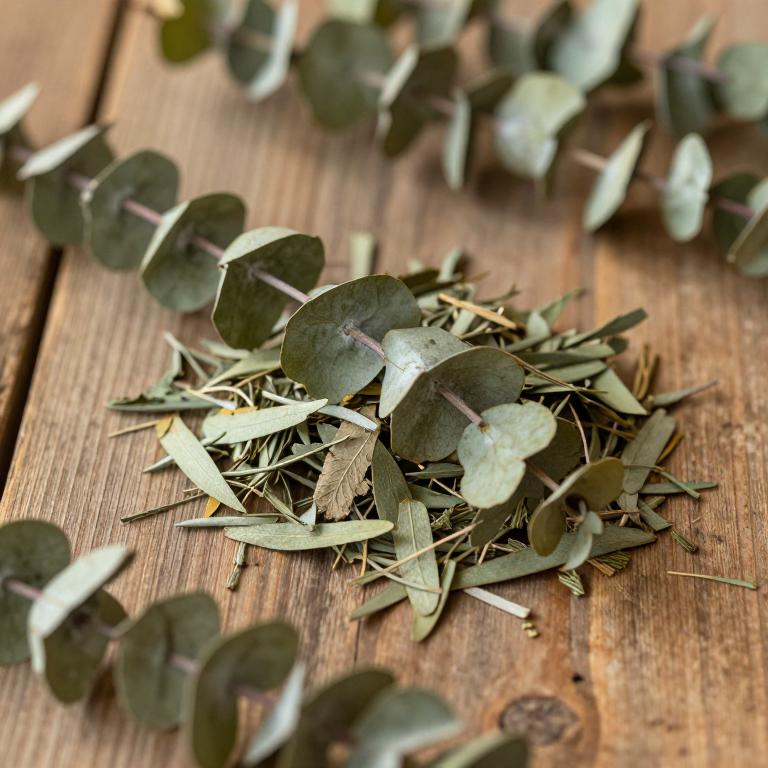
Names and Synonyms
Common Names
- black-butt
- blackbutt
- woolly gum
Scientific Names
Accepted name
Eucalyptus pilularisSynonyms
- Eucalyptus persicifolia
- Eucalyptus discolor
Sources: Wikidata, Catalogue of Life
Taxonomical Classification
This plant belongs to the kingdom Plantae and is classified under the phylum Streptophyta within the class Equisetopsida. As a member of the subclass Magnoliidae and order Myrtales, it is further categorized into the family Myrtaceae. Finally, it is identified by the genus Eucalyptus, specifically as the species Eucalyptus pilularis.
| Rank | Classification |
|---|---|
| Kingdom | Plantae |
| Phylum | Streptophyta |
| Class | Equisetopsida |
| Subclass | Magnoliidae |
| Order | Myrtales |
| Family | Myrtaceae |
| Genus | Eucalyptus |
Sources: The World Checklist of Vascular Plants (WCVP)
Distribution
This plant exhibits a diverse geographical distribution spanning several different regions across the globe. In Australia, it can be found growing within the states of New South Wales and Queensland. Its presence extends to the islands of New Zealand, specifically in the Northland region. Additionally, the species is located within East Tropical Africa, appearing in both Kenya and Tanzania. These varied locations demonstrate the wide ecological range inhabited by this medicinal species.
| Region | Area |
|---|---|
| East Tropical Africa | Kenya |
| East Tropical Africa | Tanzania |
| Australia | New South Wales |
| Australia | Queensland |
| New Zealand | New Zealand North |
| North-Central Pacific | Hawaii |
Sources: The World Checklist of Vascular Plants (WCVP)
Botanical Identification
Ecology
The ecology of Eucalyptus pilularis is characterized by its preference for lowland environments, where it thrives in diverse landscape settings ranging from coastal forests to inland slopes. This species is typically found in well-drained soils, often occupying fertile sites that support its rapid growth and robust structural development. Within these lowland habitats, it plays a vital role in forest succession and canopy architecture, often forming dominant stands in moist sclerophyll forests. Its distribution is heavily influenced by local topography and soil moisture availability, allowing it to adapt to varying levels of nutrient availability while maintaining a competitive edge in established forest ecosystems.
- Habitat :
- Lowland
Life history
The life history of Eucalyptus pilularis is characterized by its status as a perennial species, ensuring its long-term presence within its native ecosystem. As a phanerophyte, the plant maintains its buds and reproductive structures well above the ground, typically manifesting as a large, woody tree. It maintains an evergreen deciduousness, meaning it retains its foliage throughout the year without undergoing a seasonal shedding period. This combination of a perennial lifecycle and a phanerophyte life form allows it to establish a dominant presence in its habitat, providing consistent canopy cover and structural complexity over many years.
- Deciduousness :
- evergreen
- Life form :
- phanerophyte
- Lifecycle :
- perennial
Morphology
The morphology of Eucalyptus pilularis is characterized by its massive growth form, existing as a large, woody tree. As a self-supporting organism, it does not function as a climber or a parasite, maintaining an independent biological existence. The plant is terrestrial in its habitat, neither aquatic nor epiphytic. In terms of stature, it is a significant forest species, with a plant height that typically ranges from a minimum of 30 m to a maximum of 70 m, maintaining an average height of approximately 55 m.
- Aquatic :
- terrestrial
- Climber :
- self-supporting
- Epiphyte :
- terrestrial
- Growth form :
- tree
- Parasite :
- independent
- Plant height max:
- 70 m
- Plant height mean:
- 55 m
- Plant height min:
- 30 m
- Woodiness :
- woody
Physiology
The physiology of Eucalyptus pilularis is characterized by its utilization of the C3 photosynthetic pathway, a metabolic process that allows the plant to fix carbon dioxide primarily through the Calvin cycle. Morphologically, its leaves exhibit specific dimensional variations essential to its physiological function, with lengths ranging from a minimum of 9 cm to a maximum of 16 cm. The leaf width displays a similar range of variation, with a minimum measurement of 1.6 cm, a maximum of 3 cm, and a mean width of 2.5 cm. Furthermore, the plant does not function as a nitrogen fixer, meaning it lacks the symbiotic relationship with nitrogen-fixing bacteria required to convert atmospheric nitrogen into a usable form, relying instead on available soil nitrogen for its nutritional requirements.
- Leaf length max:
- 16 cm
- Leaf length min:
- 9 cm
- Leaf width max:
- 3 cm
- Leaf width mean:
- 2.5 cm
- Leaf width min:
- 1.6 cm
- Nitrogen fixer :
- no
- Photosynthetic pathway :
- C3
Reproduction
The reproduction of Eucalyptus pilularis is driven by a complex interaction of biological and environmental factors, beginning with a biotic pollination syndrome that primarily involves insects. Following successful pollination, the plant develops fruits that exhibit significant morphological variation; these fruits typically have a mean width of 1.3 cm and a mean length of 1 cm, though they can range in width from a minimum of 0.7 cm to a maximum of 1.1 cm, and in length from a minimum of 0.6 cm to a maximum of 1.1 cm. Within these fruits, the seeds are produced with a mean mass of approximately 0.00669 g, with individual seed weights ranging from a minimum of 0.00135 g to a maximum of 0.02838 g. Once the seeds are mature, the dispersal process is characterized by an anemochorous syndrome, meaning they are dispersed by wind, supplemented by an unspecialized dispersal mechanism that allows for various modes of movement within the ecosystem.
- Dispersal syndrome :
- anemochorous
- Dispersal syndrome :
- unspecialized
- Fruit length max:
- 1.1 cm
- Fruit length mean:
- 1 cm
- Fruit length min:
- 0.6 cm
- Fruit width max:
- 1.1 cm
- Fruit width mean:
- 1.3 cm
- Fruit width min:
- 0.7 cm
- Pollination syndrome :
- insect
- Pollination syndrome :
- biotic
- Seed mass max:
- 0.02838 g
- Seed mass mean:
- 0.006692857 g
- Seed mass min:
- 0.00135 g
Sources: Global Inventory of Floras and Traits (GIFT)
Chemicals
Eucalyptus pilularis has 7 reported phytochemicals identified across 0 scientific publications and several other databases. The most consistently reported chemicals include Allosamidin, Chlorine-, PHOSPHORUS, POTASSIUM, Polyphosphate.
| Chemical | Supporting sources | Consensus |
|---|---|---|
| Allosamidin | 1 supporting sources | ★☆☆☆☆ |
| Chlorine- | 1 supporting sources | ★☆☆☆☆ |
| PHOSPHORUS | 1 supporting sources | ★☆☆☆☆ |
| POTASSIUM | 1 supporting sources | ★☆☆☆☆ |
| Polyphosphate | 1 supporting sources | ★☆☆☆☆ |
| Pugnac | 1 supporting sources | ★☆☆☆☆ |
| sulfur | 1 supporting sources | ★☆☆☆☆ |
Allosamidin
- Phytochemistry
Chlorine-
- Fungal genetics and biology : FG & B
PHOSPHORUS
- Fungal genetics and biology : FG & B
POTASSIUM
- Fungal genetics and biology : FG & B
Polyphosphate
- Fungal genetics and biology : FG & B
Pugnac
- Phytochemistry
sulfur
- Fungal genetics and biology : FG & B